First Mission Stories - America
Pennsylvania, Indiana, Missouri, Wyoming, New Mexico, Tennessee, Louisiana, Oklahoma, N. Carolina, Alabama, Ohio, W. Virginia, Alaska, Michigan
Revised November 21, 2025
Pioneering Workers and Accounts
Alaska - Maimie, The Eskimo Woman
Some Northwest Pennsylvania History
Some Early History of the Work in North Central Pennsylvania
When the Workers Came to Indiana
First Workers to Preach in Missouri
Beavers Heard the Truth, 1914 in Wyoming
Early Gospel Missions in New Mexico
When the Gospel First Came to Gleason, Tennessee
Account of the Early Gospel Work in Louisiana (1925-1982)
History of Early Gospel Work In North and Central Louisiana 1922-1938 (Frank Account)
Early Gospel Work in North Louisiana - Hill Account
History of the Fellowship in Ohio and West Virginia
Early Workers in Alabama
Early Work in Oklahoma
How the True Gospel Came to Barry County, Michigan
Maimie, The Eskimo Woman in Alaska
This is the story of an Eskimo woman who lived far up in the Arctic.
The Arctic Circle is determined in the world where, on June 22, the sun doesn't even set at all. North of that is Arctic, whether it is in Russia or Finland or Norway or Alaska, that is the circle. In the summer months the sun doesn't set and in the winter months you don't see the sun for weeks at a time.
This woman was troubled about her salvation. She was living in a very remote spot and her closest neighbour on one side was 14 miles away, and on the other side 75 miles. At that place 2 people lived and at 14 miles distant 12 people lived, but no preacher and no church. She dreamed a dream and says it was more than a dream, like a trance.
She walked and walked and was weary and got to where the light was and there was a door. As she approached the door, it opened a little way and a voice said, "What do you want?" and she said, "I want to come in." The message she got was, "Look at yourself, you are unclean, and no one unclean can come in." and the door quietly closed. She stood and beheld herself and saw that indeed she was very unclean, so she turned back wondering how she might be clean. It seemed that she was defiled, and she walked back from where the light seemed to be and went back into darkness.
With this she began to be concerned and prayed. She didn't know how to serve God, so she thought perhaps if she quit her smoking (which she did and had a certain sense of well being). She wondered what else. Of course there was no church service to attend, so it came into her mind that she would let her hair grow. It seemed to her that that was in the will of God, and from that day to this she has never cut it. She knew nothing of ever hearing about that or reading it.
This woman's husband's people had heard the Gospel but her husband has been away from home long. It was at this time, when the woman was concerned and had accomplished these things in her life, that the dying request of the man' s mother was that her son could hear the Gospel. There was some correspondence and we received a message, and we started corresponding with the Eskimo lady and her husband.
It would take about a month and then we would receive a reply, because of the distance and because the mail only went in there once a week. At first they gave us an invitation to come, particularly the husband, and then when he found out we were serious in coming, he wrote a letter and told us not to come! He said, "We are poor candidates for Christianity. I am a very busy man. Maimie feels the need of being baptised, but she doesn't understand and it isn't worth your while in coming..."
The letter was lost and I didn't know it was lost and so my companion and I made plans to go! We flew in a very small plane and just at the time of our going I had to go alone because my companion's father had died. So I went in on a Piper Cub, just a two person plane on skis.
As soon as I arrived he said, "Did you get my last letter?" and I said yes. But he didn't tell me when the last letter was written and that the last letter he had written was lost. But the letter preceding that was the last letter I had received. He said, "It's a strange thing that you have come when you received my last letter."
At the place where we received our mail, the snow would pile up as high as the mail box and by the spring of the year, which was probably about 5 months later, the sun melted the snow away from the mailbox - and there was that letter lying upon the ground telling us not to come! I have the confidence to believe that God is well able to hide a letter and that it might be kept as a witness that God was able to keep that letter from us, and then later that we also might see it as a confirmation.
We had meetings every night after my companion arrived about a week later. It wasn't until he arrived that Maimie was assured that we were the very ones her mother had told her about. Her mother, who was an Eskimo of course, could neither read nor write English or her own language, but she had told Maimie that the time will come when the messengers of God will come two together. They will have no home of their own, neither will they charge for the Gospel, and will travel from place to place and Maimie believed that would happen. But that wasn't confirmed to her until my companion arrived after I had been there one week myself.
God would make one family of all nations. The Eskimo people are very oriental. It would be very easy for them to migrate across the Bering Strait . That is a very narrow distance between Russia and Alaska. You could walk across in one day. It is frozen over 9 months of the year. It is 28 miles across.
*In 1909 workers first went to Alaska, and were there for 1909 and 1910 but they were very disheartened because of the conditions of the people. There was a family of friends who moved there in 1933 with the interest of having an open home. In 1933 Jack Carroll and a brother from New South Wales, Harold Gibson, went up there with the glorious Gospel. A little work was done and a few folks established. And since that time there has been a work continuing. There are 10 workers in that state and 2 conventions, about 800 miles apart. A small convention and a larger one at Anchorage about 600 people.
Maimie's strong desire was that she might be cleansed so she would be ready to go where that bright light and that door were. As we were having meetings, Sunday came and it was our second Sunday there, and I asked them if they would like to have in the morning a little study of how the Christians met together on the first day of the week. They said they would like that so we had a little study of I Cor. 14, how one by one each would pray and testify, prophesy, singing hymns in the spirit and with the understanding.
The next week, which would be our last week there, Sunday came and we asked them the night before if they would like to have a meeting. I knew we had talked about it and they said they would. Before this, one evening I said to them, "It is very possible that we are wasting our time here. We have been here nearly 2 weeks and it might be that you are getting an education about the Bible and about Christianity and if that is so we might as well leave because we don’t want to waste our own time or your time either. There will be a plane coming in 2 days and I am afraid that maybe all you are getting is a knowledge of the Bible."
She quickly spoke up and said, "For the first time in my life I feel an inward feeling like I did from my father and mother. I have a family feeling for you men. It is altogether new, there is a warmth in me about you and the words you speak that I have never felt before." He also expressed a similar thought so we said, maybe this is entering your hearts and not just your heads, so we will stay another week." So that led us to have that Sunday am meeting.
I said, Our brethren in Fairbanks (the closest church which would be a few 100 miles away) meet there at 10.30 am and we could meet with them at the same time before the Throne of Grace. We can pray for them and they can pray for us." They thought that would be good. She said I will get up a little earlier tomorrow so all will be in readiness." She usually got up at 4.30 so she got up at 3.30 this time. By the time the chairs were done and the dogs were fed and breakfast over everything was in readiness and 4 chairs in a circle in that little log house it was 7.30! 60 below zero is a very poor time to go for a walk and we were ready so we took our place in that little circle of 4 chairs.
There wasn't a word said, not a sound made until 10.30. We were there 2 hours. I read the book of Romans part of Hebrews, and half of the hymn book! They were also reading scripture, meditating. I wouldn't recommend such a long period of time but on that particular occasion that was how it was.
I don’t know if I have ever seen a person so overjoyed; her countenance was like the countenance of an angel. She was all aglow. She said, "All my days I have felt that God was unrighteous, that the only people who could worship God had to live where there was a church and a preacher. I didn't think that was right, that God would cause people who are isolated like we are, far away from a church building or a minister, to be excluded from worship." She said, "Today I knew that God is righteous and I have been wrong about this all my day. That we can worship in our own home without the church building and the minister." She was excited and thrilled to know the reality of that. That was a glorious day for us too. It became a mutual thing - her joy as well as her husband's was imparted to us also.
We said it was necessary that we leave on Wednesday, and all Tuesday they were out looking for wolves. That was their occupation in the winter months, out flying in a little plane. He said to her, "It seems that we are not going to have very much help as soon as those men leave," she said, "I am confident that before they leave they will give us a little study of some kind of mid-week meeting. I am sure there will be some arrangements and they will give us a little outline of what to do in the mid-week and some maybe even oftener."
They came back that Tuesday night and after supper I said, "Well, we are leaving in the morning and we would like to give you a little study list that we've got for Wednesday night meetings. She said "I was telling Errol about this, and maybe even another little study list." (We had one for Sunday night meetings) When men and women are childlike and trusting, God is well able to impart understanding aforetime to understand the way things would be.
After some years Errol died and she was alone. There was a road put in but not open for the public. It was for large trucks only. Finally they opened the road and as soon as it was open I saw our chance to drive 600 miles the round trip. Fuel had to be taken too. We tried to let her know we were coming. Every night at 9 there is a news broadcast all through the Arctic for 15 minutes regarding a death or emergencies, or problems. They have no news papers or magazines. Maimie always retired early, so she didn't listen to it. Like I said she was up at 3 or 4 am, so went to bed by 6 or 7 p.m.
This night she woke just at 9 pm which wasn't her custom to do! She thought well here I am awake I might as wall listen to that little Program "The news of the Arctic." She turned it on and the first message she heard was "Maimie at Creak, Stuart and Robert will be coming tomorrow". She turned it off and said, "God is well able to awaken me!" She hadn't listened to that program for several years! She didn't think it any great wonder. Felt God is well able to do things.
We found after about 14 hours on the poor quality gravel road she had a tent pitched and 2 cots in for us and everything was just like the sister workers would have done it for us! She thought of everything for our comfort; it was like the finest Hotel to us, such gracious care. We regret we haven't opportunity to labour among the Eskimos as we'd like, distances are great.
That man when he was alive would have opportunity most of the time to have flown us in that light plane, but it is very difficult to get there now. Maimie is now moved to Fairbanks, although she does spend 3 months of the year at that place still. We rejoice in the mighty way that God can open doors.
*It was actually in 1905, that Bill and Sara/Sally Corcoran (siblings) went to Alaska and were the first workers to go there.
Some Northwest Pennsylvania History
The 2x2s must have come to the Northwest part of Pennsylvania about
85 years ago. Two sister workers,
Nettie Miller and Inez London, were en route to Keating Summit, PA, by train. Seeing two young women
traveling alone, the conductor took an avuncular interest in them. Clearly
they were not worldly-wise. He told them he was concerned about setting
them down in Keating Summit, a pretty wild coal mining town. He urged them
to get off at Wrights instead. People were, well, more family-minded
and clean-living there, and the women would be more likely to find suitable
accommodations with some local family.
Nettie and Inez did as the conductor suggested, and later that day they
found their way to the home of Delmer and Ocea Nelson, about half a mile
up the Hamilton Road. It was a three-generation household, with Delmer
and Ocea's son Milford and Milford's wife Pearl and their little girl,
Olive, also living there. Ralph may have been born by then.
The young wife and mother, Pearl, saw the two workers as an answer to
prayer. For months she had been trying to get a midweek Bible study going,
and it had been rough going. It was winter and the church trustees didn't
want to start the furnace and get the building heated an extra time between
Sundays for a couple of hours of Bible discussion, no matter how many might
show up.
Milford and Pearl attended the Methodist Church. Growing up, Pearl Robbins
had attended the United Brethren Church, the only other church in Wrights.
Now she was a faithful Methodist, along with her husband, who was a lay
leader, a Sunday School officer and a trustee. Quite likely the reason
Nettie and Inez were directed to the home where they lived was because
of
Milford's church offices.
Pearl's idea about Bible studies did have some support. There was some
talk about the United Brethren and Methodists hosting the midweek Bible
studies alternately, but there was continued reluctance in both churches
because of heating the church buildings for the extra time, even every
other week. Some UBs seemed suspicious that some sheep stealing could occur.
The two
congregations were friendly enough, but there was some rivalry. Besides,
already two Nelson brothers had married Robbins sisters and "converted"
them to Methodist!
Pearl had come up with another variation on her midweek Bible study
theme: Why not hold them in the homes of parishoners? They could
still be "inter-faith." The various families that wanted to host the meetings
could take turns. It would not be so difficult to heat someone's parlor
for the
get-together. If too many people started attending, the study group
could split. That proposal was under consideration when the two sister
workers arrived.
When they began to talk about holding meetings in homes, Pearl was convinced
this had to be God's way of endorsing her pet project. The workers asked
permission to hold some gospel or salvation meetings in the Methodist Church.
In those days, revivals were common, and were usually welcomed by the local
church-goers. Such events often brought in new members. They were often
quite entertaining, with lots of hell-fire and damnation preaching, and
music, and dramatic altar calls and repentance scenes. Usually there were
offerings received, and shared with the host church. It was uncommon for
the revivalists to be women, but not all were ordained ministers, so Nettie
and Inez were considered something like "domestic missionaries," not necessarily
"women preachers," which would not have been acceptable to the conservative
churchfolk in that time and place.
At first, the gospel meetings were well attended. But numbers dwindled
when the visiting evangelists began holding forth on it being wrong to
have church buildings and ordained ministers, to pay preachers or have
stationed pastors, etc. Delmer and Ocea Nelson, their son Guy, his
wife Lulu, and their children, stopped attending. After a while, so did
Milford. He and Pearl had some hard words about it. But she continued
to attend whenever the weather allowed her to go on her own, pregnant,
walking the half mile or so, taking her children. Pregnancy was probably
one reason she was not baptized when some other initial converts were,
but about a year later. She may have attended when Joe Seyler was baptized,
with his wife Ada, née Heath.
Milford was opposed to Pearl's professing, but she did. He was particularly
upset by her wish to be baptized. There was such finality in that ceremonial
renunciation of her earlier beliefs and practices. Milford said the burial
language related to baptism was fitting, because it would kill
their marriage, and harmony in their home. Already there was coldness
between them. Not to mention the rift with his parents.
Delmer and Ocea were sick of having Nettie and Inez around. Pearl invited
them to supper one day, and as she was out picking the stringbeans in the
family garden, Ocea took the basin from her, declaring, "We are not giving
those women any more of our food or money. They are not welcome here."Pearl
said it was her home too, and the women were her guests. That
situation would soon change, said Ocea.
And it did. Guy and Lulu were living in a newer home on part of the
Nelson farm, they having married more recently and not being able to fit
into the homestead farmhouse. Now Milford and Pearl's household was transferred
to that house and Guy and Lulu came to live with Delmer and Ocea.
On a Sunday morning the following summer, as Pearl waited to be picked
up to be taken to her baptism, in the Portage Creek behind Joe Seyler's
(where meetings were held), Milford gave in. "I will go along with it,
if that will make you happy in our marriage," he told her. He attended
her baptism. That night he went to the Methodist pastor and resigned from
his church offices, turning in the books and records in his possession.
Over the years, three of Pearl and Milford's daughters went into the
work. Olive spent more than 50 years in Argentina. Edith was in Pennsylvania
and Florida before being sent to Brazil, where she died after suffering
a stroke. Alice was in Pennsylvania for quite a while, later Michigan and
New Hampshire. She has since returned to Pennsylvania, suffered more than
one heart attack, has had some surgery and other treatment for this but
has congestive heart failure. She will probably retire from the work too
and live with Olive in an apartment on their married sister Leah's property.
Leah is married to Lawrence Lewis, now elder in that meeting group. There
are very few professing people in that area now. All of the original
converts have died. Quite a few of the second generation have, but many
others have left the sect. Some third generation members are active
and rearing children in the sect; but more are not, having never professed.
Another part of the aftermath of the first conversions and establishment
of the cult in the area is the deep divisions that occurred in the families
involved. The Nelson and Robbins families that did not "profess" became
estranged from those that did. Milford Nelson's brothers Guy and Don and
their sister Ione Caskey did not convert to the 2X2 sect. Pearl's sisters
Lulu Nelson (married to Guy) and Anita Winterquist and her brothers Orlo
and Alton Robbins also did not "profess." They probably would not have
been hostile or even cold toward those who did profess, but the exclusivism
of the 2X2 belief system not only causes its adherents to become aloof
from
others, it also offends others. It goes beyond "holier than thou" to
"we are holy and you are not." Children are taught that cousins outside
the sect are "unsaved" and those other churches are "wrong" and "against
the Bible." All the people in them are "poor, lost, deceived sinners."
The resulting resentments and feelings of rejection cut gaping holes in
the family fabric. The writer grew up having very little contact with "unsaved"
relatives, paternal and maternal.
Milford left the sect for a number of years, after Pennsylvania overseer
Jim Beacom and others persecuted his daughter Alice, young in "the work,"
was excoriated for wearing gun metal stockings instead of black. There
may have been other issues. After having some health problems he eventually
did return and was "professing" at the time of his death.
The writer's father, Ralph, was "marked for the work" but married a
"professing" woman instead. He had grave doubts about the beliefs and practices
of the sect, but "kept a united front" in the home. When the younger daughter
left home and the sect, he too discontinued his
participation. Toward the end of a long struggle with cancer, he "re-professed"
to ease the anguish of his beloved wife and his elderly, frail mother,
constantly concerned that he was bound for hell and he would not "spend
eternity with" them. He told the writer frankly that he did what
he had to do to give them peace of mind, and also to "get them off
my back" because of the constant pressure to "get right with the Lord before
it is too late." He did not accept the core 2X2 beliefs as valid or their
practices as "sensible."
Ralph's daughter Sylvia married a 2X2 man (having been all but betrothed
to him by an understanding between the families when they were toddlers).
They had three children. The eldest "professed" and married a "professing"
man. They are rearing their children in the sect. Her sister and brother
and their children are not very close to them because of the division created
by
2X2 attitudes. The writer left the sect in her teens. Her children
were exposed to the 2X2 beliefs and lifestyle when spending time with grandparents
Ralph and Mary Nelson, but were not at all persuaded by it. They were not
very close to their cousins, growing up, because the cousins
were being reared in the sect, and the "disapproval" was always there,
usually unspoken.
Milford's and Pearl's younger son George "professed" late, married a
"professing" women. Two married "professing" men, and have been in and
out of the sect. The youngest daughter married a man who "professed" late,
apparently so that he could marry her. Their two children never "professed."
By: Martha Nelson Knight, 1999
Olive Nelson, my aunt, now retired from the work and living near
me, told me about how "The Lord's Way" came to this community
when she was a child.
Some Early History of the Work in North Central Pennsylvania
NOTE: I asked Murhl Howland some questions at Quakertown about the time the gospel came to Sabinsville. I received this in the mail from him...he says this may not be complete but is as near as he can remember it being told. [September 14, 2001]
In the Fall of 1913, Robert Chambers and Robert Stewart had started out, perhaps in Hornell and/or Olean areas [Southwestern NY towns], but didn't seem to get settled in a place to preach until near Knoxville, PA [North Central PA] in a place called Boatman?? where they had some attendance.
In perhaps March 1914, they came to the Jemison Valley and got the use of the Lower Jemison school, inviting people to a meeting that night. After meeting, they walked back to where they left their few belongings. The next night brought their bags, hoping to be invited, but were not, so stayed in the school that night going up on the sunny side of the hill before the teacher came, and until it was time to visit homes again. That night they were invited home, perhaps to my great grandparents. Swimleys.
After a week or so, they left--perhaps Special Meetings other places. They did have some meetings at Clines in Liberty area where Muriel Cline (Wilson) professed--a girl of 12 years.
They returned to the Jemison area in perhaps June and stayed until time to go to convention. A few professed during that time before convention—Harry & Laura Burrell, Phylancy Lattimer, Fanny Howland, Mae Howland and some others, and a meeting was started in Harry Burrell's home.
After convention in the Fall of 1914, Robert Chambers came back to the Jemison Valley with Willie Wilson, and when they heard that the Sabinsville Baptist church had fired their preacher, they hitched up the horse and buggy, and Harry and the two brothers went to see about it. Lee Yale was one they saw to get permission to have meeting there. Lee told them, "We just got rid of one devil and two more come along." But they got the use of the church.
Among those that professed at that time (or the next few years) were Lee & Edna Yale, Manie & Lilla Whitaker, Oren Patterson, Ellen Wilson, Mrs. Lattimer, Ruth King, Mertie Kelts, Ila Roberts, Flora Schott, Vernie Whitaker, Fay & Lulu French, Mrs. Davenport (Burnell's mother), Freda Lattimer, Merinda Benn and others [Grandma Benn].
Meeting was first in Manie & Lilla Whitaker's home for many years, then later in Bob Wilson, Ellen Wilson, then Charla Howland's then Maurine Thomke's home.
Because of family opposition, Harry sold his farm and moved to Horseheads, then later to Presho, NY. Soon some professed in that part, and they had a meeting in the home as long as he lived.
By Brother Worker Murhl Howland
September 14, 2001
When the Workers Came to Indiana
Click Here to view photo of Pendleton, Indiana Convention (1913)
By the first convention in Indiana (Pendleton in 1910) there were only
a few friends. A few churches were existing to feed the last convention
there in 1913.
In the east there were meetings at McCordsville and Pendlelton for the first
convention from the time George Walker and Herbert Reid had the mission at
McCordsville in late 1906 and early 1907. The mission was tested in
Feb. 1907 and the Helms, (George, Dora and George's mother) Mont Woods family
and a few others began. George had met the James Layman family at Brazil
after the Toronto convention of 1906 and they had made a start. The
first saints in Indiana, George Burger, also made a start (Brazil) then.
In the 1908-09 year Tom Noble and Hugh Miller met the Will Koeniger family
at Pendelton, where the convention was established. Tom had helped
George some at McCordsville earlier because Herbert had symptoms of TB and
had to return to North Ireland (Londonderry). In Ripley County Tom
Noble had met Mae Galvin at Correct soon after the time he went to help George
at McCordsville. Afterwards, Sam Boyd was with him and he met Art Demoree's
parents, and Belle Murphy at Benham. A meeting was placed at Belle's home.
In the 1909-10 year Minnie Wilson and Jenny Kelly were at Moorland and Sarah
Rogers and Kate Armstrong not far away (20 mile) when the Newt Koons family,
Kathrene Johnson's mother and a few others made a beginning. This seems
to have been most of the friends, though no doubt, there were others by the
time of the first convention at Pendlelton 1910.
Efforts preceding all of this began in the 1905-06 year. George Walker
and Jim Jardine had worked through some of the north part with no evident
results. Jimmy Patrick and Willie Jones (two Scotch coal miners) tried
the coal fields south of Terre Haute at Hymera and Dugger that spring and
summer. Belle Cooke and companion were around Brazil. So it seems
after the Toronto convention, it was George and Herbert and Maggie McKenzie
and Charlotte Braden who returned to Indiana. By the time of
the last convention at Pendleton (1913) there were churches added at Uniondale,
Jamestown, south of Vallonia in Washington County, Odon and Flatrock.
Of these the Jamestown group was likely first. Sarah Rogers and Mary
Spires were in that part in the 1910-11 year and met the Pete Hubble family,
Joe Johns family, Frank Parman's and perhaps others. The next year
Sarah returned with Sarah Young and Sarah Dawson and the Hazelrigg's professed
south of Jamestown at Hazelrigg.
At Uniondale, Alphie Magowan came and it seems he may have been alone.
Herman Foehl was there later with Alphie, as was Willie Wilson and Fred Croft.
This would have put the mission around 1911. Frank and Kit Barrick,
Florence Miller, the Shivelys and in all about twenty-five began. It
was in 1915 that Alec Anderson and Tom Webb were there, and Alec had his
appendix taken out on the kitchen table at Frank and Kit's. The neighbors
came to help hold him down while the local doctor did the surgery.
The Flatrock mission was one Alphie was also in. Willie Wilson was
with him in the 1911-12 year. The Martin Schultz family professed and
the convention was on their farm from 1914-16. They didn’t continue
and moved to California. Fred Croft began in the work in 1912 around
this part with Alphie.
Both the Vallonia and Odon missions were worked in 1913 by Jessie Dawson
and Kate Armstrong. At Vallonia the Mike Holstine family, Ora Calloway
and Harry Borden began. The Holstine children were Burky, Lizzy, Mary
and Winnie. Thead McCleery's attended but didn't begin until 1920-21
when Hugh Miller was resting at Holstein's before leaving for Azizona and
California. Alphie Jewell was caring for him then.
At Odon, Pat and Alice Dial professed where the convention was held from
1923-32. Also the Overtons and several others including John Canady
who later farmed near Marco. It was through him that Harley and Ruby
Hollingsworth heard. When John died, his wife buried him out of the
Methodist church. When the pall bearers were bringing his body down the steps,
John Freeman said, "If he were alive no six men in Odon could have carried
him in." Some began at Newberry--Amy Dial's in-laws, the Thomas's.
Hazel Overton went in the work in 1919. Both Mary and Winnie Holstine
went from Vallonia about 1917 and Harry Borden in 1919.
So by the 1913 convention, these groups plus those at McCordsville, Pendleton
and Moorland were representing most of what had been accomplished in Indiana. The first friends at Brazil had moved to Oregon not long after beginning
and George Burger was left isolated until some began near Greencastle in
1918, and later in Terre Haute in 1935 when Fred Croft, Virgil Simpson and
Edgar Rhoderick came and Albert and Amy Fields, Reuben and Jerry Norton,
Fred and Tillie Wills, Delpha Kuhn and Lester and Bertha Fortner began.
For the years the convention was at Flatrock 1914-16, perhaps one well known
mission was in the fall of 1913 when Mary Kelly and Mary Spires were in the
Scottsburg Little York area. They first found Earl Huckleberry at Little
York, and in a later mission Harriett McGowan returned with Mary Kelly and
that was the beginning for Mattie Lewis (Martha and Rowena's Mother) the
Sweeny and Pixley families. In the Scottsburg area, Grandma Sweeney
was first, when Mary and Harriett came in the fall of 1914. Her three
daughters, Stella Pixley, Mattie Lewis and Bertie Beers soon followed.
That would have been the beginning that Stella's daughter, Cletus Jordon
and the three Lewis girls--Martha, Mary and Rowena could trace back to.
Grandma Sweeny's son George professed twenty-six years later and that led
to his daughter Martha Guthrie. Stella was an aunt by marriage to Bodine
Pixley, Olive Hazelwood, Mary Russell and Seldon Brown's wife Loreen.
Dave Lyness came to Indiana in the fall of 1913 from Illinois and he and
Fred Croft were together in southern Indiana. That was the beginning
at Shelbyville in 1914 (Harry Goodwin helped in that mission). Muriel
Collin and four other ladies began. Later they found Otis and Mona
Crawford at Leesville (Wilma Jackson's parents). Part of 1914 for them
was spent helping Tom Webb care for Sam Charleton who had milk fever near
Neoga, Illinois.
The 1913-14 year was also the beginning at Danville, Illinois when Bill Corbett
and Harry Goodwin (from Connecticut) met a German family, the Mike Hollandburger's
(Hazel Saathoff's parents) and Curt and Lou Campbell.
Dave Lyness came the next year with a man from Michigan who didn't stay long,
Grover Multersbaugh. Some in Danville were added in 1914. Then
Dave joined Tom Webb in 1915 around Delphi and Sarah Young and Isabel Norris
came. Curt Campbell professed in the sister's meetings. The Campbell's
lived by the Hollandburger's on the state line at Rileysburg. Thus
Danville became associated with Indiana.
That year (1914) at Danville, Dave and Grover met Mrs. Coors, Mrs. Johnson
and John and Molly Clem where the meeting was established. In that
mission Ada Smith began (Ethel Holden's mother an aunt to Harry Smith at
Terre Haute), also Dora Sexton who was from the Oakland City area and the
Sven Ferns.
Later when Fred Croft came to Danville with Harry Borden in the summer of
1922, several of the Fern children professed, the Larson's, Swanson's (John
Helms married Jeanette) and Anderson's (Leonard Milligan married Ethel).
At that time the two Christman families, Everett and Luna and George and
Goldie professed. Luna was a sister to Russell and Bob Kyger's father. Mable Smith was a daughter to George and Goldie. Kermit Jumps mother was
a sister to Everett and George.
1914 was also the beginning at Connersville. Hannah Kelly and Viola
Robertson met the Simpson's, Virgil and Ceber's parents at Springersville;
and at Alquina, Ida Mae Harvey's parents.
In 1915 Dave and Tom Webb found Turple and Liz Martin and Fred and Bessie
Martin. At that time they lived near Burrows, east of Delphi.
In the Spring of 1915 Lawrence Baker began in the work from the Neoga, Illinois
area. He began with Hugh Miller around Martinsville at the Cross school
house near Mahalasville. There they met two children, Forest and Mary
Voyles (around 10 years old) who came to the meetings often against their
parents wishes. Forest went into the work in 1923 and Mary in 1924.
In that mission Mrs. Ferguson and her two daughters professed, (Rachael Bybee
and Thelma). The meeting was placed in Mrs. Ferguson's home.
John Lemon also professed then and joined Hugh Miller in the work in 1918.
Hugh and John were together when Arthur and Maude Hilligoss were baptized
in 1919. So by the time the last Flatrock convention came in 1916 friends
had been added in most of Indiana except the northwest and southwest corners. They were the two last places.
In the Northwest the beginning was at DeMotte among the Dutch. A family
had moved to Washington by the name of Ploegsma, professed and had the workers
contact Abe DeCoker, south of DeMotte. Sarah Young came first alone
in 1918,and later that year Tillie Cunningham and Goldie Barton. That
was the beginning for the DeCoker's and DeFries'.
In the Southwest likely the beginning was at Augusta on Highway 64 when Tom
Webb and Willie Webb came in 1918. That was the beginning for Frank
and Gertie Laswell, Tom and Teeny Humes and Alma Tooley, there were fifty
that began in that mission. Tom and Willie were also at Bloomington
that year 1917-18 and met Pearl Fullford (Floyd's mother) and some others
which was the beginning there.
That same year (1917-18) Lilly and Nellie Bateman were northwest of Greencastle
a few mile and the Knauer and Eubank families began. Perhaps there
were others at that time. Delta Alexander and her daughters Martha
McCleery and Mary Mobley also Viola Fisher, Mary Arthur, Madonna Shockley
and Louise Hicks could trace back to this mission. Southern Indiana
opened up very well in the years right after the first World War. In
just a few years over five hundred professed.
In 1918-19 Patience Bateman and Eliza Cox were just south of Pikeville at
Cup Creek where they met the Porter Collins family and thus the Belcher
families can trace their beginnings to that mission. Goldie Barton
returned to that area with Patience the next year.
Fred Croft came back from the first World War in June of 1919 and went back
to England for a home visit from November until March of 1920. When
he returned, Earl Huckleberry joined him around Bloomfield and that area
had its beginning. It was then they met the Ooley's and Mrs. Arthur.
Near Worthington they met the Stinogles and Daisy Stahl (Louise Quinn's mother)
at Koleen they met Ms. Wright (Hazel Hudson's mother) and a little group
professed. The church was in Mrs. Wright's home on Kentucky Ridge.
The ladies at Clay City, Pauline Smith, Dorothy Holtsapple, Edith Stinogle
and Stella Mitton (Edith's sister and Pauline and Dorothy's mother) who alter
professed in 1947, trace back to the Worthington mission in which Edith professed.
Many with Bloomfield area connections likewise go back to the 1920 work in
the Bloomfield area—Emma Watkins, Ott and Fern Watkins, Wayne, Roy and Harold
Arthur, Ralph and Vada Ooley and others.
In the same year (1919-20) Alphie Jewell began in the work with Hugh Miller.
Alphie was from Davis Creek West Virginia. They worked out from French
Lick and met Harmon Kerby and Louise Love's mother and grandmother.
Mrs. Stout (Inez Crawley's grandmother) at Red Quarry and they professed.
They were also in Powell Valley where they met Inez Shipman and her parents,
Elmer and Lucy Jones and others. Later they tried to have a mission
at Hardinsburg where there was interest. Hugh was so sick with symptoms
of TB that he could not continue. He had measles in 1913 around Martinsville
when he was with Willie Wilson and they broke out inwardly instead of outward.
He never could recover and tried to help out in Ohio for special meetings
in the spring of 1920 and then rested at Arthur and Viola Cathcart’s in Connersville
afterwards. After the McCordsville convention in 1920 he rested more
at Holstines in Washington County. That was when Thead McCleery's professed.
Alphie Jewell was helping with his care. At the first of the year (1921)
it was arranged for him to go to Arizona for doctoring. Later that
spring he went on to the San Diego region where he passed away in April,
1923, at 35 years old. Word came to the Indiana workers at the Danville
special meeting. He was the same age as Willie Wilson to the day.
Lizzie McGregor and Eliza Cox came to Indiana from Kentucky in September
1918. Lizzie and Barbara Elliott met the Arthur Hilligoss family (1919)
and the next year (1919-20) Eliza was with Barbara in the Hillsboro area
and that was the beginning for the Jim and Sina Cooper family at Melott and
the Parsley family at Rob Roy. John and Dessie Childers began in those missions
also.
-----
After convention in 1920 John DeFries went back to the Bloomfield area with
Fred Croft and they met Edna Gresham at Freelandville. When John went
home and Hugh went west, Fred took Alphie back to the French Lick area.
They used the Quackenbush School on Emmons Ridge in 1921, eleven began. (Ab Quinn, Dick Jones, Sam Albright and Albert Freeman among them), although
some had been to Powell Valley.
It was while Fred and Alphie were walking from Dick Jones (where they had
placed a meeting) to Mrs. Kerby's for their mail that they encountered Ellis
Moore who was married to Inez Shipman's sister, Naomi. Ellis tried
to club Fred, and when he warded off the blows, pulled a gun. He then
marched them for about a mile with the gun in Fred's back, toward Dick Jones's
store, ordering them to close the meeting and leave the area. Fred
and Alphie went to Hardinsburg, twenty made a start. Among those were
the Holidays' and George and Georgia Mattax (Opal Robbins parents).
In the Spring of 1918 in Northern Indiana, Hugh Miller and Lawrence Baker
met Claire Miller and her Mother at Georgetown. They were added to
the group at Turpie Martin's near Burrows.
In the 1921-22 year in Southern Indiana, Alphie Jewell and Elmer Tomey were
out from New Albany along Highway 64. They had several good missions
and met the two Mills families near Marengo (Ercle Hilligoss's parents and
Paul and Elmer's parents). The next year Harry Borden returned with
Alphie and several began at English and Tasswell. A Sunday morning
meeting was established at English where they had met Opal and Lottie Allen,
Ebbey and Relly Brown, Clint Longests', the Sloan's, Wanda Lasch, the Austins
and others (Louise Love professed there). Opal went to Kentucky to
begin in the work with (Ille ??) Keith in 1926.
In the 1922-23 year Virgil Simpson began in the work with Fred. They
had the mission at Antioch church, northeast of Hillsboro near the Linquist
farm. That was the beginning for John and Mae Lingquist and Ruby Croft.
Several professed in the mission. Sam and Verna Lewsader first heard
here. Fred and Virgil, after the mission at Antioch, had Lizzie and
Eliza come to the area after special meetings. A few more began at
this time including the Lewsaders'. Fred came back to test their meeting.
In the fall of 1923 Willie Wilson returned to Indiana from New York
and took Virgil to the south around Booneville. There they met Alta
Kyger's parents (Kellys') and Sam Crons' near Folsomville. The meeting
was placed at Crons' (Fern Martin and Helen Garrisons' parents). That
same year Fred had Alphie and Dave Hamilton with him at Shoals before taking
Forrest Voyles to the Cambridge City area. There they met Helen Green,
her brother Lum and wife Lithe, Homer and Faye Kerns (Wilma Fisher and Mary
Olson's parents) and Earl Troutman and his mother. Ruby Quinn began
here also. Harry Quinn began later that year (1924) at a tent in French Lick.
In the beginning of 1924 Homer and Mary Hohn (Mildred Lumley's parents) began
at Bloomfield in Ezra McDaniel and Harry Borden's meetings. The Bloomfield
meeting was in their home for thirty-one years. 1923-24 was the beginning
at Cambridge City-Dublin. Clyde Oler's, Hardy and Eva Lawrence, Hazel
Mashino's mother and two aunts, (Mrs. Coleman and the Elliot sisters) professed
in Fred and Forrest meetings. Later near Tel City (Bristow) Willie
and Lloyd Watkins met Herb and Blanche Metz and Blanche's mother Mrs. Goble. Convention began at the Kerns farm in 1933.
In eastern Indiana Tom Dearman and Earl Huckleberry were east of Connersville
at College Corner in 1921-22. Several began including Lloyd Watkins
wife, (Mary Guiler) her mother and Martha Dane.
The Hillsboro convention began in 1926. The Hillsboro and Melott churches
were established. Virgil and Bessie Garrett's family had been added
at Melott, when Lizzie and Claire Miller were there in the fall of 1923.
A church had been formed at Hoopston, Illinois when Tom Dearman and Dave
Hamilton were there. A fourth church was at Danville and one at Williamsport. These, coupled with existing meetings in the Jamestown area, Delphi and DeMotte
made a sizable nucleus for the convention.
First Workers to Preach in Missouri
MISSOURI WORKERS 1907-08
Hugh Matthews
Perring Hawkins
George Walker
Jean Weir (Feb.)
Leroy Shaw
After convention in Chicago, Illinois, Hugh Matthews and Ferring Hawkins
came to Missouri and started the first mission in Missouri near Jameson.
A number came. First to profess were Mr. and Mrs. Lloyd (& Polly)
Smith. Then Mr. and Mrs. Oral (& Zona) McNeil…also others.
When interest developed, George Walker came to help in the mission. These professed in December.
George Walker felt Missouri would be a good field for sisters to work.
Leroy Shaw (Minn.) wanted to give her life in the work, so George had her
meet Jean Weir in St. Louis, Missouri, in February. They tried around
Pattonsburg and later went to Jameson to help establish the church there.
Mr. and Mrs. Lloyd Smith had the first 2 conventions in Missouri on their
farm near Jameson. In 1918, a convention was held on the farm home
of Mr. and Mrs. W. Oral McNeil near Jameson.
Mr. and Mrs. Lloyd Smith died in Oklahoma. Their daughter, Mrs. Melita (Smith) Leeper lives in Enid, Oklahoma.
Mr. and Mrs. W. Oral McNeil died in Missouri, buried near Galatin, Mo.
Missouri - 1915: After conventions in the fall of 1915, Harry Fleming and Arthur McCullagh came to Knox County in northeast Missouri to bring the gospel. They had meetings in the Davis Church which was located about seven miles SE of Edina. A few professed but failed to continue. Henry Robertson and wife Hattie who lived NE of the Davis Church came to some of the meetings and invited Harry and Arthur to come home with them and have meetings in their community.
They went to their home and started a mission in the Pleasant Ridge Baptist Church where one person professed. Many came to the meetings and wanted to hear more so Harry and Arthur got the use of Antioch School. They were then invited to continue the meetings in the Russell Parrish home. Several people decided at this time and a church was established.
It was not on record how Harry and Arthur arrived in the area, possibly by train or on foot. Due to very hard times and stiff opposition by many of the area church members, Harry and Arthur endured many hardships. Those who professed were also rejected by family, friends and neighbors. However, several endured and continued faithfully in the Truth.
Early Missouri Conventions 1912-1960
1912-1913 Lloyd Smith, Jameson, Missouri (See 1912 Photo in Photo Gallery)
1914-1917 Lewis Shannon, Sumner, Missouri
1918 Oral McNeal, Jameson, Missouri
1919 Henry Robertson, Knox City, Missouri
1919 Alfred Glenn, McGirk, Missouri
1920-1923 Robert F. Chaney, Gilman, Missouri
1920 J.A. Murray, Bolivar, Missouri
1924 Robert Wright, Indian Grove, Missouri
1925-1930 George Wahlbrink, Triplett, Missouri
1932-1933 George Wahlbrink, Triplett, Missouri
1931 John Murphy, Melbourne, Missouri
1931-1945 Mrs. Bertha Schupbach, Spokane, Missouri
1932 C.C. Eoff, Rutledge, Missouri
1934-1935 Miner Stevens, Lock Springs, Missouri
1936-1944 A.R. Widel, Blackwater, Missouri
1945 Gas Ration (5) One-Day Conventions:
George Wahlbrink, Keytesville, MO.
A.R. Widel, Blackwater, MO.
Hall, Kansas City, MO.
College Building, Springfield, MO.
Chester Eoff, Knox City, MO.
1946-1968 A.R. Widel, Blackwater, Missouri
1946-1960 Walter Schupbach, Clever, Missouri
First Missions in Indian Hill, Wyoming
Beavers Heard the Truth, 1914
In 1914, at Indian Hill, two workers, Ed Poole and George Kiemig, walked into the community spreading the gospel. Byron was away, and they asked Mable for a drink, which she got for them, and then fixed them a meal. They were inviting all the neighbors to their gospel meetings, which were held in the Black Hills School, 1-1/2 mile north of the Beaver place. The workers stayed one night with each family at that time.
After the Harrisons professed, the meeting was put in their home. They had the largest dugout, and Grandpa's (Buford's) seat was a trunk. Byron had bought a Dart car, and that is how they traveled to meeting. The Harrisons lived one mile north and four miles east of the Beavers.
Edith Middleswarth had a dugout which was 1/2 mile north, and 1/2 mile west of their mailbox. About 1/2 mile to the east was Warren and Edith's parents' place. When their Dad got killed by a horse, Warren came home to take over things. Eventually, he married Nellie and they had three sons, Ed. Charles, and Norman.
Charles Middleswarth also remembers going to the Dempse Harrison home for meeting, and one time when Byron Harrison was in the work in about 1925, Byron brought a little Austin car that belonged to the Beavers to their place and took him a ride in it. He also took Charles for a ride on a horse, letting Charles ride on the back of his saddle.
The Fleming family, Travis' mother and dad, moved into the dugout that Edith had when they left that country.
There was a preacher named Markley, who had services at Hillsdale, and came up Sunday afternoons and had services in the school house at Indian Hill. He would take up a collection.
Alfred and Sophronia Egyabroad lived in South Dakota and were seeing each other, and each met the workers separately. She was a school teacher and he was a harvester. They just could not wait to see each other again, to share notes, that he had met brother workers, and she met sister workers. After they professed and married, they moved to Indian Hill on a claim. which they had filed in Cheyenne, and that is where Convention was for several years.
When they first came to their home site they hauled gravel from 1/2 mile east of their location. Then, when they starred digging the foundations for their home, they found they were sitting right on a g ravel pit. Eventually tons and tons of gravel were hauled out of that location. The first year for Convention was 1918, then 1919, 1920, and in 1921 there was no Convention there.
The only piece of equipment left on that homestead was an old walking plow, which Dennis Egyabroad came out and several brother workers helped him lift it on his trailer. It is now at his home in his yard in Washington. Cannot remember what year that was that they came out and got that.
It was in 1921 at a Special Meeting in the Harrison home that Grandpa (Buford), sitting on a trunk, professed. He was VERY timid, and bigger boys made fun of him. He could not remember which workers were there at that time.
Now we understand that Byron Harrison went into the work. He was a twin to Bernice, and lived in Oklahoma. He had meeting in his home. His daughter Irene went in the work also .
In 1922 and 1923. Convention was held at Bogsty's, which was near Pine Bluffs, and then it came back to Indian Hill at Alfred's (Egyabroad) for years 1924, 1925 and 1926.
In 1927 and 1928. Convention was held at John Kennon's which is over by Antioch, Nebraska. After that, Convention started at Chugwater at Herman Hellbaum's place, where Rob lives now, for the years 1929 - 1932.
1933 was the first Convention where it is now, which was at Herman's again, until Earl and Florence married, and had Convention there until Lerwicks bought it in 1997. Convention is still here, w ith Glenn and his family owning it, and Henry and Rachel Borchardt on the place.
Buford lived there at that place until 1937, when he and Grandma (Alice) came east of Chugwater on Valentine's Day and looked at this place, which they subsequently obtained. They were married on July 1 of that year and have lived in this same house ever since. Meeting was put in this home in about 1955, and has been here since that time.
(This information was given to Noaleen Beaver on Febr. 1, 2003, by Buford while sitting at the breakfast table. All except the Convention dates. which the Beavers had written down for several years. The dates were confirmed with Sylvia Rhodes.)
Whether the Beavers moved to Indian Hill in 1914 or 1915 is unresolved.
See Photo of 1926 Indian Hill Wyoming convention in Photo Gallery
Early Missions in New Mexico
Edwin Parker Hartman was born on January 10, 1896 in Nebraska. His parents were William Tecumseh and Ema F. Opel Hartman. Parker was the eldest of nine children, one of which only lived one day. Three of these children were in the work in later years: Parker, Tec and Charlotte.
The gospel came to the Hartmans through Anna Taylor and Martha Sprague. The Hartmans lived out on a farm about six miles north of Osceola, Nebraska at that time, and that was their home until the parents moved into town in their old age. Anna had been in the work about two years, Martha six weeks.
It happened to be a Monday, which was washday, and that was not an easy chore for a big family in those days. Mrs. Hartman was out hanging the last pieces on the clothes line when the girls came walking in and came up to her. They met, and she finished hanging the things up and then she started to the house. The girls followed her. Mr. Hartman didn’t believe in preachers and thought they were just out for the money they could get. There had never been a preacher in their house, so I guess it wasn’t that easy to invite them in. However, she did, and they helped her fix lunch and had the meal with the family. Then they helped with the dishes and left.
Later the girls started meetings and the Hartmans went. On the first night, the Hartmans asked the girls to go home with them, which was so important in those days. Otherwise they might spend the night in the school. So they got acquainted and the Hartmans continued to attend the meetings. One night, Mr. Hartman took up a collection, but of course, Anna refused it and asked him to give it back to those who had given it. This really impressed Mr. Hartman. He later made a start, but didn’t go on. It was in those meetings that Mrs. Hartman and Parker professed in the little schoolhouse two miles from their home. Parker was twelve years old. He went in the work in 1916.
Parker preached in Nebraska, Colorado, New Mexico and Texas. He came to New Mexico in October, 1922. Herman Shields was his first companion, and they started in Raton where Mr. & Mrs. Hills decided, also Mr. & Mrs. Tyndall. Mr. Tyndall didn’t continue in the Truth, and left her, but Irene was faithful to the end. The Hills told the boys of the Kiowa community, and that is where Mrs. Rice and the Tulls decided. Mrs. Rice professed in February of 1924. Mabel Foster of Gladstone came into the fold along in this period of time also.
There was a mission at Maxwell where Mr. & Mrs. Charley Ayers professed. Glen Billeter was his companion by then. In May of 1925, Parker and Glen and Herman had a short mission in the Ayers home at Maxwell where Leon Darras and Munn Van Skelan decided, both Roman Catholic Belgians. Both died in the Faith. I don’t know if this is when Mrs. McKinley professed or not.
Then the boys took a tent to Albuquerque. Mrs. Crain had heard the Truth in Montana, but moved to Albuquerque soon afterward, so the boys went down to help her. About this time the Nyborgs, their daughter Freda, Mrs. Kilgore and daughter decided. Mrs. Kilgore’s granddaughter is Judy Tinklepaugh, who is now in the work in Washington state, and has preached in Hong Kong and Taiwan. Mrs. Britten heard in the above mentioned mission too.
Those ladies told the boys about Barton community; in fact. they took them out there. Mrs. Meeks decided first, then Les and Rosetta Bassett. We think the Wards professed about then, too. Then they found the Prices and the Normans. Dan Heckman was one companion and Tommy Hill was another during that time.
To backtrack a bit, the first fruits of New Mexico was a Mr. Smith. He professed, but his wife was very bitter against it, and they soon moved to Oklahoma. However, he didn’t live long. I believe he died young of an appendicitis attack, but he was still professing.
Frances Middick is often thought to be the first in New Mexico, because she was there so much longer and better known. She professed through Clara Gerlach and Octavia Leighty. Mrs. Garcia was the next. She professed in meetings held by John Patterson and Herman Shields. Tom and Mollie Brown and Bessie Steele were next. (Bessie’s husband made a start but didn’t continue.)
Garcias lived in a sod shanty with a houseful of children, three or four of which they lost in an epidemic of diphtheria. They had an old car and when Mr. Garcia got into it or any other car, he would say, “Be careful with Garcia!” He was friendly to the workers but that’s all, and sure enough in later years, he lost his life in an automobile accident.
In those days, the workers would go into a community, get the use of a little schoolhouse, send out post cards written with a lead pencil, and get the meetings started.
Howard Waterfield was with Parker when they found the Yeates family. Mrs. Yeates, Clara, Ida Pearl and Lucille all decided (Lucille was 15 yrs old.)
After convention, the boys came back to Northwest New Mexico and met Mrs. Douglass at Grenville. It happens that Winnie Spath and he sister, Beulah Wright had come in to Grenville to make an open home and were school teachers there. Mrs. Douglass had come to know them for the older of her children had them as teachers. Mrs. Douglass had met Octavia Leighty and Clara Gerlach first, but I don’t know if she went to meetings then.
Now here comes Parker and Glen Hilleter and started meetings in the schoolhouse. Mrs. Douglass and her husband, Slim, went to some meetings, but he didn’t go much. Parker came to the house to visit one day, and as he was leaving, Mrs. Douglass said she thought that this was the right way. Slim said he didn’t know about that. Mrs. Carder was getting interested about this time too. There was a Special Meeting being held in a house. Mrs. Carder came to the meetings and her husband came and got her and made her go home. It was some time before she got back to meetings. Many years later her husband professed himself. These Carders would be Wretha Douglass’ parents.
Parker tells it this way: Mrs. Douglass was making jelly and standing at the stove stirring away, thinking about the meetings and concerned about getting right. Suddenly she just stopped what she was doing, got in the old flivver, and went into Grenville to Mrs. Spath’s. The boys were staying in a hotel room upstairs, and she told them of her decision. It was the beginning of days for her and her big bunch of children.
Carl Myers tells that it was May of 1929 that Parker turned down their lane. Lots of walking was done in those days, and it was not an odd sight to the resident either to see someone come walking along up to the house. Also making a start at that time were the Barkers and Walkers.
One of the last missions was at the little pink schoolhouse called to this day (and still pink) “Big Springs” school. It is out north of Clayton. James Walden was his companion, and during this mission, Aaron Price, Clark, Minnie, Edith and David Oldham professed. The other Oldhams had already professed through Robert Chambers.
In those early days the workers did lots of walking as already mentioned. On one occasion they were having to walk in the snow, and it was deep and became pretty hard walking. Parker attached his belt to his suitcase and was pulling it along behind him in the snow. They came to a house and went up to the door, doubtless hoping for a rest and perhaps a cup of something hot. The owner came to the door and must have thought that they had had car trouble or left their car in a snow bank. So he said, “Are you broke down?” To which Parker replied, “Not yet!”
Would you please excuse the errors and omissions of this account, for Parker was 90 years old when he sat down in my kitchen and would talk a bit, and then I would write down what he had said. Even I am aware at this later date that some are left out, but it was certainly not intentional. We do know that Mrs. MacBeath professed through Parker and Kenneth Boehning in Clayton in 1928. Then soon after Mrs. Evans at Texline came in.
Parker left the work and married Mrs. Douglass (Slim had been killed in a truck accident just south of Raton in February of 1935). Lorene was already gone from home, also Evelyn. Robert married Wretha Carder not long after Dad died.
Parker liked to say that for a man who had no children, he could say he had two and a half dozen girls and they each had a brother. Some people could count up different figures on that--most of them astounding. That was a true “Parkerism.” He was actually saying that he had two (2) plus a half dozen (6) girls, and they all had a brother--Robert. That’s a total of eight girls and one boy.
Although Parker was good to us, and it is true that he was sorely needed with a widow struggling to make ends meet, bringing up a bunch of children, yet I feel that his heart was never far from the work. He never missed an opportunity to talk to anyone who would listen about the Truth. His legacy to us is singleness of heart for the Truth and a beautiful spirit.
There were also several around Vernon and Wichita Falls, Texas. Perhaps the Lanes, Fields, Burch’s and Yates cover those. There were also some folks named Dorsey who came into the fold, but didn’t stick with it.
By Frances Douglass Smith
Early Workers in Tennessee
Jean Allan, from Duns, Berwickshire, Scotland, entered the work in June, 1904. She preached for "7 years in the old country," and volunteered in 1911 at a convention in Ireland to come as a worker to America. She sailed with a number of other workers from Liverpool on September 20, 1911 to Philadelphia, after which she went to preach in Tennessee with another sister worker.
She wrote that "After the convention which was held in Sept, I came to Tennessee with a sister worker, and we have been rpeachign ever since in the vicinity of Chattanooga, in the Southern part of the State and have made many friends whree we have been who make us welcome at any time." (August 22, 1913 letter by Jean L. Allan to Dear Brother [Ed Cooney])
1911 may have been the first time workers preached in Tennessee.
When the Gospel First Came to Gleason, Tennessee
(Author Unknown)
On Friday, October 22, 1920,
George Murrell and Earl Lumley got off a train in the little
Town of Gleason and started walking out into the country to find a place for meetings. Someone on a wagon offered them a ride part of the way. They got off at the forks of the road and took the one that led to Walter and Betty Finch's house. They weren't at home, so they sat down in the open hall way and were sitting there when Walter and Betty came home in a buggy. They had seen George and Earl's tracks in the dirt road before they got to the house and wondered who was ahead of them.
George and Earl inquired about a new little church building they had passed. A number had left the Presbyterian Church because of disagreements and built this building to meet in until they knew what to do. Walter told them as far as he was concerned they could use it, but he would have to ask the other elders. George and Earl got up to leave (they had planned to go back to this church building and sleep on the benches) and Pappy Finch (Walter) said, "Men, it's nearly night; hang up your coats and stay."
He told them to never sleep in a building as they had a spare room, and any time they were in the community they could stay there. They had thirteen children with only three gone from home, and their daughter Willhyte Blakemore was back home with her boys - but somehow they had a spare bedroom! This all was very unusual for Mr. Finch, as he was a very timid man. They stayed that night (and many more nights), and the next day they went to see the others; and all gave them permission to use the building.
They went to Tommie and Dora Trentham's home and asked to stay; but Dora was afraid of them, thinking they were spies. They then went to Ern Smith's home; he told them his wife wasn't home, but they could stay with them if they could put up with their fare.
George and Earl went to the Sunday school on Sunday morning and then George preached. Monday night they started their mission and preached every night for several weeks. A large number professed there, but some did not go on. Some of the ones who professed then and went on were: Walter and Betty Finch; Clarence and Pauline Nield and Pauline's mother Mrs. Buchanan; John and Arizona Finch and their son Kelly and Carrie Finch; Carrie's sister Clora Fisher (her husband Tom Fisher later professed and was baptized when he was an old man); Tommy and Dora Trentham (lost out for a while but came back).
A Sunday morning meeting was started in Walter and Betty Finch's home. Willhyte's husband was killed when he was helping to cut down a tree, and this was just before the Gospel came. She had returned to her parents' home with sons Lloyd (5) and Harold (3). She was unable to go to those first gospel meetings as Chester was soon to be born and Harold had broken his leg, but Walter and Betty would tell her about the meetings and she saw the workers' manner of life in the home. In a Sunday morning meeting, she was expressing her desire to make her choice and said "I believe this is the only right way" and Walter Finch spoke up and said, “There is not a doubt in my mind about it." He was a very timid man, and this was his first time to speak in a meeting. So Willhyte and Walter shared their first testimony. Willhyte had meant to say, "I believe this is the only right way and I want to walk in it."
This new little church where they had the first mission was a little down the road and in sight of the other Presbyterian Church. One Sunday, someone heard the people in the Presbyterian Church singing - "Will there be any stars in my crown?" The people at the other church were singing - "No, not one!" So many professed from that little church that there were not enough to carry on. Mammy Finch asked George Murrell what he thought would happen to that building. He said, "They will probably tear it down and make a stock barn"; and that is exactly what they did!!
George and Earl went to the Hill Top community next and received permission to use the schoolhouse which was just across the road from where Leonard and Ella Lee Moseley lived. When they received an invitation, Leonard said he thought he would go over and see what this was all about. Ella Lee said she was not going. She said that if there was anything to them they would have a church building.
A large number from the community went. Leonard stayed and visited with all after the meeting until only he and the workers were left. He asked where they would spend the night. When they said they would sleep on the benches there in the school, he invited them home with him to spend the night. The next day he had to go to work cutting stave timbers. He told them there was plenty of wood for a fire and there was a stove in the room where they slept and they were welcome to spend the day there if they wished. They said they had letters to write and would stay. They stayed several days and Ella Lee began attending the meetings, too. Ella Lee was a half sister to Betty Finch.
Both Leonard and Ella Lee professed. Several others professed, too, but sadly they did not go on. Uncle Leonard and Aunt Ella Lee would be rejoicing today in heaven because of their son George professing and loving the truth - also his granddaughter Ginny.
The workers had meetings at Sand Hill Baptist Church, and the church was full of listeners there, too. They preached there for two weeks before they were put out. They preached in someone's home then. The workers preached at Sidonia, and this is where Lee and Pearl Wolf professed.
Others professed there but did not go on. Later "Uncle" John McCaleb and "Aunt" Liz and their daughter Leah professed, along with Doc White (his wife Nanny professed but never gave up her snuff). Later on when the Moseley family moved to McKenzie, they went to Doc White's home for meeting for a while and then to Uncle John's. Doc and Nanny had three children who later professed - Buna Garrett, Mary Collins and her husband Eunice, and Bubba White.
One Saturday in May after there had been many threats and people were stirred up, George and Carl Lewis (Earl went somewhere else in the winter) went with Kelly to town. While outside of a store, Carlos Trentham hit George in his temple with the end of his pocket knife. Carlos was kind of a simple man, and others had put him up to doing this. Kelly picked him up and started into the store, but the man wouldn't let him in; so Kelly put him in his car and took him to their house.
Later a mob gathered on the hillside and cried all night - "We'll get you yet - we'll get you yet!" His eye was bloodshot, and it was blue and bruised all around it. Sunday morning he dared to walk across the field to the meeting at Walter and Betty's with dark glasses and stayed there Sunday and Sunday night. They felt they had to get him out of town; so on Monday, Kelly and Walter and Mr. White took him to McKenzie to get a train. They didn't want the enemies to see him get on the train in Gleason. He went to Madisonville, Kentucky to see a specialist who treated him.
Carl was with the tent at Sidonia where they had interest. (Two of the other young workers with George those early years were Jeff Goodridge and Edgar Roderick.) On Easter Sunday (1921), they had a special meeting in a tent at Walter Finch's place. The Paris friends came. Some at Paris had professed in Howard Hamilton and Lawrence Baker's meetings the year before the workers came to Gleason.
Then the Fourth of July (1921) they had another special meeting at the Nield place. In September (1921) they had a two-day convention at the Nield place. Everyone carried food, and they cooked potatoes in a pot and fixed something to drink.
Then in 1922, convention started on the place of John and Arizona Finch and son Kelly and Carrie Finch (they all lived together) and was there until convention went to Paris in 1935. Friends came from other places in Tennessee and from Missouri, Arkansas, Alabama, Mississippi, and Kentucky.
In 1928, Murray Keene, Elwood Purser, Olene Richardson, and Frances Caldwell started in the work at Gleason convention. They were given opportunity to speak before testimonies in one meeting.
A few years later, George Murrell and companion went with Clarence and Pauline Nield and Grandma Buchanan to Louisianato help open up the way for the gospel there. The Nields had a favorite cow in Gleason, and they built a crate for it and shipped it by train with them to Louisiana! They lived in a tent and partitioned off a place for the workers while they helped them build a house. Later the first convention in Louisiana was at their place in Shreveport.
George went to Kentucky later. He really never got over the hard blow to his head. On Thanksgiving Day of 1926, he died and was buried in Madisonville, Kentucky. Kelly Finch and Leonard Moseley went for his funeral.
In 1931, Tom McRoberts and Elwood Purser had a mission in Martin, Tennessee. Harold Blakemore professed then when he was 14 years old. Some of the Terry family professed then and before this, too. Mrs. Terry and five of her daughters - Irene, Era, Mildred, Estelle, and Dorothy - died in the truth.
Tom and Elwood then went to Hickman, Kentucky in 1932, and Myrtle Terry Blakemore professed in August when she was 14 years old. Right before the workers went there, she had told her father that she felt like she needed to do something but that she didn't know what to do. He told her that he couldn't influence her concerning that - that she would have to do what she felt in her heart she should do. She joined the Baptist Church the next Sunday, and she said that she didn't feel any differently afterward than she did before.
The very next week, Tom and Elwood put up a tent near them. She and her father went to all of those meetings and professed, but he later lost out. He had a wooden leg and it rubbed his stub leg raw when they had to walk a distance to meeting. John and Fannie McMullen professed during this mission - also Rosa Dance and Grandma Ferrell. Charlie and Mae Ferrell had professed before this mission. The meeting was put in the McMullen home as it was too far out in the country to the Ferrell home. Four of the Ferrell children professed later - Maxie (and husband JS Peal), Prentice, Preston (and wife Louise), and Marie (and husband Edward Cali). John and Fannie McMullen's daughter Patsy later professed and was in the work for a while before marrying Raymond Naef, who had also been in the work.
After Pappy and Mammy Finch's death, Harold rented the farm and the meeting continued there. Later when the farm was sold, Harold and Willhyte moved to McKenzie and the meeting went with them. Then Harold married Myrtle Terry in 1943, and the meeting continued in their home in McKenzie until they (Harold, Myrtle, Alda, and Willhyte) moved to Paris in 1986.
The large number of friends who met there all died one by one until there was just family left, except Mayrene Brown in Gleason (Harold went after her from McKenzie and also Paris as long as she was able before her death). Mayrene's mother also professed a while before she died, and some went there for a little meeting on Sunday afternoon for a while so that Mrs. Brown could be in a meeting.
When
it seemed that nobody else would be added, they moved to Paris where Alda was working and where there were other friends. They still had the Union Meeting in their home on first Sunday and their turn for the Wednesday night Bible study. This is still the privilege today of Harold, Ann, and Alda (Myrtle died in 2000). Ann (Blakemore) professed at Paris convention in 1960 and went into the work in 1969 and was in the work for 27 years until her health failed her and she returned home. Alda professed in 1965 at Paris convention. Phillip Finch, a brother of Willhyte, professed before he died and this brought much joy to her.
Written November, 2004
Author unknown
TTT NOTES:
Gleason is a town in Weakley County, West Tennessee, containing 2.3 square miles.
Population in 2011 was 1,443, and about 40 miles south of the Kentucky State line.
Paris TN is about 20 miles northeast of Gleason.
1920: The FIRST convention in East TN was held in Chattanooga.
1921: The FIRST convention in West TN was held in Gleason at Nield's place.
1922: The SECOND convention in West TN was held in Gleason at John & Arizona Finch’s place
1935: The Gleason convention moved to Paris, TN
An Account of the Early Gospel Work in Louisiana (1925-1982)
The date of the earliest workers in La. is not definite, but we know that Arthur Benton and Ira Hamilton were in the Denham Springs area a short time about 1923. The mother of Libby Eddards remembered seeing the tent after she professed in July 1945. Others remember Arthur tell of being there also.
1925 George Murrell & Bob Argue were at Hall Summit. Opposition but no one professed.
1925 George Murrell-& Bob Argue preached at Sand Spur Baptist Church near Pollock in Summer of 1925. Ada Montgomery (later, Johnson) professed there.
1925 Geo. Murrell & Jeff (Geoffrey) Goodridge were in Shreveport when J.D. Hill family moved from Ky. to 3059 Boone St., Shreveport in 1925. (George & Jess were together part of 1925-26. Later Jess was in Ky., then went to South America with the gospel.
1926 The Clarence Nield family moved from Gleason, Tenn. to Meriweather Rd. near Shreveport. George & Jeff helped build the Nield house.
1926 The Nield & Hill families & G. Murrell attend Round Rock, TX convention. 1946 Dee Gillham was with G. Murrell after return from Round Rock Conv.
1926 Reed Wood heard G. Murrell & Dee Gillham at Rocky Mount, near Ringgold. (George Murrell was a native of Ireland. He was injured by a blow on the head in Gleason, Tenn. in 1921. He recovered enough to be active a while, but this blow attributed to his early death. He died in 1926 in Kentucky, and is buried in a lot of John Higdon in Madisonville, KY.
1926 Glen Billiter came to help Dee Gillham after George M. could not continue.
1925-27. George Walker was in La. (with Glen & Dee, we understand) when Cora Sheffield professed in mtgs. near Ringgold, La.
1927 April 3, A Sp. Mtg. was held in home of Shelton & Cora Sheffield near Ringgold. (Workers present: Sanford Johnson, Robt. Chambers, Dee Gillham, James McLeod, & Glen Billiter. (A friend has notes taken in this meeting.)
1927 Wanda Geneskie & Naomi Harrison were at Sand Spur when Will Montgomery (husband of Ada) died. Wanda had the funeral service.
1927-28: Glen Billiter & Bernie Fuller were South of Ringgold. Reed Wood, His mother & sister attended these mtgs. Mrs. Madison Hatchett professed, we suppose, in the same mission. (Wanda Hatchett was named for Wanda Geneskie & Bernie Hatchett for Bernie Fuller.)
1928 Glen Billiter & Bill Williams were near Minden when Mrs. Lossie Russell professed 1929 Dan Hickman baptised Lossie Russell.
1929 Tommie Hill entered the gospel work. May have been in TX. The work in East TX and La. was closely associated in those days.
1930.A two day Sp. Mtg. near Hill home, Boone St., Shreveport in 1930.
1931 A two day Sp. Mtg. at. Nield's, likely in a tent, in 1931.
1932 (July) Glen Billiter & Howard Waterfield (later, Kenneth Boehning) had a tent at Sand Spur (Antoine) near Pollock. Edgar Montgomery, Abdon & Cora Vallery profess.
1932-33. Glen Billiter & Kenneth Boehning & Alfred Waterfield were at Dry Prong where several professed. Including the Nick Moores, Pollards, Cosbys, Ola Ross, Middie Frazier, Ola Watson. This was followed by the mission at Holloway where Mr. & Mrs. Leon Whatley professed.
1933 The first cony. was 2 days, held at Nields on Meriweather Road, Shreveport. Wanda Geneskie & Mildred Simons visited a few weeks in La. and helped at this first cony.
1934 In April, the Wainwright family heard Glen Billiter & Kenneth Boehning in the Bethel community, where Mr. & Mrs. professed.
1934 A three day cony. at Nields this year. (The convs. continued there until 1944 which marks the last cony. at Nields.) No convention was held during WWII – 1941.
1935 We have report that Wanda Geneskie & Mildred Simons were at, or near, Jena in 1935. Glenn Billiter & Tcmmie Hill were near Wainwriqhts in mission at same time. Itle Keith & Ruby Smith from Ark. were in La. in Dec. 35 for Sp. Mtgs. & visits. Louise Montgomery came in touch with the truth in 1935 when she & Edgar were married.
1936 Ruby Smith & Itle Keith helped prepare for the cony. at Shreveport. Glen & Kenneth were yet together from reports.
1937 Wayne Tyson came to La. April 15. 1937. He joined Glen Billiter at Pineville. They used a tent. (Wayne said there were little churches at Holloway, Dry Prong, Shreveport, Lake Charles & Minden. They moved to Montgomery, then to New Verda where the Lee VanCleaves heard, then to Wampas where Amos Richardsons heard.
1938 Wayne & Glen were at Breezy Hill where Futrells professed. Then at Midway where Mrs. Sethard professed. later East of Colfax, then at Shreveport where a Mrs. Howell professed.
1938 Walter Stuhr & Jack Mulkey were near Arcadia where Cravens professed. Joe Craven gives the date as June 15, 1938.
1939 Wayne Tyson & Glen Billiter were at Lake Charles in a tent. Glen married & Waiter Stuhr helped Wayne continue.
1940 Hubert Childers & Wayne Tyson were at Effie where a number professed.
1940 (Nov. & Dec.) Edwin Eygabroad preached at Ft. Neches, TX where Hockersmiths, Earnes & Akins heard. (Walter Stuhr helped him continue there.)
1941 Workers were Edwin Eygabroad & Walter Stuhr. Hubert Childers & Wayne Tyson.
1942-43 List. Hubert Childers & Wayne Tyson; Edwin Eygabroad & Wilson Whitworth; Walter Stuhr & Clifford Moore.
1943-44 -till July- Hubert Childers & Leslie Printz in Jena, Nebo area. Wayne Tyson & Wilson Whitworth in Springfield (B1oodRiver) area. Edwin Eygabroad, Walter Stuhr, Clifford Moore & Charles Buchanan.
Alice Wunderlich & Sarah Coleman were also in La.
1944 Charles Buchanan was with Hubert Childers from July till Nov. They had a mission at Rock Hill where Iveys, Mrs. Whittington, Lonicier & Lucy Hebert professed.
Note: Workers starting designated by **; Resting is designated by *.
List for 1944-45. Hubert Childers, Chas. Lauchner*, Edwin Eygabroad, Charles Buchanan, Walter Stuhr, Clifford Moore, Wayne Tyson, Wilson Whitworth;
/S/ Elsie Walker, Sarah Coleman, Alice Wunderlich**
List for 1945-46. H. Childers, Cleopa Landry*, Edwin Eygabroad, C. Lauchner, Walter Stuhr, Wilson Whitworth, W. Tyson, C. Buchanan;
/S/ Elsie Walker, Lois McKnight, Edith Bacon, A. Wunderlich
List for 1946-47. H. Childers, C. Lauchner, E. Eygabroad, C. Moore, W. Stuhr, George Keimig, W. Tyson, C. Landry;
/S/ E. Walker, Della Wamsley, E. Bacon, L. McKnight, M. Updegrove, A. Kinsey, A. Wunderlich**
List for 1947-48. H. Childers, Jn. Lambotte*, E. Eygabroad, C. Landry, W. Stuhr, C. Moore, C. Lauchner;
/S/ E. Walker, Agnes Kinsey, Edith Bacon, Lois McKnight, Mytrie Updegrove, Annie Dixon*, Alice Wunderlich, Sarah Coleman
List for 1948-1949. H. Childers, C. Landry, W. Tyson, Troy Craig*, W. Stuhr, J. Lambotte, E. Eygabroad, Clifford Moore;
/S/ M. Updegrove, L. McKnight, E. Walker, Anna Dixon, Edith Bacon, Ruby Brown, A. Wunderlich**
Also Workers Lists and brief notes for:
1949-50; 1950-51; 1951-52; 1952-53; 1953-54; 1954-55; 1955-56; 1956-57; 1957-58; 1958-59; 1959-60; 1960-61; 1961-62; 1963-64; 1964-65; 1965-66; 1966-67; 1967-68; 1968-69; 1969-70; 1970-71; 1971-72; 1972-73; 1973-74; 1974-75 1975-76; 1976-77; 1977-78; 1978-79; 1979-80; 1980-81; 1981-82; 1982-83; 1983-84; 1984-85.
~~~~~
NOTES: Charles Lauchner started Nov. 1944. Elsie Walker came to La. In Fall of 1944. Sarah Coleman was sick with T.B. in Spring of 1945.
1st cony. at Futrell place in Dry Prong was oct. 26-28. Visitors: Orin Taylor, Ray Bonds, Harold Hollingsworth, Anna Coleman, Ruby Smith, Irene Stewart & Lois McKnight who came to labor in La. Cleopha Landry started in the work from this cony.
Sept. 1947-Chas. L. helps with mtgs. of Wayne & Cleopha near Ponchatoula. In Spring 1948- he helped Hubert & in at Joyce & again with them in the Fall at Woodworth.
1947 Dry Prong Conv. (Oct. 16-19). Visitors: A. Sexton, P. Hunter, S. Dallas, Orin Taylor, Sarah Coleman, Alice Rae, Leslie Olsen. C. Lauchner with W. Stuhr after cony. 1948- till he went to Ala. Jan. 5, 1949.
1948 Dry Prong Conv. (Oct. 20-23) Visitors: Will Jackson, Kenneth Boehning, Willie Wilson, Luie Ryan, Ed. Hagan, Tom Webb, Peter Hunter, Katie Studer, Albert Sexton, Opal Allan & C—?
~~~~~~
Charles L. returns to La at time of Dry Prong conv. Oct 18-21, 1951. George Walker pres. Feb 10-13 for Sp. Mtgs in Tent at Dry Prong & Effie in 1952.
In 1953, Hubert & Charles used tent in suburbs of New Orleans.
1953 Dry Prong Conv. Oct 15-18 - Visitors: Ray Bonds, Van Miller, Tom Kinglake, Donald Karnes, Harold Hollingsworth, Roy Jennings, John Lambotte, Orin Taylor, James Walden, Duane Hopkins, Jack Mulkey, Ival Printz, Edgar Bassett, Gus Jeanson, Patsy McMullin.
1954 – A Workers Conv at Chattanooga, Tenn. Sept 23-26. Workers from about ten states present; La., Ark., Ky., Tenn., Miss., Ala., Fla., Ga., S.C., N.C., Md. & Va., with George Walker, Andrew Abernethy & some others pres.
1954 – First Conv. at Ponchatoula was Oct. 14-17, on farm of Clarence & Pearl Raiford. Cleopa Landry had break down early Dec. 1955 with Ival near Many, La. C. Lauchner joined Ival there.
Chas. L., with Albert a month early 1956. Charles Hughes came for Sp. Mtgs. Feb. 1956.
1956 Ponchatoula, La. Conv. Sep. 27-30: O. Taylor, W. Kleffman, J. McLeod, Mary Lindley.
1957 Dry Prong Oct 17-21: Tom Patterson, Orin Taylor, Ed. Eygabroad, H. Childers, James Fawcett, Laura Arthur, Lillian Tenniswood, Dorothy Steinkuhler, Ruth Sundermeyer. Walter Stuhr died at Logan Home, April 5, 1957
Ponchatoula Conv. Sept. 26-29, 1957. Visitors: Chas. Mitchell, John Hendy, Rover McCorkell/
1957 Dry Prong Conv: A. Abernethy, M. Keene, L. Wilson. J. Lambotte, D. Limerick, M. Linquist, J. Hobbs, L. Smitz, Dorothy Egyabroad.
The History of Early Gospel Work In North and Central Louisiana 1922-1938
Written by Hazel Franks, Effie, Louisiana, 1991
The earliest account found shows Workers came to Louisiana for a short while in 1922. Arthur Benton and Ira Hamilton went to the Denham Springs area (southeast of Baton Rouge). At this time Mrs. Eddards was a young girl, and when she later professed in 1945, she could recall having seen the tent in that part of the State.
In 1925, it was laid on the hearts of two families to move to Louisiana to provide a home for God's servants and the furtherance of the gospel to this part. One of these families, the J.D. Hills, heard the gospel in August of 1918 in Centertown, Kentucky, through George Murrell and William Tommy. They moved to Shreveport, Louisiana in March, 1925. George Murrell and Jeff Goodrich assisted them.
Sometime during that year, George Murrell and Bob Argue had meetings at Hall Summitt where they had opposition and no one professed. During the summer, they preached at Sand Spur Baptist church near Polluck where Ada ( Montgomery) Johnson professed.
The other family moved that moved there were Clarence and Pauline Nield. George Murrell and Earl Lumley were having meetings in Gleason, Tennessee, when they first heard the gospel in Oct. 1920. The Nields and Grandma Buchanan made their choice in January and February, 1921.
On Saturday afternoon in July of that same year, George Murrell went into town of Gleason, TN. 1920-1921 with Kelly Finch, one of the friends. While Kelly was shopping, George looked around. Kelly went into the hardware store, leaving George outside. A man named Carlos Trentham said to George, "I heard about the lies you've been telling." George said to him, "I don't lie." Carlos knocked him down with brass knuckles. He fell and blood started flowing from his head. Kelly heard the commotion and ran outside, finding George lying on the sidewalk. Carlos' brother, Robert Trentham who had professed, ran and fell over George to protect him. Robert looked up at his brother, Carlos, and said, "You've killed my preacher." The Constable said to Robert, "Give him some air," and ordered the crowd to "Get back." He then took up a collection for Carlos' fine.
The crowd said, "Get this man out of here!" Robert and Kelly carried him to the car and started out of the town. Kelly soon stopped to put up the top to keep the sun out. The crowd came after them, throwing rocks and saying, "Get him out of here!" Before getting the top up, Kelly jumped back into the car and started off again. When they got to Kelly's house, they called two doctors who refused to come. That night all of the friends came over to help with George's care. The angry mob went to a hill close to the Finch house, firing guns, yelling and screaming. George was able for the meeting on Sunday morning and spoke with his face battered and bruised. (Gleason, TN. 1920-1921 incident.)
In Dec. 1925, Clarence Nield came to Shreveport to "spy out the land," spending the week with the Hills. Jan. 1926, Clarence and Pauline Nield moved their family and Grandma Buchanan, bringing all they could in their Model-T Ford and settled near Shreveport on Meriweather Road.
The Hill and Nield families and George Murrell attended Round Rock, Texas Conv. in July 1926. Dee Gilham returned to Louisiana with George, and they preached at Rocky Mountain, near Ringgold, where Reed Wood first attended the meetings. Some people opposed and burned their tent down.
Late in the summer of that year, George became ill. There was a thickening of the skull, pressing on his brain. The Shreveport doctor asked him if he had ever received a blow to the head? George later returned to Kentucky, where he died November 14, 1926. He was buried at Madisonville in the lot of John Higdon. (He first went to Bowling Green, then to John Higdon's where he died later.)
Carlos Trentham, George's attacker, was helplessly confined to his own bed for years prior to his death in 1975.
Glen Billiter came to help Dee Gilham after George couldn’t continue. The end of 1926 and part of 1927, George Walker came to comfort the Hill and Nield families and preached with Glen and Dee, when Cora Sheffield and Carrie Johnson professed near Ringgold.
The first Special meeting was held April 3, 1927, in the home of Shelton and Cora Sheffield. Workers present were: Sanford Johnson, Robert Chambers, Dee Gilham, James McCleod and Glen Billiter. Later that same year, two sister Workers: Wanda Geneskie and Naomi Harrison preached at Sand Spur.
Approximately in late 1927 and 1928, Glen Billiter and Bernie Fuller were south of Ringgold, when Reed Woods attended the meetings again, two years after first hearing George and Dee. Reed's mother and sister also attended at this time. It's supposed that Mrs. Madison Hatchett had professed in this mission. Mrs. Lossie Russell professed that year near Minden, while Bill Williams was with Glen. She was baptised in 1929 by Dan Hickman. Tommie Hill started into the Work in Texas that year.
There was a two-day Special meeting held in a tent on J. D. Hill's property on Bone Street in Shreveport. Another two-day meeting was held in 1931 at Clarence Nield's on Meriweather Rd.
In 1932, Glen Billiter and Howard Waterfield had a tent meeting at Sand Spur, near Pollock where Edgar Montgomery (at age 16), his father Will, Abdom and Cora Vallery professed. Kenneth Boehning joined them for awhile also. Later Glen and Kenneth were at Dry Prong, where the Moores, Pollards, Cosby's, Ola Ross, Middie Frazier, and Ola Watson made their choice and professed. This was followed by the mission at Holloway in the fall, where Mr. and Mrs. Leon Whatley, and W.A. and Lottie Nugent decided to profess.
In April 1933, Glen and Kenneth were in the Bethel Community, where the Wainwrights first heard the Truth. This year was also the first Convention at Clarence Nield's and it lasted two days.
Ada Wainwright gave this account of their experience: When Glen and Kenneth walked past their home, she was on the porch reading her Bible. Glen noticed this and called it to Kenneth's attention. Later they came back by, visited with her and invited them to the meetings. She and the children would pick strawberries until late in the evening, going home tired and hungry, but Glen encouraged them to go to the meetings anyway. "If he had not, we wouldn’t have gone," she said. During the meetings, young people would pass by in the back of a pick-up singing, "Give Me Ol' Time Religion, it's good enough for me." They didn’t know that we actually had the Ol' Time Religion!"
Mr. Wainwright liked to read story books and would set up late at night burning their pine knots to read with, because they didn’t have a lamp. After he professed, he would sit up until 11:00 every night reading his Bible. Before the gospel came, Ada was a "snuff-dipper." If a dark cloud came up, she took it out; after the cloud passed over, she got some more! They went to W.A. Nugent’s home in Pineville for union meetings for several years when he and Lottie lived near the post office. The Holloway and Dry Prong churches met there also.
In 1934, there was a three-day Convention at Clarence Nield's. Wanda Geneskie and Mildred Simons were at or near Jena in 1935. Itle Keith and Ruby Smith from Arkansas were in Louisiana in December, 1935 for Special Meetings and visits.
Wayne Tyson came to Louisiana April 15, 1937 and joined Glen at Pineville. By this time little churches had been established at Shreveport, Minden, Dry Prong, Lake Charles, and Holloway. Glen and Wayne moved from Pineville to Montgomery. Then to New Verda, where Lee and Mary VanCleave heard. Next was to Wampas and the Amos Richardsons received the gospel at that time. Glen and Wayne went to Breezy Hill in 1938, where Don and Alma Futrell professed. At Midway, Mrs. Bethard professed. Later they were east of Colfax, then to Shreveport, where Mrs. Howell made her start.
In June of 1937, Walter Stuhr and Jack Mulkey were near Arcadia when Cravens, Anne Dixon, and the Barletts (Pauline White and her mother) professed. Glen Billiter married in 1939 and Walter joined Wayne at Lake Charles, where he and Glen had a tent.
Hubert Childers and Wayne were together in 1940, just after Hubert had returned from preaching in France. In April, they arrived at Effie, where they saw Melba Garlington working in the field. They told him their business and Melba said he thought his uncle Ivy Garlington would allow them to put up their tent on his property.
Hettie Dunlap had been going to every church she could find, trying to seek out what she was reading in the Bible. One Sunday morning at the Baptist church, Mrs. Bertha Crooks said, "Hettie, I have found what we have been looking for! Two men have set up a tent up at Effie and they are preaching the Bible!" Hettie and her family started going and went every night except one for the six weeks they were there. The tent was crowded; people standing everywhere, inside and out!
Henry Dunlap, Hettie's husband drove a school bus route in a panel truck for $40 per month. He would take everyone in Vick that wanted to go to the meetings and jammed them into the little truck. The School Board member sent word to him, that if he didn’t stop hauling all those people to the meetings, he would take away his job. Henry knew that the $40 meant everything for him and his family, but he sent a message back stating: "If you're going to mix religion and politics, you can have your job." He didn’t stop hauling people to the meetings and he didn’t lose his job either.
Hubert and Wayne faced great opposition. People were saying that they were German spies, saying that "Hubert was Ol' Hitler himself!" This caused a big uproar in the Effie and Vick communities. One night Blyth Dunlap (Teague) pleaded with her cousins to go with them. Their father was bitterly opposed to the Truth, but they went anyway. On the way home after meeting, one of the cousins started ridiculing the Workers, and Blyth stood up for them. When she got home, she went alone to her room and asked herself this question, "Why did I do that? I don't know if those preachers are right or not." For the first time in her life, she fell to her knees and begged God, "Please Father, if this is your way, show it to me. If it isn’t, save me from it!" Blyth had felt a terrible fear from her early childhood, but until that night, she was not aware of the yearning in her heart to know God's way. She knew the meaning of those words: "How sweet it is to be released from sin and live in perfect peace with Him."
The Principle of Lafargue High School and his wife attended the meetings one night. Afterward, he tried to start an argument with Hubert. His wife was speaking in French to her husband, telling him what to say. Hubert turned to her, and gently answered in French. This ended the argument.
Leathy Clark had become desperately disappointed in the Vick Baptist church. When she stopped going, the preacher, nor the deacons or any of the members cared enough to find out what the problem was or ask her to return. A long while went by, and she was still feeling the need of taking her children somewhere, and thought of going back to the church when the Revival first started. Before that, something wonderful happened for her, and she felt it was the "beginning of life!"
One Saturday afternoon, Leathy visited her neighbor, Hettie Dunlap. Hettie told her about the meetings at Effie and invited Leathy. She and her three girls went with them every night. In studying the scriptures spoken on with Hettie, Leathy could see clearly this was God's way. One night in the meeting, God brought to mind all of her sins and she thought someone had told these preachers everything she had done! By this time, some had already professed in the mission, and all Leathy could think of was, "While on others thou art calling, do not pass me by."
Henry Dunlap, who wasn’t interested for himself, had said he was getting behind on his work in the field and he wouldn’t be able to go on a certain night. That day, Leathy felt God had spoken to her, and she went to the Dunlaps crying, saying she had to go to the meeting that night. She felt she had to make her choice that same night! Hettie walked way back into the field, carrying Fay on her hip, to ask Henry if they could go? Ellis Miller's field joined theirs, and he and Henry were leaning up against the fence post visiting when Hettie arrived. "Leathy is at the house crying," she said, "saying she must go to meeting tonight to make her choice." After hearing her plight, the men started laughing and mocking her. Hettie said, "You can laugh and make fun if you want to, but this is a serious matter."
Their countenance quickly changed. Henry told Hettie they would go, and he invited Ellis to go with them. This was Ellis first time to attend; his wife, Josephine (Tottie) had been going. Later in reference to this occasion, Ellis said, "If God ever spoke through one human being to another, he did that time!" When Hettie said what she did, it was like sticking a dagger in my heart."
One night after meeting, about 8:30, it was thundering, lightning, and the wind was rising! Wayne suggested to Hubert that they should take the gospel meeting tent down. They did and put the organ in the little batch tent; tightened the ropes and went inside. The wind was blowing so hard, they had to hold the poles the best they could. The poles were bending and the tent was giving way with the force of the wind. All at once, the center pole went through the hole in the top! The storm then came back from the other direction, breaking the top out of a big black oak tree. A limb came down and stuck 18 inches into the ground, right between the stakes of their batch tent.
After the storm was over, Ivy Garlington and Ivy Bringal went to check on everyone. Seeing their small tent still standing in place, Mr. Bringal said, "If God didn’t disturb those preachers, I am certainly not going to." Some said, "If they are still alive, they have to be the true servants of God!" There were at least 300 trees around their tent, in a radius of 4 miles, blown down or broken off like toothpicks, some of which were two feet in diameter, with a good tap root. The houses were wet, because the wind blew water under the shingles.
The next day Hubert and Wayne put up the meeting tent to discover a big hole in it, with a split from the top to the bottom. They soon mended it by hand. The storm destroyed the Methodist church, but had left 16 pews, each 16 feet long. The Methodists asked if they could put them inside the brother's tent to keep them dry. They were glad to get them. They had seats for 200, but could use lots more!
In the next several meetings there were people standing everywhere....inside, outside, and children sat all around the speaking platform. Some nights they had 500 people. When the meeting was tested, 200 stood up. A lot professed who didn't know what they were doing. Eighty-four really professed. Then they started “threshing, turning on the fan." When they did, the crowd thinned down. Every night they would miss a few.
Melba Garlington, Emma Garlington, Frank and Lottie LaPrarie, Steve and Della Wiley, Cloyce and Bea Guillory, Eva McKay, Mrs. Ryan, Elsie Edsworth and Audrey Ryan were among those who lived at Effie and professed in that mission. Some from Vick who made a start there were Ernest and Mary Clark, Hettie Dunlap, her daughter Blyth, and Leathy Clark. When they closed there, Hubert made plans to take their tent to Vick and pitch it on Ernest Clark's property. There had been a threat on their lives if they attempted to go, but Hubert decided to try it anyway.
A woman from Holloway sent a message to Vick when she heard they were going. Leon Whatley, who lived at Holloway, hauled the tent on his log truck. Just as they turned off of Hwy. 107 onto the Vick road, they saw a pick-up truck parked with four men in it. The truck pulled out right behind Leon. The Sheriff was parked about 1 mile down the road at Tom McKay's, near the first curve. The four men had tried to stop Leon, and they innocently thought they wanted to talk to them. The men saw the Sheriff and told him, "There are those preachers going to Vick! Either you stop them or we will stop them ourselves!" The Sheriff pulled Leon over, Hubert and Wayne with him. He took the brothers in his car to Marksville (the courthouse) and told Leon to wait for them. When Hubert and Wayne returned, Leon was "fit to be tied!" He had never faced anything like that before!
The brothers gave the Sheriff their testimony and showed him their draft cards. He said, "Men, I'm not questioning your sincerity in the least, but you don't want to go to that hornet's nest down there!" They replied, "Mr. Johnson, if what we believe and preach is not worth dying for, it's not worth living for. We'll give our lives for this." Mr. Johnson said, "If you'll wait six weeks, we'll see that you get to go." Hubert said, "The Baptists and Nazarenes preach there, we have the same right." "It's true," the Sheriff said, "I can't stop you. But you don't know who you're fooling with. Those men will kill you." Hubert finally agreed to wait and let things settle down, but told the Sheriff, "I want you to understand, if it cost my life and that of my companion, we are going to preach the gospel at Vick."
Mr. Johnson took them to Ernest Clark's house where several men were waiting to help pitch the tent. He told them he couldn't guard them all the time. Ellis Hitler said to Hubert, "If the Sheriff will give us permission, we’ll guard this tent with a shotgun ... you just let us take care of it!"
Since they had to wait, they took their tent to Kolin. In July, 1940 they put it up on Palmer Chapel Road on Mr. Powell's land. Charley and Dola Craig and Mellie Tarver made their choice and a Sunday morning meeting was established in Charley Craig's home. Troy Craig and A.J. Craig professed at Shreveport Convention in July, 1941. Guvey and Melody Thornhill heard and professed a few years later.
After the Kolin mission and Shreveport Convention, George Walker asked Hubert and Wayne to go to Alabama Conv. and then planned for Hubert to accompany him to another conv. They sent Wayne back to LA to arrange for the mission at Vick. Wayne saw Mr. Johnson, the Sheriff, and reminded him who he was. "You told us to stay away six weeks; we've been away three months. On Thu. morning at 8:00 we are going to Vick. If you think there will be trouble, you had better be there too." Mr. Johnson replied, "Boy, NO-O-O-O you can't go now!" "Mr. Johnson," Wayne said, "Thu. morning we are going to Vick, and we are going in that same truck. We'll be there at 8:00," and walked out.
Leon drove his truck down that road with dust stacked up for a mile!! But they went to Vick! Jim Miller w as waiting there with a six-shooter in his pocket, just in case those same men came to cause trouble. Ernest Clark had his loaded shotgun close by. If the Sheriff ever went there, they never saw him. When Hubert arrived, he told the men to put their guns away. "We'll take care of them with this Bible." Ellis Miller sat in those meetings, hoping every bullet fired into the tent would hit him and not those preachers. "That was how I listened to the gospel and meant it, too. It was from my heart." They did have a lot of opposition, but the mission went well.
Jim and Frances Miller, Ellis and Josephine Miller, Rhea Lofton, Corine Ryan and Littie Miller professed in that mission. The Sunday morning meeting was established in Ernest Clark's home; Wednesday night Bible study at Ellis Miller's. Blyth Dunlap recalled a previous occasion when she was in the Miller home, she was trying to learn how to dance. The next time she was there, she was begging God to teach her to pray!
Mearl Miller, Ildred and Mahalia Miller, Nettie Shannon, Kirby and Lessie Franks professed in later missions. The first Special Meeting in that area was at Mrs. Ross' at Breezy Hill. While they were gone, Jim Miller and Telou Clark guarded the tent with guns to keep anyone from burning it down.
During a Special Meeting at Ivy Garlington's, Charlie Mitchell was speaking when the Sheriff and a Deputy arrived. They started looking around, up in the tops of all the trees. Ivy went out to see what this was all about. The Sheriff told him it had been reported that they had wires strung everywhere in those trees and were sending messages to Germany! Ivy said, "There are no wires here but the telephone wire! Why don't you men come in and listen. He's telling us some good things." They said, "We're satisfied," and left.
During the Summer, on a hot, dry day, Hubert and Leslie Printz were walking from Vick to Effie (about 10 miles). Hubert wanted to encourage his young companion, so kept telling him about "one of the friends." He said, "She lives on this road and when we get there, we'll stop and get a drink of cold water and rest awhile. We may get a cup of coffee." Finally they came in sight of Vennie Sayes' house. Hubert said, "There is where our friend lives and we'll be able to rest." As they turned in, Mr. Sayes came to the door. He cursed them and told them to "NEVER turn into that gate again!" Hubert assured him they wouldn't, and they walked on. When they got out of sight of the house, Leslie sat on his suitcase and told Hubert, "If that's your FRIEND, I don't want to meet any of your enemies!"
From late 1943-44, Hubert and Leslie were in the Jena-Nebo areas. They also preached at Rock Hill where three women who were sisters professed: Lucy Hebert, Rosa Lonidier, and Evie Whittington, also Mr. and Mrs. Ivy. Hubert went to Rock Hill for the fellowship meeting one Sunday morning. While he was waiting for the bus, a man came along with a gun and said to Hubert, "I'm going to kill you....I ought to do it right now!" He repeated it. Hubert was relieved when the bus came! As the bus arrived in Alexandria on his return, Hubert looked up to find the same man standing in the station, looking at him and said, "I'm going to kill you." Hubert felt pretty soft, so he spoke to the man, but didn't get off the bus there. Before this man died, he made his choice and put his arms around Hubert, asking for forgiveness. He was Hanchie Lonidier, Rosie's husband.
The last convention at Clarence Nield's home in Shreveport was 1944. It was moved to Dry Prong on Don Futrell's property, and a convention was started at Texarkana, Texas the following year.
The Red River levee broke at "upper" Vick in 1945 and the people had to move out of their homes to the other side of the levee at "lower" Vick. They pitched tents furnished by the Red Cross. The friends were loaned tents from the conv. grounds and pitched them all around Leathy Clark's house, which was on a knoll ...a city of just friends.
Hubert, Wayne and Charles Lauchner were at Effie during this time, separated from the Vick friends. The three brothers and Kirby Franks decided to go see about them. The current in Red River was so strong, it had caused the Marksville Bridge to cave in. Mr. Gaspard crossed them over in his little tugboat in that same area; the current was too swift for his flatboat. There was only one life-jacket and Mr. Gaspard handed it to Hubert. Hubert gave it to Kirby and said, "You take it, you have a family and we don't." The crossing was very rough, with the water rolling all around that little boat! It didn't look at all safe to the four men, but when they reached the middle of the swift moving current, Mr. Gaspard opened the motor as wide as it would, go and they made it safely to the other side! Then they started their walk to "lower" Vick. When they arrived to the point where they were across from Leathy's house, the Coast Guards crossed them back over to the Vick side. The friends were overjoyed to see them!! Mearl Miller was away in the Army at this time and his wife, Littie was in a tent alone. She moved into a tent with others and let the four men use her tent, where they also had a few meetings.
The first Convention at Don Futrell's was Oct. 26-28, 1945. Visitors were Orin Taylor, Ray Bonds, Harold Hollingsworth, Anna Coleman, Ruby Smith, Irene Stewart, and Lois McKnight, who came to labor.
In 1947, Edith Bacon and Lois were asked to visit the friends at Rock Hill and have a few gospel meetings if possible. Alva ("Whitt") Whittington had been very bitter since the mission in '44 and often mistreated his wife, Evie, after she and her sisters professed. Those three women faithfully went to every meeting, walking the 1-1/2 miles to the Ivey home. Edith and Lois had supper at Whittington's one night, and "Whitt" learned that they hoped to have some meetings in Rock Hill. Knowing his wife would be wherever they were, to their great surprise he offered them his living room for the meetings! Mr. & Mrs. Ivey walked in with their lantern every night. "Whitt" became very troubled, but the "bottle," cigars, and card games were not easily conquered. In the Spring of '47, he and his daughter, Edith Hodnett made their choice. In later years Hanchey Lonidier (who threatened Hubert's life), Otis Ray Whittington and Sam Hebert (Lucy's husband) decided.
During some of these years the gospel was also prospering in the southern part of the state, and a convention was started in Sept. 1954 on Clarence and Pearl Raiford's property at Ponchatoula where it still continues in 1991. The last convention at Dry Prong was in 1957, then it was moved to Effie on Kirby Frank's farm, beginning in Oct., 1958, and continues in 1991.
TTT Notes:
First Workers. George Murrell came from Kentucky; Texas workers came to help.
First Friends:
The J. D. Hill family moved to Shreveport March, 1925 and
Clarence and Pauline Nield
moved there in Jan. 1926
to provide open homes for the workers to pioneer Louisiana.
First Special meeting was held April 3, 1927, in the home of Shelton and Cora Sheffield
First Convention was held in 1933 at Clarence Nield's for two days. Last conv. here was in 1944; there is one report that says the first convention was held in 1928 at Ringgold.
1945, Oct. 26-28: The first Convention at Don Futrell's in Dry Prong and the last one held there was in 1957.
A convention was also started at Texarkana, Texas in 1945 on Tommy & Mildred Hill's property, situated close to the Louisiana border.
1958, October: The Dry Prong convention moved to Effieon Kirby Frank's farm, beginning in Oct., 1958, and continues there (2013).
1954, September: A convention was started on Clarence and Pearl Raiford's property at Ponchatoula. It closed sometiome after the 21st century began.
First Sunday A.M. Meetings: By 1937, churches had been established at Shreveport, Minden, Dry Prong, Lake Charles and Holloway.
Early Gospel Work in North Louisiana
By Faydelle (Berry) Hill, August 1982
Pauline and Clarence Nield and Grandma Buchanan* heard the Gospel in October, 1920 in Gleason, Tennessee. Clarence and Grandma professed in January, 1921; George Murrell and Earl Lumley having the meetings. Pauline professed in February, 1921. That year Clarence and Grandma went to convention, but Pauline did not go. It seems in the spring of 1921, Carl Lewis was with George and George Lewis Nield was named for him. The Nields met the Hills in the fall of 1923 at Madisonville, Kentucky Convention. Gene Hill was a baby.
Clarence came to Shreveport in December, 1925 to spy out the land, spending the week with the Hills. Arrangements were made for his family to stay at the Hill's home until they could get settled. They came January 19, 1926, bringing all they could in the Model T. They got to Gurdon, Arkansas, and stayed all night because the water was over the bridge, and still the next morning they could not get across the bridge. Clarence left the family at Gurdon and went on by train to Kildaire, Texas to Mrs. Avie Fuller's place. George Murrell met him there, (George was at Dad Hill's place) to go with him back to Gurdon to get the family. They all went to Mrs. Fuller's for the night.
Clarence bought property on Meriweather Road ( Shreveport) where all was in timber. Enough was cleared to put up George's meeting tent, and the family lived in it while the house was being built. They put petitions in the middle and the workers slept on one side and the family on the other. A place was curtained off for Grandma. They used cots, etc. Clarence and George bought a second hand wood cook stove and made a table, benches, and cupboards. Lanterns were used for light. They used water from a spring.
They moved into the house in March before it was finished--two bedrooms, living room, dining room, and kitchen. George and Jeff Goodrich stayed around till July. All went to convention in July, 1926 to Round Rock, Texas. Both Hills and Nields went to convention in one car. They spent Wednesday night in Dallas with the Faust family, and went on Thursday to Round Rock. This was a three-day convention.
About this time of the year Jeff Goodrich left for South America to preach. George came back to Shreveport from Round Rock and had Dee Gillen for his companion. George became ill from the blow he got in Tennessee in July, 1921. The following is an account of the blow George received:
Pauline and Clarence saw George after he was hit and taken to the home of one of the friends, Kelly Finch. On a Saturday afternoon in July, 1921, George and Kelly Finch went into town together. Kelly was shopping and George was looking around town. Kelly went into a hardware store and George was on the street. A man named Carlos Trentham said to George, "I heard about the lies you have been telling". George said, "I don't lie".
Then Carlos knocked him down with brass knuckles. He fell down and blood started flowing. Kelly heard a com motion and ran out to the street and saw George lying on the sidewalk. Carlos' brother, Robert Trentham, who professed, ran and fell over George to protect him, and looked up at his brother and said, "You have killed my preacher". Then the constable said to Robert, "Give him some air", and ordered the crowd to get back. He then took up \a collection for Carlos' fine. The crowd said, "Get this man (George) out of here".
Robert and Kelly picked him up and took him to Kelly's car and started out of town. He stopped the car to put up the top to keep out the sun. The crowd came after them throwing rocks and saying, "Get him out of here". Kelly jumped in the car before getting the top up, and started off. They got to Kelly's house and called two doctors and they refused to come. (I might mention here Carlos Trentham was confined to his bed helpless for years, and died in 1975.)
That night all the friends went over to help out with George. The mob cane to a hill close to Kelly's house and shot guns and yelled and screamed, George was able to go to meeting on Sunday and spoke, but his face was all battered and blue. He went back to Kelly's house.
On Monday A.M. he left and went to Guthrie, Kentucky. He was gone for two or three weeks and then came back to Gleason, Tennessee. Then in September, 1921 he left for Bybee Convention in Kentucky. After this convention George went to England and stayed a year.
Arthur Benton and Ira Hamilton came to West Tennessee in 1923. George Murrell came back to West Tennessee in 1924. As I said before in the Summer of July or August of 1926, George felt the effects of the blow he had received in 1921. Dee Gillem was with him. Dr. Kerlin here in Shreveport asked Dad Hill and Clarence Nield if George had ever received a blow. There was a thickening of the skull pressing on the brain.
Robert Chambers and Jim McLeod came over from Texas to get George. At this time George could not speak, so he wrote on paper what he wanted. He said he wanted to hear from George Walker before leaving. But Jim and Robert took him on to Austin, where he took some chiro treatments, and then Charley Mitchell took him to Oklahoma . Later he went back to Kentucky and died there November 24, 1926. He was buried in Madisonville, Kentucky in the lot of the John Higdon's who were on the convention grounds.
The first Special Meeting in Louisiana was at Cora Sheffield's in 1928 at Ringgold. Glen Billiter came to Louisiana after George's death. Special Meeting at Dad Hill's was in 1930 in the garden under a tent (2 days). In 1931 there was a Special Meeting of two days at Nield's place. The first convention was in 1933 (2 days) at Nield's. In 1934 the convention was 3 days and the meeting tent was across the road. The last one there was in 1944, and then moved to Dry Prong. Later it was moved to Effie, and another put at Ponchatoula, the present locations. *
By FDH , August, 1982
Note: Faydelle ( Berry) Hill was married to Gene P. Hill and lived all her married life in Shreveport; died July 29, 2010.
*Before Pauline Nield’s death, March, 1979, we got together one day and compiled the above information. This account has been written for the benefit of our children and their children, etc. so they will know how their parents and grandparents came in touch with this great and wonderful Truth and Gospel. Since it was all recalled from memory, there may be a few discrepancies in dates, happenings, etc.
Note: Grandma Buchanan was Pauline Nield’s mother
Some Early Workers in Ohio
Kate Allan - September, 1910 - See details below in Alabama.
History of the Fellowship in Ohio and West Virginia
Compiled by Ethel (Marie) Fleming
Overseers:
George Walker
1917-1922 Jim Beacon
1922-1930 Andrew Ramsey
1930-1937 Fred Croft
1937-1963 Andrew Abernethy
1963-1970 Hubert Childers
1970-1976 Leonard Hawkes
1976-1981 Leslie White
1981-1988 Weldon Burgess
1988- ___ Earle Newmiller
Workers from Ohio & West Virginia (in alphabetical Order):
Bessie Adams, Glen Badertscher, Verle Badertscher, Margie Badertscher, Ron Badertscher, Elaine Badertscher, Regina Bailey, Keith Bailey, Ken Baker, Susanne Ballard, Patty Battles*, Sam Berry, Verna Bosse, Melvin Bucher, Ethel Clemens, Grace Cunningham*, Albert Dorn, Maude Dozier, Arthur Duer, Blanche Eddy, Lois Ernsthausen**, Izetta Ernsthausen, Delbert Ernsthausen, Bob Ewell, Paul Falb, Jake Gibbs*, Patty Gibbs*, Kathy Greene, Sam Henderson, David Joehnk, Jenise Johnson, George Knapmon, Elizabeth Kiraly, Philip Krause, Leslie Kuehne, Ada Lewis, Carl Lewis, Ezra McDaniel, Helen Miller, Leonard Milligan, Stanley Morris, Ralph Nowell, Miriam Nussbaum, Jerry Riggs*, Lewis Sutton, Darryl VanMeter*, Jacqueline Waite, Beth White, Mamie Womer, John Woy**
* from West Virginia (5)
** Died in the work (3)
Our Own Workers Currently Laboring (year not given): (name and year started in the work)
Margaret Carey-1931, Jean Lantz-1939, Dennis Falb-1939, Esther Potts-1940, Inez Gieseck-1946, Luther Nussbaum-1946, Al Goff-1948*, Clinton Goff-1948*, Howard Nussbaum-1953, Tom Nussbaum-1953, Dick Cornell-1953, Mary Fields-1962*, Don Reynolds-1964, Dora Gilmore-1966, Ray Miller-1967, Jo Ann Ernsthausen-1974, Ed Beasley-1976, Martha Houston-1977, Don Barber-1977, Geri Weiner-1979, John Wegter-1979, Dave Melton-1980*, Mary Ann Robertson-1982, Grace O’Keefe-1982, John Elrod-1983, Bill Houston-1987, Floyd Cranmer-1988*, Marjorie Lehman-1988, Alicia Weaver-1990, Titus Lehman-1991.
* signifies West Virginia (4)
Workers from Ohio who labored in other countries (5): Ed Beasley, Dora Gilmore, Ron Reynolds, John Wegter, Bill Houston
CONVENTION GROUNDS in OHIO & WEST VIRGINIA:
Zanesville, Logan, Miamiville, Hartford WV, Sharon, Blacklick, Wooster, Morrow, Clyde, Eaton, Yellow Springs (11)
1908 - Zanesville: In a Building
1911-1919 - Logan: Parley Nutter's
1909-1910 - Miamiville: Mrs. Graves
1920-1929 - Hartford, WV: Frank McMillin's
1922-1930 – Blacklick: Frank & Alice Cornell
1925-1951 – Wooster: Mrs. Kraus
1930-1965 – Morrow:
Mr. & Mrs. Giehle (Owners); Mearl Baker; Glen Badertscher
1930-1934
Archie Horner
1935-1937 (owners)
Von Johnson
1935
Bud (Craig) & Lula Clampitt
1936-1937 (Owners)
Lester & Margarette Houston
1938-1965 (Owners)
Bill & Lois Houston
1964-1965
1952-1982 – Clyde:
Herman & Janie Foel
1952-1960
Russell & Helen Rhoades
1961-1982
1967-1978 – Eaton: Forest & Vivian Swihart (Building Burned)
1930 to Present – Sharon: Amos & Bertha Morris; Walten & Hazel Morris; Vivian Lantz; Chuck & Minnie Gross
1983 to present - Yellow Springs: Ed & Ilene White
Early Workers in Alabama–1912
Kate Allan from Duns, Berwickshire, Scotland professed on January 21, 1905. In the Fall of 1907 she "volunteered for work in America with a number of others"...and "on the 7th September [1907] sailed from Liverpool on the maiden voyage of the Lusitania. On arriving in this country we had some meetings in Philadelphia and then scattered to various states. Miss Minnie Pearson and I going to Amsterdam, NY on 4th October in which city we preached three months...For two years I preached in that state...The end of September, 1910, I went to Ohio and for two years labored in that state...Since then I have been and still am in the state of Alabama. My present address being c/o Mr. Eugene L. Bentley who is one of the prominent business men in Pelham, Shelby Co. in which county I have been preaching for some time. In fact since last October, Miss Floyd and I have preached within a radius of ten miles from that place."
In 1911, Kate's sister Jean Allan went to preach in the neighboring state of Tennessee. See details above.
Early Work in Oklahoma
Tom Patterson, age 23 arrived August 10, 1905, aboard the S.S. Virginian, traveling from Liverpool, England to Montreal, Canada, final destination Sidney, Manitoba. Tom Patterson was possibly the first worker to preach in Oklahoma. He was preaching in Oklahoma in the Fall of 1912 when his sister Cassie came to preach in Oklahoma where he was. Tom and his sister Anna (Cassie) both arrived on Aug. 22, 1915 on the SS Philadelphia with a destination of Oklahoma. Tom and Cassie's home address was Knockaraven, Dromore, County Tyrone, Ireland.
Cassie wrote a letter to Edward Cooney dated September 3, 1913 and her return address was Mrs. L. Elliott, Galtry, OK. She gave four references of friends living in Northwestern OK: Mr/s. C. P. Mitchell, Wakita, OK; Mr/s John Engar, Ringwood OK; Mrs. Jacob Leighty, Ringwood, Oscar Baynes, Dacoma. Tom and Cassie attended convention in the Fall of 1912 at Amasa Smiths, Centralia Kansas.
Oklahoma Overseers have been: Tom Patterson, T. Webb, Charlie Mitchell, William Peterson, Roy Deitzel, Lecil Sullivan, Harry Brownlee, George Peterson, James (Jim) Holt (and probably some others)
Early Oklahoma Workers Lists:
1912: Tom Patterson, Renslaw Wilkie, Wm. Jackson, Titus Larson
/S/ Cassie Patterson, Lena Ecu?
1915-1916: Will Jackson, Walter Stuhr, Tom Patterson, Fred Kinglake
/S/ Maggie Knox, Cora Pixler, Cassie Patterson ( Ireland), B. Ballin
1919-20: S. Charlton, C. Smith, G. Samuel, V. Miller, A. McCullagh, Walter Stuhr
/S/ Cassie Patterson, Blanche Hartsock, M. Knox, Anna Stuhr
1923-24:
F. Kinglake, H. Bryan, T. Hartman, C. Konshack, G. Hughes, E. Huckleberry
/S/ A. Stuhr, K. Studer, V. McKnight, L. Schmidt
1924-25: T. Webb, B. Fuller, E. Huckleberry, H. Childers, C. Konschack, O. Schreck
/S/ A. Stuhr, L. Schmidt, V. McNight, I. Essendon
1925-26: T. Webb, H. Childers, E. Huckleberry, C. Biggs, D. Hughes, H. Glenn
/S/: H. McGowan, A. Stuhr, E. Sloan, A. Schupbach
1926-27: Tom Webb, Carl Biggs, Earl Huckleberry, Arthur Benson, Lewis Murray, Hubert Childers
/S/ Harriett McGowen, Anna Schupback, Alma Stuhr, Elizabeth Sloan
1928-29: E. Huckleberry, H. Bartlett, H. Childers, C. Biggs, T. Webb, A. Benson
/S/ A. Stuhr, A. Schupbach, E. Walker, O. Sloan
1929-30: F. Kinglake, H. Bryan, T. Hartman, C. Konshack, G. Hughes, E. Huckleberry
/S/ A. Stuhr, K. Studer, V. McKnight, L. Schmidt
1947: Chas. Mitchell, Donald Spinner, Willie Kleffman, Wilbur Torrence, Willis Crane, John Noteboom, Chas. Buchanan
/S/ Sadie Fink, LaVerne Sparks, Helen Eames, Minnie Gilbert, Anna Colman, Nellie Lewis, Iris Jones, Alice Krauss
Conventions in Oklahoma have been held at:
First Conv: Tonkawa 1917 (shown on First Convention map)
1908 - First Oklahoma convention at Minnie Baine's next to the Kansas line (5 saints and 3 workers attended)
1915-1918 - No convention in Oklahoma; the friends went to Haskin's place in Argonia, Kansas. (just over the OK line in Kansas)
1916 or 1918-1919 - First Oklahoma convention held at Emery Walters southwest of Stillwater
1920-1927 at Wunderlich's (See 1926 Drury-Perry Workers Conv Photo)
1928-1929 at Gombel's at Geary
1930-1942 at Mrs. Palmeter's at Braman
1942 Perry –
1940-41 - George and Mary Samuel inherited her family farm west of Perry from her parents Homer & Clara Austin after their deaths.
Unable to move there due to George's work, Samuels offered it for convention; and leased it out.
1942 Perry – First convention hosted by John Turner
1943 Perry – Hosted by Willard Wilkie farm
1950/52 Perry – George and Mary Samuel moved to their property.
(Note: George Samuel is shown entering the work in 1905 on the List of First Workers, 1905; married sister worker Mary Austin 1920).
George died 1961; Mary in 1973
Convention continued, hosted by their daughter Margaret (1921-2016) and her husband Jack Buchanan (1918-2005);
Now hosted by their son Glen & Judy Buchanan.
1937-1950 Chelsea convention at the Loveless farm
1950-1973 Chelsea - Clint and Connie Hall’s Farm (not sure if held on the same farm in Chelsea)
1974 Bradley - First convention at Jim and Adelaine Shelby’s Farm; then Lyndle Shelby; closed in 2023.
How the Gospel Came to North Carolina
By Ida Hawkins (Crews) Rhodes, 1993
In 1907 two young women came to Wilmington, North Carolina, preaching the Gospel as Jesus' disciples had in the New Testament. These two young ladies were Ida Hawkins and Minnie Pearson. Ida was 18 years of age when she came to Wilmington area. They held some Gospel meetings in the white schoolhouse at Seagate and my father James Isaiah Crews and my mother Virginia Toluma Spooner Crews along with some others attended the services. As the meeting progressed and the young ladies gave the invitation, my parents made their choice to try to walk the lowly way of Jesus, in that meeting. My parents received the most valuable heritage they could ever have that night.
Ida and Minnie usually walked in the surrounding area inviting people to the Gospel meetings. One day they were walking to Hampstead from Wilmington, a distance of 25 to 30 miles. (Most of the roads were dirt and a very few had cars). The weather this particular day was very hot and the two were becoming very tired and lame, as their feet were blistered. They spotted a farmhouse and stopped to ask for a drink of water; this was the home of Mrs. Edens.
When she saw these ladies walking with a limp, she insisted they come in and take their shoes and stockings off. As she washed and doctored their feet, she insisted they stay with her a few days. She cooked their meals and treated them very grand. When Ida and Minnie were well enough to walk, they thanked Mrs. Edens and invited her to the Gospel meetings. Mrs. Edens, her son Luther, daughter Lula Edens Swann and her husband Jim Swann made their choice a little later in a Gospel meeting at the same white schoolhouse.
When the Gospel came, my mother and dad were just a young couple with a one year old baby, my oldest brother T. A. Crews. My father used to tell us about how he had only a third grade education and could not read and could only write his name with much difficulty, when he heard the Gospel. After he made his choice, Ida, who had been a schoolteacher for a short time in Baltimore, Maryland, taught him to read and write. He became one of the leading building contractors in Wilmington during the 30s and early 40s.
Some others who professed shortly after my parents were Joe Ritter and his wife. Ivey Buxton and his wife Maria, Nellie Batson and her husband. Another incident comes to my mind which happened some years later. My dad and Joe Ritter were going to a gospel meeting out in the country near Dunn, NC. They were riding along in my dad's old car talking about the meeting and bird hunting when they heard a loud explosion. They thought the car had blown the engine. They stopped as quickly as possible and got out to check the damage, their hearts racing from the scare. My dad opens the rear of the car and they saw the cause of the explosion, the spare tire had got so hot, that it had blown apart.
My father had the Sunday morning meeting in his home from the time he professed in 1907, until he died in 1948. My brother T.A. had the meetings from 1948 until he died in 1991. His son Tommy now has the meeting in his home.
After my parents made their choice, they would take the train every fall to Baltimore to the convention on the Hawkin's farm. I remember, when I was little, how much I looked forward to that trip. We could ride the train to Chesapeake Bay and take the ferry to Baltimore. From there we would get a ride to Hawkin's farm.
Now I am 81 years old, but value the privilege of being raised by a mother and dad who put the Truth of I have known as a child, a young girl and as an adult. God first in their lives. I thank God every day for all the workers.
By Ida Hawkins (Crews) Rhodes
Written in 1993
How the True Gospel Came to Barry County, Michigan
By Laverne Stadel
I may not be 100% accurate as to the order of the places the meetings were held, but this is the way I remember it.
In 1914, John S. Jackson, called Jack Jackson, who was at that time head worker in Michigan, asked Arthur Benton and companion to Barry County and preach the gospel, as no workers had ever been there.
Before convention that year, Arthur was having a mission that was showing some interest. I believe it was in the northwest part of the lower Peninsula. Arthur told Jack he would go if Jack would send workers to continue that mission. Arthur and Ernest Benton (brothers) got off a train in Freeport, that was owned entirely by a man named Jerry Bowman.
The train ran so slowly and the tracks were so rough a man could run and catch it. Also it would stop and pick up passengers any place between Freeport and Elmdale, as that was the entire length of the run connecting with the P.M. train running between Grand Rapids and Detroit. The boys tried without success to find a place to have meetings in Freeport; so walked 7 miles east to the Cheney School District where I attended school (an 8th grade country school).
I remember a knock on the door and I saw Shay, the teacher, answering it and a man's voice could be heard. She returned to the classroom and told the pupils to tell their parents that there would be gospel meetings in the schoolhouse, beginning that evening.
It seems the Lord had opened up the hearts of my father, uncle and his wife (strong United Brethren members) who lived a quarter mile east of the school by the name of Emanuel Stadel to take the boys in for a number of days.
Then a family by the name of Shellenbarger living a half mile south of the school let the boys stay a few days with them. Our place was a half mile on South, yet I remember my dad called across the road to a neighbor who was more or less Catholic, and asked him if he had been down to the gospel meetings. He answered, not knowing there were not any collections, "I have no money." My dad replied the same was true with him.
The meetings may have been going on close to a week when we went to hear the boys. The aforementioned people never went to a meeting, even though the room was packed with seats full and standing along the wall. Soon my parents invited the boys to stay with us, and when I came home from school that afternoon, Ernest ,the younger brother, was in the northern spy apple tree by the house picking apples, and Arthur was helping my dad in the field. At about 8 years of age, I was astonished that preachers would be doing things like that.
Only once do I remember my parents going to church and that was at the Carlton Center Methodist Church, a place Arthur later asked to use for meetings and was refused.
I cannot remember how long the boys stayed with us that time, but after closing meetings in the Cheney School, they had meetings in the Friend School; where in later years both Annie and Johanna attended before going to Woodland High School. A man by the name of Sudder living a quarter mile east of the school did all in his power without success to stop the meetings and telling the word around that the boys were Mormons.
The Carlton Center general store was more or less a gathering place for the farmers in the area, and my mother being young and about the age of the workers, a snide remark was made by one about my mother. And a big man named Frank Crawford told them that my Mother was beyond reproach and any more talk like that he would thrash any or all. Needless to say, they took him at his word.
Min (Minerva) Farrell, her bro. Chas. Aspinal, his wife Rickey (Rickena) and their daughter Adah about 12 years old were all members of the aforementioned church and so the Preacher also called them Mormons and not to have anything to do with them.
The place where that building was standing is now just part of a farmer's grassy yard and has been for years.
On a Sunday morning, Arthur attended the service, and after preacher Phillips was finished, Arthur ask to have a few words and was refused by the Preacher, but the congregation wanted to hear what Arthur had to say. Arthur told them that they were not Mormons, but preached the gospel as Jesus did and sent his disciples.
Then the Preacher began questioning Arthur, and a little girl (I have no idea who) but she was a Sunday school pupil, went home and told her parents that the week before the lesson was about Jesus before Pilate and this Sunday it was acted out. The Aspinals and Mrs. Farrell left and never went back to the church.
A widow lady by the name of Henney had pledged money for the Methodist Church and after she professed refused to pay it and Phillips threatened to sue her.
I believe meetings were in our big old rambling farmhouse before they got the Seventh Day Adventist church at Carlton Center, a building still in use.
I cannot say when the Aspinals and Min Farrel made their stand, but I remember that our house even with farm crates with heavy planks across them and horse blankets over them. Also, all the chairs we had some stood on the back cement porch to listen.
When the boys asked for the use of the Adventist building, one board member refused and another who had possession of the key said it was built with donations, and they should be allowed to use it if they preached the Bible. I know nothing about a preacher there.
On a night when the meeting was tested I remember seeing Burt (Berthrum), husband of Min, stand to his feet and say, "I want to serve the Lord." He was considered a tough man at that time by all who knew him.
There were quite a few who started and went on for some years and then fell away. One family in particular had the Sunday morning meeting in their home also some Special meetings moved to Hastings and left the truth. My parents first convention was in 1915 at Carsonville. The ladies baked bread and made jars of butter for the tables. It was 180 plus miles and with Model-T Fords, it took two whole days to drive it.
Once in the Lansing or East Lansing area, fresh gravel had just been spread and we all had to get out and walk or push to get the Model T through. Chas., Rickey, Pa, Ma, Adah and I started out in the Aspinal Ford. They stayed at Grandpa and Grandma Clays overnight coming and going, but as it was too crowded for me to go all the way, I stayed there and was picked up on the way home.
Those were the days of gasoline lanterns and kerosene lamps. The cars were touring cars, and if it rained the side curtains were put on as quickly as possible.
One of the workers who were companions of Arthur in those days was Ernest. He later went to South America to preach ,and I have been told that the workers who went there at that time were required to have a job, and Ernest worked in a hospital. Seems he met and married a woman patient there. Later he worked for an oil company. He passed away many years ago.
Arnold Sharman and Arthur had meetings in a tent, first in Sunfield, then on the yard at the Parrot farm in Woodland where someone cut the tent ropes. Of course, no one took the blame. I don't know if any from the village ever listened or not.
Wm. Fergeson who later married, had a home and Sunday morning meetings, was Grayling City Treasurer for many years, which indicated he was very well thought of by the voters, Will bought a farm four miles south of Grayling where Convention has been many years and his widow Edith and unmarried daughter still live there where the Grayling Convention is. Ilene, the daughter, cares for her mother who is very frail.
Willard and Ethel Dunshee were a young married couple when they were living in the Eastern part of the U.S., heard the gospel and volunteered for the work and for some years were separated and with older companions. Willard being with Arthur.
Geo. Boyles, Tom Webb and Edgar Hawkins were with Arthur also during those years. Edgar quit the work, married a sister worker Olga and both in time lost out entirely.
My first convention was at the Ernest Gilbert farm near Coleman where I professed in 1918, I believe. Then we have a car in 1920 and we went to Carsonville Convention. I was baptized in Lake Huron at Port Sanilac. In 1924 we moved to Lansing due to Mother's poor health and medical, surgical expenses and foreclosure on the farm.
In 1928, Peter, Dina and daughters Annie and Johanna bought a small farm about a quarter mile east of the Farrells; the Aspinols having sold out and moved to a farm near Thornapple Lake and Sunday meetings there, also the Farrells had meeting in their home.
The Rosenthals were quite close as neighbors to the Farrels, and in 1929, four sister workers were resting at Burt and Min's home when Peter and Dina who were getting very much upset with the worldly churches were invited to the Sunday morning meetings, which were really gospel meetings, but Peter and Dina did not realize that, but were impressed and professed.
The workers were Mary and Margaret Shorten. Margaret Tector, Grace McDonald. Grace Alter married Lowell Brown having one child, a daughter. Grace passed away some years ago and Lowell since married Nonia.
I hope this report is reasonably accurate as I can remember it.
By Laverne Stadel

 REPRESENTING THE LARGEST COLLECTION OF 2X2 HISTORICAL DOCUMENTS ON THE INTERNET
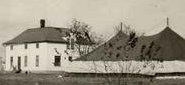 Perry, Oklahoma Conv, 1942