REPRESENTING THE LARGEST COLLECTION OF 2X2 HISTORICAL DOCUMENTS ON THE INTERNET
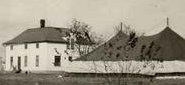 Perry, Oklahoma Conv, 1942
The Early Days
Also known as: The Work of God in Ireland in 1898
A Letter Written by Goodhand Pattison of Cloughjordan, Ireland
To his son, John Pattison
Click Here for pdf version in Booklet format (download is off site) Timeline of Early Days in the Two by Twos
Map of First Independent Missions
Revised Aug 14, 2023
INTRODUCTION
An account titled "The Early Days" was written by Goodhand Pattison to his son, John Pattison. This account concentrates mostly on the missions held within a 20 mile radius of the town of Nenagh in Northern County Tipperary, where Cloughjordan is located, the home of Goodhand Pattison. The time period covered was from the Winter of 1897 through the 1903 Portdadown Convention.
NOTE: This account is not about missions held by workers all over Ireland at the turn of the century. For instance, the account does not cover in depth the very successful missions held in Northern Ireland, which were worked mainly by Edward Cooney who was from Enniskillen, Co. Fermanagh, and entered the work in mid-1901, nor the missions held in Belfast and Dublin.
George Goodhand Pattison (one account indicates his first name was William rather than George) was born in 1858 in Dunmanway, Co. Cork, Ireland, and was "a West Cork man." In oct. 1885, he married Eleanor Kate Williams, born in 1852, from Knocknacree, Cloughjordan, Co. Tipperary, Ireland. Goodhand started a sawmill in Cloughjordan, Co. Tipperary, a town with a population of about 800. They had four children: William, Herbert (Bert), John and Eleanor Emily. Goodhand's wife, Eleanor Kate, was killed on October 14, 1920, reportedly in an accident when a trap (horse cart-buggy) turned over in Newtown.
Goodhand remarried a widow, Elizabeth (Seeds) Bond in December 1921, who died three years later in December 1924. Goodhand died on January 17, 1931. An account quoted below states that they are buried in the Modreeny Church Graveyard, not far from Cloughjordan. The Ormond Historical Society compiled a Gravestone Inscription List for the Church of Ireland, Parish of Modreeny for the old part of the cemetary. Page 16 lists: Grave 143: PATTISON. In memory of Goodhand Pattison, called Home 17th Jan 1931. Also his wife Eleanor Kate, 14th Oct 1920."
Herbert (Bert) Pattison was in the work in England until he died on September 19, 1965. He was responsible for compiling “Review of Hymns,” an accompaniment to the 1951 Edition of “Hymns Old and New.” He also wrote the tunes to some hymns.
Goodhand wrote the following letter account to his son, John, who went to South America in 1922, and remained there for over 50 years, preaching in Argentina and pioneering the work in Bolivia in 1957. He died in 1978, aged 85, and is buried in Cochabamba, Bolivia.
Their daughter Eleanor Emily married John Anderson of Mullingar, Co. Westmeath, and had three sons: Gordon, George, and Bertie Anderson, who were well-known Workers in Ireland in their day. Their father was a first cousin of sister workers Sue and Bess Pattison, making them related to all the Pattison workers, even though the Pattison workers don't seem to be related to each other.
John and Bert Pattison are shown on the 1921 Staffordshire, England Workers Convention photo, along with two sister workers named Sue and Bess Pattison who were sisters in another Pattison family. (John #36; Bert # 57; Sue #181; Bess #203) View: Staffordshire List of Names.
1901 and 1911 Irish Census have listings for Goodhand Pattison in Cloughjordan, Co. Tipperary.
Click Here for Link to Wikipedia for Town of Cloughjordan, Ireland
The following letter dated May 1935 was retyped from a copy of a copy obtained in England. The descriptive headings above the paragraphs were added when the letter was retyped. They were not in the original letter. This version gives the starting date of 1897 for the group.
Another version of this letter exists dated May 1925, which contains some very minor wording differences titled, "The Work of God in Ireland in 1898," and another titled "Beginnings." The 1925 version gives the starting date for the group as being 1898.
In January, 1968, Alfred Trotter sent his sister Edie "a copy of a letter written May, 1925. The writer was Goodhand Pattison, a West Cook man, who opened a shop in Cloughjordan, a Co. Tipperary town with a population of about 800. He and his wife were devout and they had three sons and a daughter. Two sons gave their lives to the preaching of the gospel, the elder of whom, Bert, died in 1963. The other, John, is now preaching in South America and it was to him the letter was written. The daughter became Mrs. John Anderson, and is now a widow living in Co. Westmeath who has sent three sons into the work of God. Through the kindness of one of them, George Anderson, now with his companion conducting a mission in this city, I came into possession of a copy of his grandfather’s letter. The old man died about 1931, his wife having predeceased him, but he left behind him the best and fullest account we have of what the people of God refer to as 'The Early Days'. I now give you a copy of this letter." A hand written copy followed.
There is ten years difference in the dates of these two letters: 1925 and 1935. Some see a basis for the earlier date as being the correct date in the author’s reference to "poor" Adam Hutchison and "poor" John Sullivan in the section titled “Conventions.” Both these men died unexpectedly. John died in 1924 at age 50, and Adam died in 1925 at age 51. In May, 1925 these events would have been relatively fresh in the author’s mind, possibly prompted his use of the adjective "poor."
There seems little doubt that the 1897 starting date is correct, as John Long is quoted as stating that the date was August, 1897, when he obtained the first opening for a mission for William Irvine in Nenagh, Ireland.
Further, at Willie Gill's funeral, June 5, 1951, Jack Jackson stated that by his calculations it was 53 years and 8 months since Willie, along with some others at Rathmolyon (Ireland), made their choice saying "Lord, what wilt thou have me to do." This would have been in October, 1897. Goodhand Pattison believed the Rathmolyon Mission immediately followed the first Nenagh Mission, which is consistent with an August 1897 start date.
These facts suggest that the 1935 account that follows which uses a start date of 1897 and contains minor wording differences may be a corrected or revised version. However, the reference to Adam and John supports an original writing date of 1925. It could very well be the 1935 date is simply a typographical error.
It is worth noting that there is no hint of Eddie Cooney's departure from the group which took place in 1928. The absence of this information lends supports to the letter’s true date being 1925. If the letter was really written in 1935, surely the author would have included mention of this highly significant event; i.e. the departure of one of the most significant, early Irish leaders of the group.
The 1925 account contains several paragraphs prior to the final paragraph which were not included in the 1935 account, and these have been included at the end of the following account. Also, the earlier 1925 version was used to make some obvious grammatical corrections to the 1935 account.
Patricia Roberts mentions John Pattison as being Ed Cooney's companion at the time his message reached the Royal Palace and eventually Princess Victoria. In Chapter 19, Page 131 of her book, The Life and Ministry of Edward Cooney 1867-1960. "In 1917, during the first world war, when Edward (Cooney) was holding open-air meetings with his companion, John Pattison, in Hyde Park, London, Daisy Bassett, a maid from the Royal Palace, heard him preach." Their message reached the Royal Palace." For further details about this event, see John Pattison's "Accounts of Princess Victoria's Contact with the Workers 1917-1920."
Following are some details taken from books
about
the local history of Cloughjordan:
From
the book: In and Out of School - in the Home of the MacDonaghs, by Roche Williams (1999) p 202:
"In 1909, William Goodhand Pattison set up a mill for
grinding
corn and sawing timber at Templemore Road, Cloughjordan, a road better
known
as the 'Windmill'…he installed an engine driven by gas extracted from
anthracite
coal to work a generator, which provided electric power for the
machinery
in the mill. He decided to use the electric current surplus to
his
needs to provide an electricity supply for the town. Poles and
wires
were erected along the streets for houses, shops, businesses and also
for
public street-lighting. The gas engine was replaced by a diesel
engine
in 1924. The town had electric lighting many years before other
larger
towns and villages and long before the E.S.B. was established in
1927. It was the third provincial town in Ireland after Carlow and Birr to
provide
its own electric power supply. When Mr. Pattison died about 1936,
the business was taken over by Martin Gleeson…"
From Cloughjordan Heritage, Volume 3, 1992:
"In the early 1900s George Goodhand Pattison came from Dunmanway, Co. Cork to Cloughjordan. It is said he had only £5 in his pocket when he arrived. He, his wife and three sons and one daughter, lived in a house on the Templemore Road. He started a saw mill in the village. During the first world war he supplied electricity to the people of Cloughjordan, long before it was anywhere else in the country. He was a good employer and gave many locals work in his saw mills. He was also interested in gardening and employed a Borrisokane man, George Davis, as his gardener. His wife was killed in a tragic accident at Newtown Lane. He later re-married but had no further children. Two of his sons became Baptist preachers and his only daughter married a man named Anderson, who had a saw mill in Mullingar. George Pattison was a Baptist by religion and was buried in Modreeny but his grave is unmarked."
[Note: it is not true he was a Baptist. See Account below]
From the book: Church of Sts Michael & John – Centenary
History – 1899-1999:
"In the year 1901, a total of 77 families consisting of 360 persons
lived
in Main Street, Cloughjordan. The number of persons was equally
divided
between male and female. Like most Irish small towns,
Cloughjordan's
population had declined steadily during the previous fifty years—by the
turn
of the century it was less than half of what it had been on the eve of
the
Great Famine. 69% of the inhabitants were Roman Catholics, the
remaining
31% were Protestants of various denominations. 64% of the
Protestants
were members of the Church of Ireland, Methodist formed the second
largest
group at 29%. Catholics owned 65% of the business premises
located
in the town, Protestants owned the remaining 35%. Early in this
century Goodhand Pattison opened a sawmill on the Templemore
Road where he gave employment to several locals. During the First
World War, Pattison supplied electricity to the people
of Cloughjordan, long before it was available elsewhere in the county."
BEGINNING OF LETTER
Information in [brackets] has been added for clarity
TABLE OF CONTENTS:
Beginnings
John Long - The Methodist's First Contact with William Irvine in August, 1897
Nenagh Revival - The First Mission
A Burning and Shining Light - Missions:
2nd Mission-Rathmolyon; 3rd Mission-Nenagh; 4th Mission-Cloughjordan
Orthodoxy - The Methodist Clergy's First Reaction
Cut Short - Cloughjordan Mission Ends After 10 Days
Christ in You - William Irvine's Doctrine
A Subtle Test
- William Irvine's Doctrine
Borrisokane Mission
- The Fifth Mission
Big Ingathering
- 6th: Finnoe Mission; 7th: Portumna Mission
Laura Falkiner, Tom Turner, Corcorans
All-Day Meetings
- Special Meeting - St. Stephen's Day - December 26, 1899
A Spoiled Worker -
Nenagh Methodist Evangelist Doesn't Quite Make It
Oak and Ivy
- Character of William Irvine and John Long
A Forward Apprentice
- Tom Turner Goes Out to Preach
A New Recruit
- Alex Given [Givan] Goes Out to Preach
Practice - William Irvine's Doctrine and Example; Ed Cooney Makes Contact
Wrestlers - Ed Cooney Enters the Work in 1901
Prayer Unions
- Fellowship Meetings
Difficulties
- William Irvine Breaks With the Faith Mission
Hardfighting
- William Irvine's Struggle for Independence
Respectable Christianity
- John Sullivan's Background
Workers
- The First Workers
Work Spreading - Early Workers and Missions
Wild Fire - Some Unsound Doctrine Among the New Workers
Conventions - 1903 Portadown Convention
Baptism - The Introduction of Baptism and the Writer's Baptism
NOTE: The 1925 version has the following paragraphs immediately before the final one above.
St. Stephen's Day-
1898?- friction developing between Wm. Irvine and the clergy
Mr. Park
- Wm. Irvine’s Opinion of Clergymen
The Sunday Suit
Threshing
- Wm. Irvine’s Call to Service - a break with traditions
Sources for Quotes
Cloughjordan [County Offaly, Ireland]
May, 1935 [or 1925?]
Dear John [Pattison],
In giving an outline of early days, as you recently suggested, I can only give approximate dates, as I have no actual records that I know of. I believe there are letters in the house which would fix dates pretty closely, but for my present purpose it is hardly necessary to go through them, and would entail perhaps more trouble than the information would be worth. I must also rely entirely on unaided memory in regard to the sequence of events, so I must be excused if I mix them up a bit, or do not set them down in proper consecutive order. I would also hold myself to be excused if in this narrative may be noticed the too frequent use of the personal pronouns "I" and "we," etc., as I do not undertake to travel very far outside my own personal knowledge and recollection. It would probably be in the winter of 1897 [footnote 1] that I got a letter from John Long [footnote 2], who was then employed as a Colporteur [footnote 3] in Limerick District in Methodism.
I believe I was treasurer both in John's time and also in W. Kennedy's, and the superintendent minister secretary. We paid our colporteurs 1 pound per week all told, and I think some, or all, profits on sales, and they to find their own keep and travel expenses, etc.; not too fat a living I would say; the main idea being to get the scriptures, either altogether or in portions, as well as other religious books etc., scattered among the people; to get talking with them in their homes, and otherwise try to help them spiritually.
To John's credit, be it said here, that already before he had thus become officially appointed he had actually made a little start on his own, without salary, only whatever he could make on book sales. It was our poor Mother who made his first book-bag, and in other little ways tried to encourage him along.
You may or may not know that up to this, for quite a good while - years I think - John had been man-servant to (Revd.) O'Sullivan, the Episcolpalian minister. His people lived in Burntwood, and John went home on evenings now and again. He seemed to have been a sober, serious religious boy as long as I have known him, and one evening while at home his Father and some neighbors were discussing barley and other kindred topics when John took hold of the Bible and said: "I think we'd better read some of this, rather than be so taken up with that barley."
The conversation ceased, John read a portion, and I suppose did a little expounding, and when finished said if they cared for such he would come the following week and do likewise. Of course, it got noised abroad before long, and when the evening came John had quite a crowd from Burntwood district, and a good number even from the town. Everyone was delighted so with John's performance that it became a weekly institution straight away; for how long I cannot remember but I believe he left Mr. O'Sullivan to devote his life entirely to the "Lord's Work" as he regarded it, taking with him, as already mentioned, his bag and books.
I don't think he was very long at the work before being taken up by the Methodist Society, and I believe it was while in that capacity and from Kilrush, County Clare, that he wrote me a letter already referred to. He said "There's a man here, an evangelist, who would cause a stir in Cloughjordan if you ask him along," or some such words. I showed the letter to Mr. Whittaker, our then Superintendent Minister, and he certainly showed considerable caution, or what perhaps he himself regarded as wisdom, by saying that sometimes men of this type, not having proper credentials etc., might do mischief in certain places by splitting up congregations, etc., and not having heard or known of this man's antecedents he would like to know more about him before asking him to Cloughjordan, not withstanding John Long's very high opinion; "But," he said, "we could ask him along to Nenagh [footnote 4], he cannot do us very much harm there, and if he can make any stir there, well and good; and we could meanwhile use our eyes and ears and deal with Cloughjordan accordingly afterwards." I may here remark that at that time, and for a long time previously, Nenagh, Mount Shannon, Whitegate, Scariff, Borrisokane and I think Killaloe were all included in Cloughjordan circuit in Methodism. Cloughjordan was the head, Borrisokane second in importance, the places beyond the Shannon very remote, hard to get to, and only a few with any heart for Methodism.
In Nenagh, we had a nice manse let to tenants, also a pretty good chapel in Silver Steet, but practically no cause with any heart or life, only a few half-and-halfers, hangers-on and droppers-in, etc. We usually kept an evangelist there, sometimes probationers for the ministry and sometimes not, was generally changed every year, and sometime oftener; lodged in Nenagh, got turns on in all the places, but mostly had to do the cross Shannon places (appointments). At the particular time referred to, we had a young fellow named Gilbert, of whom I may have more to say later on; but you can see from the above description that from Mr. Whittaker's standpoint we had not much to lose, and at least the possibility of gain by the incoming of a red-hot evangelist, even if a bit off orthodox lines.
Word was accordingly sent to William Irvine [footnote 5] (for that was the man) that Nenagh was available. I may say here that either from him or John Long, I think the latter, I learned afterwards that about the time John wrote me William Irvine was having severe spiritual conflict as to his position, prospects, work, etc.
He had not been very long in Ireland, I think, and had only been told off for work in Southern Ireland a very short time, having been North previously. I believe it was in Methodist Chapel he got holding meetings in Kilrush, which at the time was like Nenagh, more or less "a chapel without a cause." Things looked pretty black and discouraging all around when he met John, and of course they were greatly drawn to each other, as much by reason of contrast in type, as of similarity of position and work.
The tightness of the corner drove both of them to prayer, and probably to fasting, for William believed in such things then, and in a measure so did John. Anyhow he came along to Nenagh and had meetings in the Methodist Chapel and inside about a fortnight (I think) [Note: a fortnight is two weeks] he had succeeded in causing such a stir in religious, and for that matter irreligious, circles as had been entirely unknown there. Reports reached us at Cloughjordan about the strange man and his strange methods, etc. Nearly everything was highly unconventional--forms, rules and usages were either discarded or flung ruthlessly aside; instead of the "beaten path" of Singing, Prayer, Singing, Scripture reading, Singing, Sermon, taken from a well chosen text, with its well-studied 1stly, 2ndly, 3rdly, 4thly; and application, etc., then Hymn and Doxology.
One never knew from first to last what was going to come next with
him. Sometimes there was hardly any sermon; at other times nearly all sermon.
Sometime
he would give out a hymn, and from some thought therein start talking to end of
meeting and never sing a hymn at all. Sometimes they would sing half a hymn
standing,
remainder sitting. Sometimes nearly all racy anecdotes with plenty
smiles
and laughter, at other times soul-stirring exhortation, backed by sad
and
tragic experiences, etc.
All this added freshness and life to the words
of one whose intense earnestness and wholehearted zeal and devotion
none
of us had seen before, and no wonder that the Nenagh (certainly not at
that time overburdened with much more than the merest husk and shell in
religion) had some of its best type powerfully appealed to, and yielded
quite a crop of decisions for God, the following being some of them: Miss
Oakley, (who was then a teacher belonging to the Birr Oakleys and a sister
of Mrs. Geo. Loney and cousin to Geo. Coughlan and Mrs. Williams of the hotel) E. Bradshaw, Allen Harkness and sister, Jack
Carroll
[footnote 6] and sister May; who were
then living
with their Uncle Pat, an exclusive Plym [Plymouth
Brethren]; Dick Norman and a young man named Fred
Hughes.
This last named went with William Irvine for a little while
shortly
afterwards and played, sang, etc., also a young man named Wallace,
and
I think his sister, both from Templederry side, but then in
situations
in Nenagh.
Probably there were others of whom I cannot now remember,
and
I have on purpose left out Mr. Robinson, who perhaps in more ways than
one should almost come first; but I rather think that it was in
William's
second visit to Nenagh, some weeks after the first, that Mr.
Robinson
took his stand and seemed from the start to hold his first simplicity
and
freshness, right to the close of his life. Old Mr. Douglas
(Presbyterian
clergyman), his Colporteur Mr. Barber, and our evangelist Mr. Gilbert,
were also very favorably impressed, in fact one may say "set on fire"
to
all appearance, but as we know, it is one thing to make a brave and
flashy
start, but another to continue and finish well.
I believe, but am not quite sure, that from Nenagh's first visit William [Irvine] went to Rathmolyon [footnote 7], through the Carroll's introduction, where as you know he had another very successful mission, getting hold of nearly all the best type of character in the place, including the Gills [footnote 8], Carrolls [footnote 9], Hastings [footnote 10], Winters and others, and from there back to Nenagh a second time, after which he booked for here. [Cloughjordan]
On account of what we had been hearing from Nenagh, some of us at all events were greatly interested indeed in the man and his work, who could effect such a transformation in so short a time, for, mind you, we hadn't been entirely oblivious to Nenagh's needs and claims; having had occasional missions by our "General Missionary" there, as well as the regular Sunday and week night services; but never seemed to have got much hold, and could not even as a business proposition get a fair return therefrom. At our leader's meeting some would urge closing down and selling the property, while others would plead for longer and further "dressing, digging and dunging," thinking scruple to see a placed closed where we had any foothold, and where it was said by some older people there once had been a good cause.
The night came for Mr. Irvine's appearance - Sunday night I think -
with general interest and expectation pretty high, a fairly crowded
house,
but no "Mr. Irvine" for probably 20 or 30 minutes beyond appointed
time.
He was being driven over by poor Mr. Douglas who seemed to make it a
point
of conscience to be always late.
Some attempt was made to improve or
kill
time by getting on with preliminaries, and for myself I was
disappointed
and getting rather impatient, when the long looked for arrived; and
while
I forget many things about that night, even as to who was there, or who
were not belonging to our crowd, I shall never forget my first
impressions
as I saw the broad shouldered, square-built, well set-up man, with
curled
hair and beaming face trotting up the side aisle, left hand from the
door,
and taking his stand on the platform. He made little or no attempt at
preaching
that night, but sang us a solo: "The world holds out it joys, its wee
bit
tinsel toys," told us some funny yarns, grinned a good bit himself, and
set us grinning, and sent us home; some I believe rather disappointed
with
the performance and others well pleased. He was billeted [assigned
lodging] at Walton's and
I think Alice W. did some or most of the playing. As the nights passed,
he kept letting himself out a little more and more, Mr. Whittaker
always
occupying a seat on the platform and taking stock; and as well as I can
remember, but not entirely certain, I think it was Friday evening of
the
first week that Mr. Whittaker came into our shop shortly before meeting
time and made some remark to me, to which I replied I was a bit
surprised
at that, because that personally I had felt and experienced real
blessing
at the meetings. He said he could not say so, and I made the remark
like
this - it may be the pride of his heart was hindering, he said he
didn't
think so, and no more was said.
The meeting was over when Mr. Whittaker asked any leaders present to
remain for a while, and on coming up to the front - 5 or 6 of us - Mr.
Whittaker made a little speech, in which he said he was sorry for such
a necessity arising, but that a "brother" had charged him with Pride,
etc.
I really had no idea of what was coming when he asked us to remain,
neither
had I any thought of offense when I made the remark about the pride of
his heart etc., and now when brought to task, of course I had to defend
myself, and told them I did not mean the words in any offensive sense,
only in that of the natural pride of all our hearts, etc.
However, now
that the matter was up for discussion, and doubtless feeling a crisis
coming
and that he had as it were, thrown out a challenge, he wished to push
things
to an issue by talking of Mr. Irvine's doctrine, etc., not being "quite
orthodox." I think, moreover, that he had in measure previously felt
the
general pulse and believed he had strength and weight on his side. Not
much was said by anyone, only what he and I said, which didn't take
very
long to say either.
His remarks were both complimentary "Moryah" and disparaging to Mr. Irvine, and I felt my spirit a bit stirred and said I thought we would all be glad if we could secure the services of the great C. H. Spurgeon [footnote 11] in our chapel, or those of Mr. Moody, for special services in our chapel, although we knew full well that neither of these men was quite at one with us Methodists in every point of doctrine. And we were going to reject the gratuitous services of this man, through whom the Lord was working mightily, and who seemed destined to do a work which none of us could do.
Nothing further was done that night, or for some nights afterwards, but somewhere in the following week Mr. Irvine preached from Isaiah 59, which treated it in a manner which appealed powerfully to me, every point so sharp and searching and so much needed for us who had been professing so long. When the congregation had gone and none of us left but W. Guest, Mr. Whittaker and myself. Mr. Whittaker, on stepping down from the platform exclaimed, "Well! did you ever in all your life hear such a rigmarole, and such garbling and misquoting." I said "You do not always quote correctly," and mentioned two passages which he was very fond of quoting, but never correctly. I expect he was very angry, although he did not show it too badly; but merely said: "I am going to take it on myself to have the mission closed" (I think) after one other meeting; and I said: "Of course, you are at liberty to do so if you think well;" so the mission closed accordingly, after about 10 days in all, during which time several persons had professed decision to serve the Lord, and some of us who had been old professors got so hot that I think we were looked on as "troublers of Israel."
You may have heard most of the contents of this last paragraph already, but it is so intimately connected with so much more to follow that I thought it better to give it a place in my narrative. In addition to his bold and unusual methods already referred to, there were other outstanding features in William Irvine's preaching as compared with missions I had often attended before; particularly noticeable were his constant and oft repeated references to his own experiences, or as we might call it, "the work of his testimony," and right glad I am that this feature still gets the prominence it should have among our preachers of today. "Preaching" had developed into a 'fine art' in Methodism, but lacked the living touch of real personal experience, and he would persistently keep telling the people in every address that so many years ago (naming the number very definitely) he attended meetings and while doing so made up his mind to serve the Lord, that Christ came into his life, and was now living in his body, in a minor measure, as he had lived in the body of Jesus, and so realistic did he make this truth of 'Christ in You' and 'Christ in Me' that it seemed like a New Revelation, although we had been familiar enough with the words "Christ in you the hope of glory" and also "For me to live is Christ" and others like them.
Another expression he was fond of using in the first days was: "Jesus was a common man." And although at first to our Pharisaic ears, it sounded very irreverent and repulsive (so much so that some would-be-grandees, who in other respects were a bit interested in the work, took great offense and from this and other causes walked no more with us), yet none of us could contradict or deny the simple fact; and admitting and thinking it over, and making it real had a very healthy and corrective affect on me at any rate, (all events) changing completely my conception of who and what Jesus was and is, from the fictitious "Gentleman Jesus" to the Jesus of the New Testament, whom the "common people heard him gladly" and who had always been, both at home and abroad, from cradle to grave, the poorest and lowliest.
As I look back now I consider this seemingly insignificant thing, the use of this rather peculiar expression, one of the most important, because in it was a test of character which people hardly suspected. To admit it in its fullness meant the leveling of social distinctions, which most people were, and are, unwilling for, and so have to conjure up or manufacture a Jesus and heaven of their own imagination, and not those of the Bible; and so this and the unsalaried preacher go pretty well hand in hand, to be a test for all time as to pride and humility, or as to being a person like Jesus was: recognizing it where we see it in another; and being content with and upholding the doing of things as He did them.
Now to return. By the time the mission closed here, matters religious were being discussed freely all around, and probably a certain amount of 'taking sides' already manifesting itself, which afterwards became much more pronounced. Mr. Nesbitt, who was then junior Methodist Minister in church at Borrisokane, seemed more favorably impressed by William Irvine's line of action than Mr. Whittaker, and went the length of inviting him to have meetings in his chapel, even though shut out (practically) here by his superintendent, thereby I should think incurring risk of censure at least, for certainly things were getting hot just then, and timid people were inclined to walk softly, and say as little as possible consistently with principle.
I don't think Mr. Irvine went straight from here to Borrisokane but instead paid a visit (2nd time) to Rathmolyon, probably to see how they went on there, and giving them some help and encouragement. Then on his way back to Borrisokane took part here in a Sunday morning meeting at Mr. Whittaker's request, for relations had not yet become nearly so strained as afterwards, and even Mr. Whittaker knew well enough that a considerable amount of sympathy among his own crowd was partly with Mr. Irvine, even though most of them lacked the discernment to see clearly and the courage to say exactly what they felt, so that most of the odium attached thereto, as well as trying to fight my own little battle, fell on this child's unfortunate head. Mr. Irvine was very nice, considerate and conciliatory that morning, and most present, including Mr. Whittaker, were well pleased with his tone and encouraging words.
I cannot now recall but am inclined to think he would have started that evening in Borrisokane Methodist Chapel. Our Jennet [horse] and trap went most nights, occasionally taking myself or Mother [footnote 12], although I don't remember her going much, but mostly some girls, such as Annie Holland, the Joe William's girls, and our own Maggie Coughlan, all or most of whom professed decision here.
It was at this period an attempt was made to recapture some of those young people of Cloughjordan by getting up a dance [footnote 13]; and one night in Borrisokane after the meeting I mentioned it to Mr. Irvine as, of course, it was easy to see danger ahead, and his reply was "Pray it into shivers, my brother, pray it into shivers." So the few of us who were anxious for victory in that direction held a prayer meeting in our back parlor, or upper-room as it was sometimes called, on the same night as that of the dance - Tuesday - which prayer meeting in some form or another has been held on Tuesday evenings ever since.
From Borrisokane Methodist Chapel, Mr. Irvine next moved out to Finnoe, and had meetings for some weeks in Mr. Burgess' home. I never heard him say so, but think that one strong reason in his mind for making this move was that a good many of his hearers in Borrisokane came from Finnoe side, some of whom had already professed. Anyhow, between the two places during whatever number of weeks he may have spent, most on the Finnoe side, some of whom had already professed, and quite a number who in your time had gone in the work from that neighborhood, including Laura Falkiner [footnote 15], A. Corcoran [footnote 16], and 4 or 5 of the other Corcorans [footnote 17], and as many Dennisons would mostly perhaps date their conversions to those two missions, or one mission continued, whichever way you like to call it. As well as I can place events now, he would probably have gone to Templederry after Finnoe, except that sometime about then, I believe, he was called home to Scotland, owing to the illness or death of his mother [footnote 18], but in some of these particulars I am by no means clear.
Neither do I remember how or by whom the Lorrha or Portumna Missions were held, at which probably John and Tom Clarke, Richard Dagg, Tot Dane, the Hodgins family [footnote 19] and others were brought in. I think there must have been meetings at Bailey's home below Portumna where Tom Turner [footnote 20] heard the message and accepted it.
I remember very distinctly seeing and hearing Tom [Turner] at an all-day meeting in Nenagh Methodist Chapel on a St. Stephen's Day [footnote 21], [St. Stephen's Day is December 26] when we had in our gathering no less a personage than the great Rev. George Grubb [footnote 22], who treated us to a very beautiful address on "An Open Heaven" bearing in mind Stephen's words, I suppose. We had also amongst us that day two or three other clergymen including (Rev.) Crookshank, Roscrea Methodist minister, and I dare say Mr. Nesbitt and probably one or two others, Mr. Douglas, for instance; Mr. and Mrs. Bailey (Tom Turner's host and hostess) were also there that day and a whole crowd from Cloughjordan, Borrisokane and Finnoe, etc., as well as those belonging to Nenagh; and I believe the two Faith Mission workers were also present and spoke, viz. Miss Pendreigh [footnote 23], who is now Mrs. Tom Betty, and a Miss McLean, about something more later on. Yes, I was nearly forgetting, of course, John Long was present and also our evangelist Mr. Gilbert, so you see the preaching side of things was well represented, although we did not call it by the high sounding name "Convention."
Many of the happenings for several months belonging to that time have got into a sort of jumble in my memory and would be hopelessly mixed if it were not that here and there are certain landmarks by the way which help to locate positions, and adjust my bearings a little. Among other things which stand out pretty clearly is the fact that both John Long and Mr. Gilbert incurred some of Mr. Whittaker's displeasure because of allowing themselves to attend so frequently and persistently upon the ministrations of the man [Wm. Irvine] who at this time had become the great center of attraction, the former [John Long] keeping in touch with him nearly all the time, while still doing a little at his book scattering, etc., and the latter [Mr. Gilbert] as often as he dared, while still seeking to fill his own appointments to his Superintendent's satisfaction, which I do not think he quite accomplished, for the good reason (if for no other) that he did not wish him to do so.
I cannot help thinking now that Mr. Gilbert, fired by his own new associations, made some good moves off his own bat, in and around his sphere of operations, including perhaps the Portumna and Cross-Shannon territory; and could have and would have made a useful man had he continued as he began, but on leaving Nenagh soon afterwards he got mixed up with the city missions and other activities in Belfast and lost all the edge acquired by his Tipperary experiences. Some years after this (I forget now how many) he paid a visit to Cloughjordan in full-fledged clerical garb, stock collar and all, before emigrating to Canada, in response to someone out there seeking the service of a young British clergyman. He didn't come to our house first, but having called at Walton's where for some reason they could not conveniently put him up, he then came and knocked at our door at a pretty late hour, and I need hardly say, although we put him up, we were sorry for him.
Meanwhile, John [Long] held on in increasingly close association with William Irvine, as of course, in his particular calling one locality was nearly the same as another and in many ways they were useful to each other, and undoubtedly thought a lot about each other. I believe that in the Templederry Mission already referred to, and probably some others of which I have scanty knowledge, John was William Irvine's sole companion [footnote 24], in fact, I would go the length of saying (again to John's credit) that at the time he was more forward than William in the boldness and simplicity of his faith in God to provide and sustain on line of Matthew 10, while at the same time it was equally true that John always had and still has the weakness of the "sponge-nature" for absorption, and that William's stronger and more masculine character often provided the wherewithal for John, with John never suspecting that anybody beside the Lord and himself had much to do with it, for mind you John was always, and still is, powerful in self-esteem, and regarded all that he got, whether coming through another's endeavors or not, as his own lawful and well-deserved right; but surely I have been often sorry for the separation later on, and other conditions still later on, which so far as usefulness is concerned, have left both men high and dry and stranded [footnote 25]. Even in that little Templederry Mission, which one would hardly think worth coupling with William Irvine's name, there was one took his stand, who through thick and thin has kept faithful, and if nothing had been done beside in the Portumna district, surely the winning of a soul like Tom M. Turner was no mean trophy, and well repaid whatever effort was put into it. But as you worked with Tom and probably know him better far than I do [footnote 26], I need not enlarge on his qualities.
One of the landmarks already referred to was the day he (Tom Turner) and John Long came to our house with a book-bag each. I was in the back parlor doing something and Mother in the kitchen when they came into the hall; Tom was singing "Oh the days are full of gladness that I spend in His employ, I can banish care and sadness in a song of Heavenly joy. He redeemed me, etc."
Tom had only been a very short time saved [footnote 27] when he decided to give up teaching, or had to, I think it was voluntarily (I don't know which), and travelling thus with a book-bag, in company with, or apprentice to, John Long was among his first attempts at service in the harvest field. I believe he got encouragement along this line either from Mr. Nesbitt, or his successor in Borrisokane, Mr. Merrick, both of whom seemed to regard the new all round with a favor for a while, and of course would naturally patronize and direct largely with the leading strings which they had been accustomed to, and tending on that direction to which they themselves had gone.
Already, however, Tom had begun to see that this was not the best or most profitable (fruitful) way of spending his time in the service of God, and was then apparently seeking a "way out" more in accordance with the mind of God, or teaching of the Scriptures, when shortly afterwards he, with Tom McNaught and I think Dick Norman [footnote 28], conducted a mission in a place called Kyle, on the Borrisin-Ossory side of Roscrea; and being a good deal encouraged by the results they made a further attempt on their return to Cloughjordan by starting a mission at Mr. Jonathan Armitage's, Behamore, where night after night, for some weeks, the room would be full, and on Sunday nights packed to overflowing, and apparently a very gracious influence, notwithstanding that even then there was a measure of suspicion and looking askance on the part of many, which afterwards developed into sheer opposition.
It was one night fairly early in this mission [footnote 29] that Alex Given [Givan] [footnote 30] came along from Roscrea with Robert Acres and others. He had been employed at Fawcetts, and probably would have taken some minor part in Kyle Mission; but now about to devote his life to the work, did not return to Roscrea, but remained in our house with Tom and Dick. His first (debut) at preaching in Behamore nearly electrified most of the women folk there, for that night anyhow; if he had any semblance of wings he would have been (I think) taken for an angel. He certainly was a very nice fellow in the house and nothing could be more beautifully impressive than his deference, attachment and devotion to Tom, even though at times [sic] I would say considerably older.
I cannot at this moment recall where Dick Norman went after this mission at Behamore was finished, but Tom [Turner] and Alex [Givan] went to my old home at Inchinadreen, Dunmanway, very soon after, where in a sense they may be called the pioneer apostles to West Cork, opening up and having meetings all around Dunmanway, Lisbealid, Drinagh, Kilmeen, etc., and doing a work there, the results of which are so well known I need scarcely more than refer to it [footnote 31]. I may also say, before passing from the part which Tom Turner played in the movement in the early days, that around those parts in various centers, meetings were quite frequently held, with a good deal of newly-found life and freshness and liberty on the part of the speakers, and acceptance on the part of the hearers.
It was at one of these meetings at James Clark's home that Henry Culbert heard the message through Tom Turner which caused him to say "Lord whatever it means or costs, I'm going to be a Christian," and it would probably be the following Sunday night or next after, that he gave his testimony for the first time, at a big meeting in the Behamore Mission. I remember it very well; Henry was out in the hallway because of the crowd, and spoke so that we inside could hear and recognise the voice, but could not see the speaker. Many testimonies were then given which have not amounted to much as the days have gone by, but it is good to think that even with so much chaff and dross a little of the grain and gold is still to be seen.
Now for a while I must return to, and endeavor to follow up, some of William Irvine's movements, and in this connection (maybe about for the first time) introduce the "Faith Mission," as I have purposely held it over until now. The name and subject were both quite new to me until William Irvine's arrival in these parts, and while he made no secret of the fact either publicly or privately, that in preaching the Gospel he was connected with and owed allegiance to that association, and would continue to do so - so he used to say - until he found better; yet he never for a moment sought to preach up the Faith Mission so as to obscure his hearers' vision, or "hide for a moment his Lord from their eyes." First and last, it was "Jesus Only." He attributed his own conversion to the instrumentality of (Rev.) John McNeill, who about and before that time had been a leading light (evangelistic) belonging to but not confined to the Presbyterian body in Scotland. Some time after his conversion, William Irvine spent a term of some years I think, in what is known as the "Bible Institute," meanwhile getting to know some of the aims and working of the Faith Mission, he determined to throw in his lot with them, as being the best he could see, although offered more than once to have his name put forward as candidate for stated ministry.
The headquarters of The Faith Mission was at Rothesay in Scotland, and its chief organizer and promoter was John G. Govan assisted by either one or two brothers, I think two, and that one of them died in the early days of the work here. Workers, male and female, were known as pilgrims, and to the number of about 60 were scattered mostly in Scotland and Ireland, usually in pairs, but not always in the case of brothers.
The work in Ireland at that time was, in a minor sense, directed by a senior pilgrim named Potter, but I understand that all reports, monies, etc. were dealt with at Headquarters, and responsibility in regard to choosing and sending out of pilgrims, their up-keep, etc. was also borne by their chief, Mr. Govan. They preached a full, free and present salvation, by grace through faith in our Lord Jesus Christ, and claimed to preach and enjoy "victory" through the realization of an indwelling Christ, or in other words, "I now enjoy victory, yet not I but Christ who dwelleth within me." Both in their life and teaching they sought to cultivate a praiseful spirit, and used very freely and often such as "Praise the Lord," "Hallelujah." They publish a nice little monthly called "Bright Words," with editorials, leading articles, reports, state of finances, etc., and in a general way reflected pretty accurately the sayings and doings of the organization as a whole.
While conducting missions they did not take up collections, but at or near the close of a mission, if not before, they intimated or allowed it to be understood that they would accept a thank-offering from those who felt like giving one, for blessing received. These offerings were sent to Headquarters with probably a statement of account for expenses incurred over and above gratuitous housing and boarding, or other hospitality enjoyed at the hands of interested and sympathetic people. In their preaching they did not usually attack clergy or churches, but when the mission was over and any professed to have got saved, or otherwise helped by their ministrations, they sought to establish "Prayer Unions," with cards of membership pledging the members to attendance of united prayer meetings at various centers, etc., as found convenient, thus securing in a measure the lively interest and sympathy of members when pilgrims had gone elsewhere.
I do not know if the above description (which I consider both fair and accurate) does not exhaust my present recollection and knowledge of the Faith Mission organization, saving that they held a yearly convention at Rothesay, and I think another in Ireland, Portrush - if I mistake not - at those conventions they usually had some leading lights from other organizations, such perhaps as Mr. Grubb, already referred to, (Rev.) Charles Inwood from Methodism, and some other of the same type, to speak from the platform on the subject of "Holiness." I may give that of another. I think it was the (Rev.) Merick at a district meeting in Birr, when the subject was being discussed, just about time or perhaps before Mr. Irvine's arrival, and some there not knowing much of who or what they were, this man said "They are a kind of Holiness Presbyterians," meaning as I take it, that the Presbyterians, either lay or clerical, were not distinguished for the prominence which they give to this subject; at least not at all to the same extent as the Methodists, for with them at time in importance (next) to the subjects of "Universal depravity" which constituted the need for being born again, would come that of Holiness under various names and aspects, such as Entire Sanctification, 1st Thess. 5:23, Ezek. 36:35,36; Christian perfection, Heb. 6:1; The higher life, Isa. 35:8, 55:1; The Second Blessing, Acts 19:1-6; Mark 8:22; Power and Victory over inbred sin, etc., - some Methodist teaching.
All this, and much more, did Methodism teach, together with possibility of its attainment, as a definite present experience, through the power of the Holy Spirit, the person having first, of course, obtained a sense of pardon for the past, peace, and acceptance with God, through faith in our Lord Jesus Christ, as Romans 8:1, and then pressing towards attainment and enjoyment of all that has been purchased for us by the shedding of His precious Blood. I cannot say to what extent the subject Holiness is taught in Methodist pulpits of today, but in my time such teaching was expected by the most thoughtful of its leaders and of its clergy.
Another and very kindred subject, which in theory at least was accepted and taught by the very best in Methodism, was that of "Power for Service," or the "Spirit-filled Life," such as was manifested in Pentecostal and later days of "Acts of Apostles," plenty of talking and writing about it, and praying for it, etc., and even some here and there laying claim to having received it, and doubtless many sincere and earnest souls often on the stretch to obtain it; and yet somehow always having to go without it, at times incongruous to me, because I never met anyone whose experience and manner of life, etc., actually quite satisfied one as being just the thing.
I had met some whose face and general demeanor seemed to betoken "Holiness" of life, character, at least of its negative side, and the imitation or copying of whom could easily be snare to many, for such demeanor or mannerisms may be nothing more than the result of self-culture promoted by a Pharisaic spirit and guided by a complete misconception of the character of Jesus. The one thing, as it seems to me now, which always did and always will block the way, viz. the conditions not being fulfilled, was the one thing very noticeable and William Irvine when he first came amongst us; he seemed so completely abandoned to His Master and work that he would stick at nothing; while we ministers and people alike had failed to see that Holiness consisted of OBEYING all the commandments of God as seen in the life and character of Jesus, and that the Holy Spirit is given to all those who obey Him, and to those only.
William Irvine came along and translated into action the things we had been spending our time in thinking and talking, reading and writing, praying and preaching about; but not willing for the Pentecostal manifestations. Often sung, "My all is on the altar, I'm waiting for the fire," and if the fire had singed our garments, to say nothing of being consumed thereby, smelled it, in the shape of loss of somebody's good positions, social caste, or somebody’s good opinion, etc.
But here comes a man, a complete stranger, without pedigree, prestige or credentials worth the meaning, only on fire with loyalty and love for God and souls; unfettered and unhindered by traditions and opinions of men, and with an untiring energy and consuming zeal. He dared to be, do or suffer in obeying God (as he then understood it) whatever it meant or cost "in labors more abundant," "through evil report and good report" - he just went on, in face of much within and without to thwart and hinder; becoming in a comparatively short time the wonder and admiration of many, and the object of envy and opposition of many others. Even some who never followed in his footsteps much farther than as ordinary hearers in his earlier mission were wont to admit they had never seen anyone who came nearer to what Jesus must have been like - while others of the more distinctly religious type, not relishing his plainness of speech in exposing what most would have to admit was only too true, were wont to say of him "his words are galling."
I believe it was while conducting the Borrisokane Mission that William Irvine first met Ed Cooney [footnote 33], who prior to that event had done a pretty considerable amount of preaching up and down through Ireland, as he went about as a commercial traveller for his father's tailoring business. In private conversations with his customers also, Ed Cooney made a habit of speaking about eternal things, and in his own way was very successful; but like others of us who had engaged in spiritual activity of any kind, he recognised that here was a man of no ordinary stamp, and sought for and enjoyed his fellowship as often as circumstances would permit, and readily and cheerfully yielded him the place of honour and power in his esteem to which he considered him fully entitled, although Ed Cooney himself was no ordinary or every day sample of lay part-time evangelist.
And now, while I have this name before me, I may well anticipate a little, by relating what doubtless you have already heard, how that one night while out on one of his commercial rounds and staying at William's Hotel, he and William Irvine arranged to meet at our house, and there after we had all gone to bed, the two men discussed so fully the subjects of preachers and preaching of Matt. 10, William pointing out the need, etc. in the face of the greatness of the harvest, and fewness of laborers, and Ed Cooney seeking to escape the issue in one way or another, even to the extent of offering all he could make out of his job as a traveller - some 300 pounds per year or so - to be used by William as he thought fit, for evangelistic purposes, but all to no avail. William would meet such an offer with "it isn't your money the Lord wants but yourself." So in about 2 o'clock in the morning he had won, and Eddie had decided to give up his bags and job and go forth, with the result of becoming what you now know him: I cannot very closely place the date of this very important event, but am inclined to think it was probably a year or more after William's first coming among us.[footnote 34]
I have already referred to Misses Pendreigh and McLean as appearing at the Big Meeting in Nenagh on St. Stephen's Day, where also if I mistake not, he had come from Rathmolyon for the first time. Shortly after this, the sister pilgrims commenced to talk about and introduce the Prayer Unions aforementioned, I believe arranged for Tom McNaught to have sort of oversight of same around here; prayer meetings were held in several houses including Faulkiners (Laura Falkiner's people), McNaughts, Hilton, Burntwood, Stoney Road Clarkes and probably Mooneys, sometimes with and sometimes without the pilgrims, and although handled with caution and tact, a move of this kind was not likely to escape unchallenged especially by the Methodist crowd, including Mr. Nesbitt, who up to that point had seemed to welcome, to appraise William Irvine's success, and no doubt intended as far as possible to "Methodise" it, but now began to get alarmed, and made no secret of his disapproval of [the] Prayer Union movement.
Meanwhile, the sisters got busy with missions and openings in Moneygall, Shinrone and other places near hand, while Mr. Irvine pushed further afield, doing Birr, Roscrea, Maryborough, Galway etc., and at the same time keeping in touch with, and paying occasional visits to his many friends around here. I need hardly say that under such conditions there was a big stir all over, the work in those early days being patronized by such people as the Stoneys of Portland [footnote 35], and the Franks' family of Ballystanley, Mr. George Friend, and Mr. Minchin, and others of the same type, quite friendly; and of course, plenty of confusion of thought, speculation and questioning as to the meaning of it all, or what was going to be the outcome. I have mentioned above Mr. Irvine's visits to Galway, Maryborough, etc.; Living in the former [Galway] was a Mrs. Burton and the latter [Maryborough] a Mrs. Buckley, both of whom in those days seemed very attached friends of his, but for some reason or reasons dropped out later on. It was at Mrs. Buckley's that Sarah Rogers was employed and took her stand later to go forth and become so effective a preacher.
I may now mention as belonging to the same time (roughly speaking) that William Irvine and his chief [Mr. J. G. Govan of Faith Mission] were beginning not to see eye to eye in certain things, which no doubt made matters very unpleasant for both and which ended in complete separation. What exactly were the things with which William found fault and probably testified against, I do not consider myself an authority, but believe it was something he had seen more particularly at convention times, in Rothesay, such as giving place to outsiders, who while very able and attractive speakers were not the principle doers, and the making of such very prominent to the exclusion of others who had faced the music and bore the brunt of the battle. This would naturally meet with disapproval. More especially would this be the case when the persons concerned were the clergymen class which even then had been receiving unfavorable attention at his hands.
This, together with a certain favoritism or partiality which he probably noticed in regards to Mr. Govan's arrangement for sister workers (pilgrims) [footnote 36], making distinctions, etc., which William probably thought insidious and unnecessary and would consequently say some things about having seen or thought he saw failure along these lines and protesting, he would naturally grow lax in his dealing with and fidelity to Mr. Govan's authority and arrangements, becoming irregular in his reports, thereby making it difficult for Mr. Govan to carry on; and so little by little relations were becoming more strained until they reached breaking point, and Mr. Irvine got the distinction of unfavorable notice in "Bright Words" [footnote 37], and some correspondence took place also about him between Mr. Govan and 2 or 3 persons, or probably more, on this side.
Indeed, I hardly (need) say that with the onus and responsibility for conducting missions amid hostile and semi-hostile surroundings, finding apathy and criticism where one would naturally expect help and sympathy, almost completely out of touch with his chief and still only groping his way towards a fuller and clearer acceptance and practice of Matthew 10, suspected, misunderstood, and evil spoken of by many, with a nature highly responsive to the claims of the world and flesh, and harassed, as well as seduced by Satan, he was like a General trying to put up a fight against 4 or 5 battle fronts all at the same time, and the wonder to some of us is how he managed to survive, only that in those days with strain and stress of the battle thick upon him, I believe he could truthfully say or sing those words "My heart has one desire today to do my Heavenly Father's will and never from the Shepherd stray, but in His hands be restful still. His will I purpose now to do, and yield my life to his control; His hand will guide and keep me true, till I have safely reached the goal."
I think it was within a few months of his first coming amongst us that he met John Sullivan [footnote38] for the first time at our house, and had a fairly long conversation with him, which doubtless counted for much in the after life of John, who also had been professing conversion for some time, through the agency of a Mr. Loney of the Irish Evangelistic Society. This Society, under the direction of a Mr. Barton, Christian Endeavor, Dundalk, had several lay preachers conducting missions, in rather large and well got up wooden halls here and there through Ireland, occasionally occupying school rooms, tents, etc.
They were all salaried and Mr. Loney, who was one of these, held a mission in Moneygall where John was then teaching, and of course, counted him for one of his spiritual children; and to be entirely just, I would say that in a very nice respectable and unobjectionable way, John had started certain lines of activity such as talking to the more advanced and thoughtful of his school children and others about spiritual things, before he ever met William Irvine, and at the time thought and believed his efforts were being crowned with success (in a measure), some of them quite readily accepting all he had to tell them; but though the pity is that when some years later John came amongst them once again, this time with a wooden hall and without either a teacher's or preacher's salary, his old time converts left him alone, thus proving themselves of "the loaves and fishes" type. I fear these oft repeated digressions will make it all a little more difficult for you to follow this production, but for the sake of brevity you must excuse them.
It was also pretty early in the history of William Irvine's labors in Roscrea (which) resulted in the winning for the Lord and His Work two such veterans as Alex Given [Givan] (already mentioned) and Ben Boles. Quite a number of others in those early days in and around Roscrea were most favorably impressed, but for reasons best known to themselves turned their backs on it afterwards. I shall not forget one or two letters Robert Acres wrote me shortly after or about that time; neither am I likely to forget one night when after the meeting in the Methodist Chapel there, a number of people came down to Mr. Burke's house (then in the Mall) along with Mr. Irvine, and there for more than an hour continued to discuss his line of teaching, some of these people being the brightest and most intellectual in the town, especially in reference to things spiritual.
Perhaps just here will be as suitable as anywhere to introduce a portion of subject which I have not yet touched, but is essential to the proper understanding of my narrative. With such a worker as Mr. Irvine, and such a work, it follows as a matter, of course, that a number of young people under his influence would have their imagination fired and their ambition rounded to follow his example, and in a measure at least to share his success. So that from the town of Nenagh alone as many as five - possibly more - were led very soon after to offer themselves for the work, viz.
Fred Hughes* and Dick Norman* (already mentioned as workers, but not as Faith Mission Pilgrims). Allen Harkness, his sister, and Miss Oakley--all three did actually become pilgrims. I cannot say now for certain for certain whether first these two offered for Faith Mission and were declined, but that did happen in the case of Annie Holland* from this town. Some correspondence took place with reference to her. She, in company with our Maggie Coughlan* paid one visit to Rothesay Convention, and were very full when they came home of all they had seen and heard, having seen, of course, only the "glory" side of the picture, whereas I dare say poor William had seen things that didn't gladden his heart. [* These names do not appear on the July 1905 Workers' List]
Just at that time a Mr. and Mrs. Todd, who had been Faith Mission pilgrims, had started a similar line of things to Mr. Govan's with their headquarters in Enniscorthy, having (I presume) Ireland before them as their first and chiefest field of activity. I cannot say now what it was that really led up to this move on their part, whether it was a sort of revolt from John Govan's authority and setting up a "rival show" or not, as Mr. Govan had just then a fairly good hold on Ireland, but anyhow it was really an imitation, and I fear not an improvement at that, because to start off with, they did not seem to have any of their own converts to go forth as workers, and so getting in touch with Mr. Irvine, who was having quite a number willing and anxious to go, they took on the direction and oversight of such, and in a short time had a pretty nice number in the field, including Tom Turner, John Hardie [footnote 39], Emma Gill, Annie Holland* and Sarah Sullivan*, and I dare say several others, probably Alex Given [Givan], etc., as I cannot now place whether Behamore Mission in which he had already been introduced, came before or after their connection with Mr. Todd; I rather think it was before. [*These names do not appear on the July 1905 Workers' List]
Anyhow, the connection didn't last very long as I believe the workers jointly and individually felt Mr. Todd was not the man to superintend and direct such an important movement, and probably pressed Mr. Irvine himself into acceptance of responsibility. The fact that up to that point he had not sought out (place) and any authority which one would think rightly belonged to him spoke volumes for the character and worth of both men, and perhaps we may leave it at that, only to say that "Todd's Mission," as it was then called, shortly became a thing of the past, and I believe I heard later on that Mr. Todd himself had become a sort of a secretary in Liverpool or elsewhere for some foreign mission work.
And the workers now in fellowship with William Irvine went on and increased in numbers, and perhaps I may add increased in their attachment to and respect for their chief's leadership, possibly more so than was good for him or them, for just here I beg leave to say the best of men are but men at best, and when deference, loyalty, obedience to leadership, etc., goes beyond a certain point, it is very apt to become either "popery" with its blind yieldedness to a supposed infallibility, or slavery with its helpless subservience to the will of another, who has the power to enforce it, or it may be sort of mixture of both; but in any case it is bad for both sides making the leader a sort of demigod, filling him with notions of his own indispensability and importance and making of the led ones mere tools and chattels, without the independence of character which is always becoming to a man, or recognizing responsibility to the highest of all authorities which is becoming to a child of God.
I may here mention another curious feature connected with the time of which I now write, taking advantage of the wave of religious revival, then perhaps at its highest, and the softness of heart and pliability produced thereby, a number of others who had nothing to do with its kindling came along to poke the fire and show us how to spread it, etc., and of course, managed without saying so to enjoy some of our hospitality and get some of our money.
I'm not at all sure whether they consulted William Irvine or not,
perhaps
they did, but I can well remember a young man named McKenzie holding
forth
one evening in the little upper room in Spout Street, Nenagh, where the
Presbyterians used to have their services - I believe Silver Street
Methodist
Chapel would have been closed to us - anyhow this young man with very
unctuous
airs, tones of voice and manner, pleaded the cause of South America,
and
a movement was set afoot to promote and spread the Gospel in that
hue...having
prayer circles instituted, meetings occasionally held, circular letters
read and contributions left in a box at the home of the person in
charge,
the person appointed in our particular district being Frank Baskerville
in whose home at Ollatrim, John Sullivan and some others of us were
wont
to have our occasional meetings for prayer and preaching, etc. This
movement
as far as I have any knowledge, must have died a natural death; and I
would
be interested to know if any of you boys on the ground have ever seen
or
heard any trace thereof.
[footnote 40]
Another fellow came along to plead the cause of what I believe we called the "Wua Ibo Mission," which I think was in Africa; and yet another was Rankin, an ex-clergyman of some denomination in America, who held forth one Sunday morning at Corcorans, Finnoe, and altogether his subject was Ezekiel 15 - "Dry bones chapter" - treated it with considerable ability, so that Mother [footnote 41] and I contributed some money, etc., yet I do not remember who or what exactly he pleaded for.
Meanwhile, in our relations with Methodism, things were not improving. Nearly every time Mr. Whittaker and I would have any little conversation, we seemed to have a knack of producing friction, and this in turn would, more or less, give tone to much that he would say on Sunday as well as in his country visitation, thereby making me appear to some a little blacker than I was, and possibly evoking a little sympathy in the minds of others. Quite likely, I was in large measure to blame for a certain lack of proper appreciation of or reverence for ministerial position and dignity, which of course we were then encouraged in by our new teaching, and also perhaps I was in my newly found zeal a little more outspoken than was either proper or useful, often saying things which may as well have been left unsaid, both in public and in private.
Still, at the time I did not feel very guilty, and even now, as I look back, am inclined to acquit myself of motive or action any worse than that of trying to help Methodism, and in that endeavor often incurred reproach and blame which I could quite easily have avoided, for to give them only their due, they seemed wishful to take allowance for the disturbed condition of my mind under "Mischievous" influence (as they thought) and gave me every reasonable opportunity of getting back again to "normal." They retained my name on the "Local Preachers' Plan" for Sunday evening meeting(s) in town and for a certain length, but not nearly as long, in Cloughjordan pulpits; for quite a while also, I occupied the position of Sunday School Teacher, although here as well as in other offices, I felt more or less suspected and out of touch, and consequently withdrew.
And I think I may truly say that while a process of "drawing out" on my part, together with a "squeezing out" on their part was, more or less, in operation during these 5 or 6 years [footnote 42] or more, it was not until I had completely shut off supplies in cash that they completely shut me out from taking part in their services (exercises), which was a kind of relief all round. This occurred under the superintendence of (Rev.) J. D. Foster, then attached to Borrisokane, with probably Mr. Whittaker having been immediately succeeded by Mr. Wilson, then Mr. Davis, and afterwards Mr. Waugh, Borrisokane, with probably Mr. Waugh in Cloughjordan.
You will doubtless understand that during the few years which had elapsed between my first offending and my expulsion, several changes had taken place in the ministry of both towns. In all fairness, I must say that both Mr. Wilson and Mr. Davis took a rather more conciliatory line of action (at least apparently), both towards the work and towards me, from that which Mr. Whittaker had taken, and certainly, in a measure, perhaps, succeeded in holding my attendance on the preaching, etc., and giving them some of my money longer than he would have done, which in some ways goes to show they were better judges of human nature, and consequently all the more dangerous; and as Mother and I would probably have seemed to some onlookers to be slow about leaving the "Old Shop," may I offer some words of justification?
We both had been reared in the Episcopalian community, both led to make a definite decision to live for and serve God, through preaching of Methodist clergymen; both had experienced or thought we had experienced, the pardon of our sins and knew something of "if any man be in Christ he is a new creature, old things have passed away and all things have become new;" had known something, or thought we had of the love of God shed abroad in our hearts by the Holy Ghost given unto us "Giving us also the earnest of adoption whereby we cry `Abba Father'; had known something of "the Grace that had kept us to that day," although then more than 20 years since we decided. We both had, at that time, stood for and sacrificed a good bit for God and Godliness as represented by Methodism.
In other words, we had put a good deal into Methodism, and thought we had a good deal out of it. We were not slow to see or recognise where her (Methodism) practices came short of her teaching, and again I say it was in honest attempts to get others to see and recognise the same and seek to bring her practices into line with the best of her teaching, as I understood it, that I only seemed or succeeded in making of myself pretty much a byword and butt of reproach and ridicule. When I would dare to put Jesus first and Methodism second, the old cry would be raised "Thou that destroyest the temple, etc., ceaseth not to speak blasphemous words against this."
And the laws (of Methodism), a cry which in every age mostly came from either malice or ignorant prejudice, "or a zeal for God not according to knowledge," and although claiming as I do (without boastfulness) to be among the first to recognise the qualities of the man who brought us the message, which again I say was like a "new revelation" to me, and claiming to be among those who from the very first rallied round him through thick and thin, even when it meant losing the friendship of our nearest and best friends, can it be or could it have been, so much wondered at that we were so slow under such circumstances and possibly appeared very slow to some at least, who while quick enough to catch on and profess undying attachment, turn their backs and run away.
I use the words "New Movement" in no bad sense, only to express what most people would have called it at that time, and would also say in further justification of our apparent slowness that the lines of difference and of separation were not for most of that time as clearly drawn or as well defined as they afterwards became; that while much had been said about churches and clergy, their depravity, and corrupt condition in relation to their high and holy calling, and their deadness and inactivity in all but to oppose or hinder what was proving itself to be of God, yet they were not usually stigmatized as "False," and to completely sever our connection from what had been so in-wrought into our lives, and of which we could truthfully have said "With all thy faults I love thee still," until we were practically compelled so to do after much that was exceedingly unpleasant (perhaps on both sides) to us at least, just then seemed most uncalled for and about the last thing we should like to have done.
The time came, however, for the step to be taken, and having taken it, I believe have never regretted it; and while there are many things in myself and others which I did and do regret, I do not reckon our slowness one of them.
Many things occurred during the 5 or 6 years just mentioned, some of which you would probably have already known or heard of, being very interesting to me at least, of course, but lest I should become tedious or wearisome in recounting too many of my own experiences, I must hasten on to tell of a new development in the building of wooden halls.
It would probably be in the second year after the Cloughjordan Mission [footnote 43] when the Methodist ministers and leaders having taken great offense at the turn things had taken were now refusing admission to chapels, schoolrooms or other buildings over which they had control, and while as yet there were pretty large numbers interested and accessible outside Methodism, Mr. Irvine and some others thought it a pity that such persons would not have a fair chance at all events; of course, the then rector of the parish, Dr. O'Sullivan, never at any rate had much use for anything but his own "cut and dry routine," and would not if he could have given a place for meetings.
So the idea of moveable wooden halls took hold of a few, and before starting operations, Alex Buckley of Greystones and possibly others were written to, as having had a little experience in such matters. We all thought the Irish Evangelistic Societies' halls too big and too elaborate, and Mr. Buckley gave some useful hints, which together with some plans of Mr. Irvine's own, were principally acted on, and the first hall was built in our yard mostly by amateur labor, including, I think, John Cavanagh, W. Williams, John Sullivan, Henry Culbert and others and cost in all, outside the labor, about 30 pounds.
Its first move for service was Finnoe, a little field at the junction of two roads before reaching Carney P.O. from Borris. Mr. Irvine was the preacher and used to have good attendance and also some to decide, in addition to those of his previous mission. After that, the hall was moved to Stoney Lane, where for several weeks he held forth, mostly by himself, only that now and then he would turn on some local help, like Jack Carroll perhaps, and others, to try their apprentice hands at preaching. I believe it was there that Irvine Weir and Albert Quinn first made their appearance in those parts, both from Dublin - also Tom Hastings from Rathmolyon [footnote 44] and John Hardie, a Scotchman came along at that time, and I am not sure if it was at that time that George Walker, who also hailed from Dublin, first showed up or not, but I remember him being in our house with 5 or 6 others including William Irvine and John Sullivan at a pretty early date in the history of the movement. [footnote 45]
Not long after building the first hall a second was built in Mr. Cooke's premises in Moneygall, engineered and superintended by John Sullivan, who doubtless took a full share of workmanship also, being even then more than half a carpenter, although teaching his school most successfully. This No. 2 Hall was sent to Nenagh for Mr. Grubb to hold a mission in. It was set up in a field at the left side of the courthouse facing it. A good bit of hostility was manifested by some of the rougher element, Mr. Robinson suffering some damage to his window and probably to his business.
As well as I can remember, Mr. Grubb himself was nicknamed "Long Tom" after a gun of that name, I think because of his size, but his name was George. In conducting that mission, he had laid aside his clerical garb, dressed in dark grey tweed, and was thought completely won to the Testimony, but whether it was the bit of reproach frightened him or that he failed to agree with all that Mr. Irvine stood for, I don't know, but I believe that was his first and last mission in the fellowship.
I am not now very clear where the halls were removed to from the places named, but have an idea the No. 2 was brought to Miss Galbraith's of Ballaline and No. 1 to Mrs. Parr, then living at Ashmore outside Roscrea, and while these came to grief, being upset one Sunday evening I think by a number of men and boys, damaging the hall and making small bits of a baby organ - a claim was made for this damage and a sum levied in the district as compensation under the "Malicious Injuries Act" [footnote 46] - I believe it was Irvine Weir through whom this case proceeded with being probably the man in charge at the time. My recollections of the comings and goings hither and thither of workers after that is pretty indistinct, but I am sure that Irvine Weir was the worker at Ballaline for some time at least and also around Drumboyle, Ballabri, etc., and a pretty good stir all over, but much of the fruit of some of those missions did not last very long, being perhaps of the stony ground kind.
The workers' names which stand out most conspicuously before me are W. Abercrombie, Willie Clelland, D. Norman; somewhat later perhaps were John Sullivan, Matt Wilson, Jean Cavanagh, Sam Boyd, Bill Williams, Ben Boles, etc., among the brothers, Tom Turner and Alex Given [Givan] had gone South, and probably others too of the sisters, I cannot place any just then. We had none around here. The two Scotch sisters had gone North and for a time at least I believe remained connected with the Faith Mission, even after Mr. Irvine's separation. One of the latter, as you know, became Mrs. Betty; Miss McLean never joined our fellowship. Annie Holland was working around County Carlow and County Wicklow, and at the time I now write about I have little or no idea where the other sisters were. I don't think there were many all told. Mr. Irvine himself would doubtless have gone here and there a good bit, probably holding short missions in County Fermanagh, Dublin, etc., for if I mistake not the Weirs and John West [footnote 47] came in at or about that time.
I cannot place the moment exactly when Willie Gill went forth. His first appearance (visit) to Cloughjordan was pretty early, appearing at our Tuesday evening meeting in the back parlor, and giving his testimony in some such terms as "Brothers and sisters, I'm glad to be among you, it has meant a good deal for me, and I don't know what it is going to mean yet." It was as well, perhaps, that he didn't know. He had not then gone forth, but I am sure was seriously considering the step and certainly in many ways it has meant a lot to him.
I have mentioned Irvine Weir as one of the workers in these parts in the early days of halls and also working around King's County, and among his other missions at that time was one at Mr. Kinsley Brereton's, Mrs. Tom Manning's father outside Birr. Mr. Brereton was quite friendly but did not take sides, and from his place the hall was moved to Modreeny into a field near the roadside belonging to your uncle, William Williams, who was also friendly enough but never went further.
Two sisters, Emma Gill and S. Kingston [footnote 48], came along to work this mission. I believe they stayed at our place, which may have been the reason why Mother and I felt free to go away to Lisdoonyarna for 2 or 3 weeks, leaving meetings with us, and during our stay they had got some word from home and Henry Culbert wrote me something along the line of having discovered they (the writers) had never been saved. We were at sea to know the meaning of these things, but did not like the look of them and our return found things all at sixes and sevens, nobody knowing very well where they were, although some of them were confident enough of their own rightness, and every other body's wrongness, who didn't see exactly as they saw and swallow down tamely all their newly found teaching. It was partly along the line of a sort of immaculate conception of holiness, or perfection which some of them claimed to have received and others earnestly and diligently seeking after.
It was difficult to trace exactly who it was that first introduced it, but Sara Sullivan's name was often referred to as having enjoyed it. I think Sara was at that time working in Tarbert, County Kerry, and naturally with her newly found experience, the other sisters around including Emma Gill, were inclined to visit and converse with her, but the peculiar part to me was that when Sara came amongst us and took part in our Tuesday evening meeting - the Modreeny Mission had come to a standstill - she seemed the sanest one of the crowd, and to my thinking not nearly as extravagant or absurd in her claims as some of the others; to give them their due, one could make allowance for their zeal and earnestness of purpose.
In fact, as I view it now, I am driven to the conclusion that it was largely the result of their zeal and earnestness, that being just then dissatisfied with their own inward experience Godward, and disappointed with the measure of their success manward, as compared with what attended William Irvine's earlier efforts, the conditions being very much changed, they were earnestly looking for something to give them heart and hope and fastened their longing eyes on this Will-o-the-Wisp, which I believe the devil made ready for them whoever brought it. The obstinacy and sanctimonious airs of some of them were terrible, and without mentioning names, I can now see clearly enough that the very ones who manifested these features are the ones whose lives since then have been useless and fruitless, from the eternal point of view, whereas a few who were delivered from the snare have gone and made good.
Meanwhile, the work was spreading rapidly with a goodly number of workers in the field. I believe two Conventions had been held in Rathmolyon and one in Enniscorthy, [footnote 49] [Co. Wexford, S Ireland] none of which I attended. It would probably be within 4 or 5 years from the start when a Convention was arranged for Portadown (Co. Armagh, N Ireland) in a hall, which I believe belonged to a Mr. Corbett, a man who had some connection with the Open Brethren, but seemed a good deal taken up with Mr. Irvine and his work at that time.
I made it part of my business to be at that convention, going round by part of County Cavan and County Leitrim, where Matt Wilson and John Cavanagh had been working in the home of an Armstrong family, to one of whom Matt was afterwards married. The first face I recognised as our train steamed into Portadown station was that of poor John Sullivan [footnote 50], who had then been out in the work a good while. I think I can still see him with his full-bearded face, which I can hardly say became him very well.
Not long after my arrival, perhaps the next day, Messrs. Irvine and Cooney together spoke to me on the subject of baptism, as at that convention for the first time to my knowledge they started to baptize and also form churches for the breaking of bread, etc. I did not see my way clear just then to be baptized, thinking if I would get it done at all, it would be better at home, but I did attend a church meeting held somewhere in the neighborhood - in the town by Eddie [Cooney], who had been having a mission there shortly before and probably had already been forming churches.
I may here say in passing that the subject of baptism before this time formed no part of William Irvine's teaching. In fact, I believe if at any time he did mention it in public, it was in terms of distinct opposition, but probably as he and Eddie got around meeting one and another, especially a section of the Plyms [Plymouth Brethren] who were very strong on the subject, they saw the Scripture was on the Plym's side, and so were led to adopt the practice; as also in the matter of forming churches, both of which then were a good bit of a surprise to me; and if I may confess it, did not altogether meet with my approval being, as I then thought, just another attempt at forming a "new party." After a little while, however, I got over it and saw it was good to ask for the old paths and walk therein.
So in connection with John Sullivan's and Jack Little's [footnote 51] poor mission, perhaps in less than a year afterwards, I was baptized by Ben Boles in a sort of a bog stream below Mrs. Coughlan's house with Sam Armitage looking on with one or two others. It was also St. Stephen's Day. Before I am done with Portadown Convention, I may say it was there I first met Sarah Rogers and Mary Spence, both of whom, I think, were just then going forth in the work. [footnote 52]
We also had with us on that occasion a Mr. Clarke, a sort of ex-clergyman of the English Church, who was then starting to edit a weekly or monthly paper, and had been getting a living as a watchmaker or some such since leaving the church. He was more exclusive than the exclusive Plyms and the most censorious and apparently self-righteous man I ever met. Brothers Irvine and Cooney thought he would be useful if in fellowship and so sent for him and paid his fare from England, but before convention was nearly through, they disagreed hopelessly. It was at that convention I met poor Adam Hutchison for the last time [footnote 53], and remember hearing him preach on the street. Next year's Convention was at Crocknacrieve [footnote 54]. Meetings were held in a loft over a cow house, and as numbers increased yearly, tents and other arrangements had to be made. I attended one or two at Belfast, and I think all the big ones at Crocknacrieve, until they divided up into smaller ones, with one at Carrick, since then I attended none anywhere else, being so much nearer and more convenient.
And now my task is finished, I feel like offering a two-fold kind of apology, first for its great length and bulk, having very much exceeded in its proportions what I neither intended or expected when starting. But as I wrote and wrote, one thought after another kept coming until I began to feel it is never going to stop, and second, for its incompleteness. In my treatment of the various persons and things, I have tried to be just and fair all round and leave extravagant or exaggerated language to any who may care for it. The cases, as I've put them are very much as they seem to me and quite likely may not fit in with everyone else's notions in every particular, even inside the Testimony. If this is so, I cannot help it, as I doubt if twisting, covering up or varnishing, just to please the eye or of any, would be either wisest or best. The thinking over and writing out of the various happenings have, in a measure, helped and refreshed myself, and I trust the reading may have similar effect on you or any others who may happen to read it.
I remain, dear John,
Your affectionate Father,
(By Goodhand Pattison)
The 1925 version has the following
paragraphs
immediately before the final one above.
At this point I think I may bring my "Rigmarole" almost to a close, having (however imperfectly) traced it to a time when probably your own acquaintance with and recollection of events would be much more accurate than mine, and unless to refer very briefly to a few points of special interest as the years went by, I may allow you to fill in, correct, or supplement in any fashion you think fit.
It would
probably be the first St. Stephen’s Day after the one mentioned for the
big Nenagh Meeting, or in other words the 2nd after Mr. Irvine’s coming
among
us, that he arranged for an All-Day Meeting in the Irish Evangelical Society’s big hall,
erected
in Mrs. Spearman’s garden, borrowed for the purpose from Mr. Loney, who
was
spending a few days at Xmas at home. At this mtg Mr. Merrick from
Borrisokane,
and I think some one or two others equally interested as leaders in
Methodism
had been meanwhile transferred to Tinahely (Co. Wicklow).
A good many
things
had happened too within the year, which were calculated to produce
friction,
and Mr. Irvine. became bolder in his utterances as time went on. In the
course
of his address on this occasion he said "a former colleague of mine has
recently been engaged in reducing my name in Co. Wicklow" and gave as
his
authority a letter he had just received (I believe) from one of the
then
Workers. Mr. Merrick stood to his feet and asked him to produce the
letter
and hand it to a mutual friend for reading. Mr. Irvine drew the letter from
his pocket and handed it to me. I read it aloud and it was quite clear
from its contents that Mr. Nesbitt had been belittling Mr. Irvine’s work and
testimony,
and seeking to prejudice the minds of his own congregation against him;
which doubtless from his point of view just then was only natural and
reasonable,
if not commendable. Some writing took place in reference to the matter,
and of course it ended in both sides being more convinced of their own
rightness, and a rather bitter feeling against Mr. Irvine taking hold
of the other 2 men.
Poor Mr.Nesbitt as you will probably remember, in a
very few years afterwards was killed instantly in a subway in America,
where he had gone, I think to collect money for some chapel repairs
etc.
Another little matter which stands out before me in a letter from Mr. Butler Stoney’s pen, writing to the King’s County Chronicle in defence of the Wooden Hall Movement which was then little more than in its infancy. He was then in pretty hearty fellowship with the Work and Workers, but as time went on, and separation taking place, he got less and less friendly, and I believe afterwards became opposed. He too has since gone the way of all flesh.
Still another incident which you would probably have heard of, and which I can only give entirely from hear-say - I think it occurred somewhere further North than Tipperary, but where I forget. (Rev.) J.O. Park and Bros. Irvine and Cooney were dining together with a mutual friend. They were discussing the subject of "Clergy" probably from both stand-points, when the mutual friend, their hostess asked "If a good clergyman did so and so" - I think "sprinkling a baby" was part of it - "would it not make a difference"? Mr. Irvine replied almost instantly "There are no good clergymen. It is a contradiction in terms." Bro. Cooney who had never before heard him come out so plainly felt a bit surprised and frightened, and Mr Park rose from the table and retired feeling deeply insulted. So far as I ever heard, this was really the first time Mr I. had gone so far; but as you know later on he proclaimed "from the house-tops", that all and sundry of the cloth, including Mr Wesley, are in Hell, all "harlot hearted hirelings etc."
I may say here without further comment that this same Mr. Park is the man through whom I have professed conversion during his ministry in Dunmanway. I had for a time attended his Sunday School class on Sunday afternoons, and afterwards was led to hear him preach, felt convicted and made a decision etc. referred to already in my narrative. It was through his instrumentality that I ever came to Cloughjordan to Mr. Pyke’s and afterwards to Mrs. Gaynor’s Borrisokane, having spent 4 months in Rathdowney between the two. He was certainly a straight honourable man so far as I ever could see, a good preacher, and more than once or twice gone a good way out of his way in befriending me. I need hardly say that considerations like these make any kind of separation hard to a right minded person, as it is made to look so much like ingratitude.
Just one other matter and I think I am done for this time. It was rather noticeable as the years went by and workers began increasing in number and scattered here and there, that with each returning visit of Wm. Irvine,. whether at Convention or not, his messages varied considerably in their burden and import. This I take it to be in accordance both with the mind of God and the fitness of things, for how else may the Testimony be perfected, or the Workers from the raw material transformed into vessels meet for the Master’s use; workmen and workwomen that need not be ashamed, rightly dividing the word of truth.
One message of his however, stands out in my memory more clearly than most others, and it would have been proclaimed very nearly at the time mentioned in the last paragraph and was in keeping therewith, where the clergy came in for the hardest hitting. The subject or burden of the message I’m referring to was "the Sunday Suit." It was so continuously and so often mentioned in my hearing that I fancy now, as I look back, that I grew a little tired of it.
,
You would probably have heard long since that Mr. Irvine regarded Isa. 41:15-16 as his "call to service" and certainly seemed to fit in with the description given there. The threshing instrument was to be new and sharp, having teeth, and most people who knew him in those and subsequent days can well remember how well he could "thresh" and how "sharp" could be his bite. And not only so, but it was to be "new," and that, as I take it, both in the sense of being in the prime of life
with all his powers and faculties unimpaired when he tackled the job; and of being a "new" instrument, very uncommon in his methods, and his like or equal unknown or unheard of in his day. He could tackle "new" propositions as no other man could, thresh the mountains and beat
them small and make the hills as chaff, etc.
As I now calmly survey the field
of his activities, I say deliberately and with little fear of
contradiction
that there was not another in all the world who could or would have
dealt
such deadly blows to the "mountains" of clergy, and of
clericalism
and so-called "church" organizations, or to the "hills" of traditional
social
customs and usages including "the Sunday Suit." This, which while
very
innocent looking, and at first sight an absurd thing to talk of, is
mostly
a manifestation of pride or selfishness in one form or another, and the
fact that it resents being interfered with only proves how deeply
rooted
and strongly built this hill is. I did not mean to devote a chapter or
paragraph to a comparison of early days with the present in regard to
aims,
ambitions and practises in saint life and conclude by saying that it
was
give, let go, keep low. Now it is got, hold, climb up, etc.
Faith Mission Headquarters
Govan House, Gilmerton Rd,
Gilmerton, Edinburgh, EH17 8QG
Scotland U.K.
Phone: 031-664-5814
Source for: Bright Words
Link to: "BRIGHT WORDS" containing
references to William Irvine
Books about Faith Mission:
By Isobel Rosie Govan
Spirit of Revival (4th Edition, 1978)
Stanley L. Hunt Ltd., Publisher
Rusheden, Northhamptonshire, GB U.K.
By Rev. C. N. Peckham
Heritage of Revival - A Century of Rural Evangelism
Faith Mission Publishing, 1986
Edinburgh, Scotland U.K.
Kings County Chronicle (now called Offaly County, Ireland)
April 12, 1900 Religious Intolerance in North Tipp
April 19, 1900 Religious Intolerance in North Tipperary - Letter to
the Editor
April 26, 1900 Religious Intolerance in North Tipperary - Letter to
the Editor
Offaly County Library
O'Connor Square
Tullamore
County Offaly, Ireland
TEL: (0506) 21419
FAX: (0506) 52769
Source for: Kings County Chronicle (now called Offaly County,
Ireland)
The British Newspaper Library
Colindale Avenue
London, England NW9 5HE U.K.
Source for: Impartial Reporter, Kings County Chronicle (now
called Offaly County, Ireland)
Fermanagh Tourist Information Centre
Townhall, Enniskillen, Co. Fermanagh
N. Ireland BT74 7BA
TEL: (0365) 325050
Fermanagh Divisional Library
Irish/Local History Department
Halls Lane, Enniskillen, Co. Fermanagh
Northern Ireland BT74 7DR
TEL: (0365) 322886
FAX: (0365) 324685
EDITOR'S NOTE: When this Account initially came to the Editor of TTT, there were numbered footnotes made by unknown parties. Since that time, the TTT Editor has discovered additional information and has used it to add to or modify these footnotes to reflect accurate information.
1. The locations of the early missions mentioned in this account are all within a 20 mile radius of the writer's hometown of Cloughjordan, which is located in the very Southwest tip of County Offaly (formerly called King's County); except for Rathmolyon, County Meath, which is about 25 miles West of Dublin and about 70 miles East of Cloughjordan.
2. John Long wrote in his Journal that this was in August, 1897. This being towards the end of summer, it is surprising the writer should think of it as winter.
3. "Colporteurs" were travelling salesmen, selling religious books, tracts and bibles and usually doing a bit of preaching, as well. They were not at all uncommon in the revivalist environment of the later 19th century in Scotland and Ireland. Adam Hutchison was engaged in this work when he professed, per Review of Hymns, 1951 Edition.
4. Nenagh is in the County of Tipperary about two thirds of the way down Ireland, more or less in the center, a bit towards the West. It is a larger town than Cloughjordan, the writer's hometown.
5. William Irvine was from Kilsyth, Scotland and about 34 years old at that time. He had been with the Faith Mission since June, 1895, who sent him to Southern Ireland in 1896.
6. From this statement, Jack Carroll may have been the first "to profess" of those who would become Overseers over various regions in the world for the next 50 years. Jack was 19 at the time; his sister, May, was 17; his sister Frances (Fanny) professed in April, 1898, according to her biography.
7. This is the mission referred to by Jack Jackson at Willie Gill's funeral in 1951. This statement definitely establishes the Nenagh mission as the "first," although perhaps not so spectacular or far reaching in its effects as this one at Rathmolyon.
8. There were 3 Gills who went in the work. Willie was a wealthy landowner, and his going into the Work in 1900 made quite an impact on his community. He was the elder worker in the British Isles from 1914 until his death in 1951 at the age of 88. He is listed as starting in the work in 1900 and Willie's sisters Jennie and Emma Gill are also shown as starting that year. Willie Gill and William Irvine appear to have been the oldest of the workers. They were both born in 1863, so aged 34 at this time.
9. There were 4 of the Carroll family to go into the work: William (Bill) (1903), May (1903), Jack (John T.) (1904), Frances (Fannie) Carroll (1905). William (Bill) Carroll and wife Maggie (nee Hastings of Rathmolyon, Ireland) went to Victoria in 1913, where he was an Overseer/elder until his death in 1953, according to the 1951 Review of Hymns. Jack Carroll went to the U.S. in 1906, and for 50 years was the Head Overseer of the area West of the Rocky Mountains, until his death in 1957, at age 78. May Carroll was a worker with the Faith Mission, and left to become one of William Irvine's workers. She preached in the U.S. most of her life and died in California in 1961, at age 82. By not wearing black stockings, May effectively brought this practice to an end. Frances (Fanny) Carroll went to New Zealand in 1905 with the first group, preached a couple of years in Tasmania, and preached many years in California, where she died in 1980, at the age of 96.
10. The Hastings family included Maggie Hastings who married Bill Carroll, Warren Hastings and Tom Hastings. Tom migrated to New Zealand about 1904, and it was to his home that John Hardie came in September, 1904, after having drawn a blank in Victoria the previous two months and during which - it seems - his companion left him.
11. C. H. Spurgeon was considered one of the great preachers of the second half of the 19th century. Books of his sermons are still readily available today.
12. "Mother" is probably the author's wife.
13. Those "getting up a dance" were not associated with Wm. Irvine, but would have been some in the community or from various religious societies.
14. These missions may have been late 1897, but were more likely held in early 1898. A date of 1897 has been quoted in connection with Tom Turner.
15. Laura Falkiner went to West Australia in Jan. 1906, along with Aggie Hughes, Tom Turner and James McCreight, where apart from a couple of years in Victoria and Queensland, she preached until her death in 1967 at the age of 91 (or 89). If this mission was early 1898 she would have been either 21 (or 19). John Sullivan and Jack Little were on the same boat and went to Queensland.
16. A. Corcoran is not shown on the 1905 Workers List. On the typewriter keyboard, the key "A" is placed right beside "S"; if a typographical error occurred, A. Corcoran might actually be referring to Sally or Sara Corcoran, who were both in the work.
17. Per G. Pattison, there were 5 in the Corcoran family to go in the work: Jim Corcoran went to New Zealand on the same boat as Willie Hughes in January of 1907, and preached there three years before going to Queensland. He disappeared off the scene there after several years. Bill Corcoran entered the work in 1903; and Sally Corcoran in 1905; both pioneered the work in Alaska in 1909-1910. Names of the other 2 are not known presently.
18. William Irvine's mother, Elizabeth (Grassam) Irvine died November 25, 1897, at the age of 64, in Queenzieburn, Kilsyth, Scotland. According to her Death Certificate (1897 Register 483, Kilsyth Entry 127), the cause of death was "Valvular Disease of the Heart (one month) Haemorrhage, infarction of Lung" and William Irvine, son, was the informant and was present at the time of her death.
19. Three of the Hodgins family were among the first workers to Australia and New Zealand. Francis and Jim Hodgins were with the first group of 8 to New Zealand in October, 1905 (which included Adam Hutchison). Jim died of Tuberculosis in May, 1907 at the age of 22, possibly the first death among the early workers. Francis returned to England in 1910 and preached several more years then left the work and married. Another sister Polly (Mary) Hodgins came with Lizzie Sergent as the first pair of sister workers to Queensland in January 1907, at which time there were only six other workers in Australia, although another six arrived in March that year.
20. Supported by a quote from the writer of "A Review of Hymns" (1951 edition of Hymns Old & New) where he says Tom Turner professed while teaching in Co. Galway - which included Portumna, but not the other places, all of which were in Tipperary. As indicated later in this write-up, Tom appears to have been one of the first to go preaching - it seems in 1899. He went to Western Australia in January, 1906 (See Footnote 15) as part of the first permanent group to the continent, and after some time in Western Australia and Victoria spent the last 35 years of his life as the elder worker in Queensland where he died in 1959 at the age of 82. He was born in 1878 according to the 1951 "Hymn Authors."
21. It is nearly certain this meeting was held on December 26, [St. Stephen's Day is Dec. 26] probably 1899, since Tom Turner's starting date in the work was 1899. However, the author seems to jump ahead chronologically nearly two years from the preceding events in the account. According to the Kings County Chronicle (renamed Offaly County) newspaper correspondence of April 12, 19 and 26, 1900, George Grubb's mission was held in the early months of 1900, and very likely followed on from this meeting.
22. The Reverend George Grubb was a leading light with the Faith Mission at this time. In 1894 he had officiated at the wedding of its founder John George Govan, and enjoyed prominence at their conventions in Rothesay, Scotland. However, as indicated later in articles dated April 12, 19 and 26, 1900, of The King's County Chronicle, one mission in the months following this St. Stephen's Day meeting, and after considerable opposition from the local population, he no longer supported the movement and William Irvine.
23. Subsequently, Miss Pendreigh left the Faith Mission and married Brother Worker Tom Betty; Miss McLean also left the Faith Mission, but later returned to them, per Faith Mission.
24. John Long is listed as starting in the work in 1899, and continued until William Irvine rebuked him on the platform at the 1907 Crocknacrieve convention (according to the newspaper report of the July 25, 1907, Page 8 of the Impartial Reporter & Farmers' Journal of Enniskillen, N. Ireland)
25. William Irvine was removed from his position in the work in 1914.
26. This statement is of interest because it appears the only opportunity for the author's son, John Pattison, to have worked with Tom prior to 1925 would have been 1911/1912-1913 when Tom was on home visit to Ireland from Australia. This would have put John at only 19-20 years old, so quite likely it was his first year in the work.
27. The July 1905 Workers List shows John Long, George Walker, Tom Turner, and Alex Given [Givan] as starting in 1899 - the names being listed in that order. On this basis, the incident above would have taken place in 1899, if considered Tom's first year in the work. However the statement "only a very short time saved" suggests an earlier date if Tom professed in 1897 or early '98. It is clear that there was various preaching activity by a number of men apart from William Irvine in these first couple of years, but it is not clear whether this was because they were not "full time workers," or still maintained other affiliations such as with the Faith Mission (which was the case with William Irvine) or subsequently went their own ways. In the Fall of 1899, William Irvine led a group of group of eight on an experimental bicycle tour of Scotland and made contact with many Faith Mission members. They returned to Ireland prior to the St. Stephen's Day meeting [Dec. 26] mentioned earlier in the paragraph titled ALL-DAY MEETINGS. By that date, it seems the group or movement was starting to assume a distinct identity under William Irvine's leadership, although as indicated later in the paragraph titled LEADERS, it seems this role was not automatically assumed by him at this time.
28. Neither Tom McNaught nor Dick Norman are shown on the 1905 Workers List.
29. The Cloughjordan-Behamore mission held by Tom Turner and Dick Norman
30. Alex Given surname is also spelled Givan and Givens. shown as entering the work in
1899
on the July 1905 list, but the above could have been prior to this. After John Long and William Irvine, Tom Turner and Alex Given [Givan] were the very first two men to commit to the work full time. Born Slane, Co. Meath, Ireland on March 12, 1872 - died in Glasgow, Scotland on May 28, 1948, age 74. Labored in Ireland, Kentucky, New York, Ohio, West Virginia.
31. The above missions seem to establish Tom
Turner
and Alex Given [Givan] as two of the very first to be fully committed, apart
from
William Irvine himself and John Long.
32. The Faith Mission started in Scotland in October, 1886 with meetings held at Moffat and Whitehaven. The next year the first sister pilgrims went out to preach and a number of men and women in the years following. The founder married one of the first sister pilgrims in 1894, and they set up house in the town of Biggar, Lanarkshire, and then in 1897 in Rothesay, where they set up a training home for pilgrims. In 1891, the first pilgrims went to Ireland. Their convention in 1904 was at Portrush. (See Spirit of Revival by I. R. Govan)
33. Eddie Cooney was born in February 1867 which puts him in his early thirties at this time and older than the other workers accept for William Irvine and Willie Gill and one or two others.
34. Ed Cooney is shown as going in the work in 1901 on the 1905 Workers' list. He was formally put out of the work in 1928.
35. C. Butler-Stoney wrote a letter dated April 26, 1900, which was printed in the King's County Chronicle (renamed Offaly County, Ireland) in defense of the mission.
36. References in the book Spirit of Revival, the story of J.G. Govan and Faith Mission, written by his daughter, I. R. Govan, makes it clear that the sister pilgrims were a highly regarded and active group.
37. John G. Govan wrote in Bright Words March 1900, "Pilgrim Irvine is in the south of Ireland. We have not had regular reports from him lately." A month after Govan's visit to the south of Ireland, Irvine reported: “In September, 1898, I was put out of the Faith Mission for not being willing to conform to all their piccadilly discipline, etc.” (October 13, 1920 to Dunbars). However, Irvine's name continued to be listed on the Faith Mission Location of Workers List--without a companion and without any mission locations or dates; also, his name continued to be listed as Superintendent of the Faith Mission work in the South of Ireland until December, 1900. In September, 1901, Bright Words stated: "During the year several have dropped out of our list of workers. Pilgrim Irvine has been working on independent lines in Ireland, then quite recently Pilgrim Kelly has resigned and also aligned himself with these independent workers."
38. John Sullivan is shown as starting in the work in 1900 on the 1905 Workers' List. He went to Australia with Tom Turner and Laura Falkiner, arriving in Brisbane in January 1906, with his companion, Jack Little, as the first workers to that state. His companion left him within a year or two. John was the elder worker in Queensland until he died unexpectedly in 1924 at the age of 50.
39. John Hardie was born in 1870 and came from Kilsyth, Scotland, the same place as William Irvine. He was a boyhood friend of William Irvine's cousin William Cleland. He went with William Irvine and six others on the experimental Autumn, 1899, "Bicycle Tour" Mission of Scotland and is shown as starting in the work in 1900 on the 1905 Workers' List. In July, 1904, John Hardie and Sandy Alexander came to Melbourne, being the first workers to that part. After no response there, John went across to New Zealand in September 1904. The next workers arrived in New Zealand in October 1905.
40. The author's son, John Pattison, was one of the pioneers of the work in South America, going there in 1922 and continuing there until he died in Bolivia in 1978. He would have been a child about 4 to 10 years old during the period covered by this account.The author's son, Bert Pattison, was in the work in England until his death.
41. "Mother" is probably the author's wife. See reference to "20 years" in this section.
42. "5-6 years" refers to the period that began when the author first came in contact with William Irvine and continued until he made a complete break with Methodism; which was from late 1897 to mid-1903, the year he attended his first convention at Portadown. See paragraph titled CONVENTIONS.
43. Articles in the Kings County Chronicle (renamed Offaly County, Ireland) on April 12, 19 and 26, 1900, refer to the time as being six months since a mission had started, and a wooden hall being used. At the date of these articles, a third hall had been built and George Grubb had just concluded his mission using Hall No. 2. This probably followed on from his St. Stephen's Day meetings (Dec. 26, 1899) which, together with the "6 months" from the articles, dates Hall No. 1 back to late 1899. The Cloughjordan Mission was late 1897 - early 1898. The second year after this takes it to 1899, which agrees with the author's statement.
44. Tom Hastings migrated to New Zealand during 1904 becoming the first "friend" in that part of the world. It was to his home that John Hardie went in September 1904, after getting no response in Melbourne.
45. George Walker professed in April 1898. He, Irvine Weir, John Hardie and four others accompanied William Irvine on the Scotland "Bicycle Tour" Mission in October, 1899.
46. The above incident was referred to in The Kings County Chronicle (renamed Offaly County, Ireland) newspaper article dated April 12, 1900.
47. Owner of the property at Crocknacrieve Convention grounds near Enniskillen, N. Ireland.
48. S. Kingston is not shown on 1905 Workers List.
49. The writer states that in the following year (1904), the first convention was held at Crocknacrieve. Working backwards with one convention being held per year, there were conventions held in: 1904 at Crocknacrieve; 1903 at Portadown; 1902 at Enniscorthy; 1901 at Rathmolyon; 1900 Rathmolyon.
50. John Sullivan died unexpectedly in Queensland during 1924, at the age of 50.
51. John Sullivan and Jack Little went to Australia together at the end of 1905, and were the first workers to Queensland. Jack left the work and "the Truth" within a year or two.
52. The 1905 Workers' List shows Sarah Rogers as starting in the work in 1900, and Mary Spence in 1902.
53. Adam Hutchison died of smallpox in Burma in January 1925 at the age of 51.
54. The first Crocknacrieve Convention was held in 1904,
and continued to be held there on John and Sara West's property until about
1920, when the property was sold. The large numbers attending attracted the
attention of the press which reported crowds of 2,500 to 3,000 present on the
Sunday afternoon of July 28, 1907, (See: July 25, 1907, Impartial Reporter
& Farmers' Journal, Enniskillen, N Ireland). However, many of these were
day-visitors with more like 600 attending the full convention.