REPRESENTING THE LARGEST COLLECTION OF 2X2 HISTORICAL DOCUMENTS ON THE INTERNET
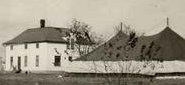 Perry, Oklahoma Conv, 1942
First Missions
Poland & Latvia
Revised July 5, 2025
POLAND & LATVIA

After Poland became a country in 1919, after World War I, some of the workers to go there were:
|
First Missions
Poland & Latvia
Revised July 5, 2025
POLAND & LATVIA After Poland became a country in 1919, after World War I, some of the workers to go there were: Tom Alexson (born in Ukraine, professed in Manitoba) The years and order in which these men went to Poland is not known for certain. A letter mentions that Tom and Jack went to Poland in the spring of 1925, but it is not known if they were the first to go there. Willie Evanov went to Poland in 1927. Shortly after WW2 in 1947, a Polish sister, Mila Gargas, started in the work with a Swiss companion named Marie Heiniger. Apparently there was a short time when there was a little bit of movement there permitted by the communist government. Marie eventually had to leave and Mila was left alone. She died in 2005, but wasn't active as a worker during the last years of her life. Of course, everyone had to hold registered jobs under communism. A Polish man named Eduard Podgorski, was able to leave and go to Switzerland where he started in the work in 1960. Two years later he returned to Poland. He was in the work there by himself under communist rule for 20 years. He had to hold a registered job, but was generally able to get out to visit East Germany and to Switzerland for convention every few years, and even came to Canada for conventions one year--probably in the 1980s. During the interwar period, it seems that a number of workers in the Eastern European countries -- Latvia, Lithuania, Poland, Czechoslovakia -- worked together during those years, so the men’s names listed above were moving back and forth from country to country, and would not all have been in Poland at any one time. From letters, it seems that visas were a major problem, and often they could only get a few months permission at a time before having to leave and be out of the country for at least several months before returning. So with a number of them divided between those countries, they were able to rotate in and out as visas were available. Russia, of course, was already closed by communism. One Russian brother, Konstantin Petrochuk, had professed in Germany in the early 1920s, and by the mid 1920s had returned to Russia alone, where he worked in Leningrad and had some converts. As far as can be determined, he was never able to leave the country again, and it is a bit uncertain if he survived World War 2. When WW2 broke out, Bert Todhunter was in Switzerland for some meetings and was trapped there. After the war, he spent most of the rest of his life in Austria, being Overseer there for a number of years. He returned to the British Isles in his very old age, where he died in 2008 at 102 years old. During his years in Austria, there was a relatively large group of workers. Most of them learned various languages so they were able to make visits into the countries then under communism. Outside workers might visit Poland for a few weeks at a time when they could get a visa, but for the most part Mila and Eduard were the only workers there during the communist years. In the fall of 1983, Loran Skaw (from Iowa), who had been laboring in Romania and Austria, was able to go and stay longer on some sort of student visas. In 1985, Domenic Enrietta (from Colorado), who had been laboring in Italy since 1974), went to be with Loran for several years. In 1987, Jeff Evans (from Iowa) came and labored there til 1990. both Then Jeff returned to the States and Eleanor and Arlene Leszewski (biological sisters from Wisconsin) went in the early 1990s. Ukraine was opened to the workers again in the 1990s. Now there are quite a number of workers, several conventions and several Ukrainian workers. At present (2009), there may be either six or eight workers in Poland. Loran Skaw is now Overseer. Among the workers there is Ian Simpson from Indiana, grandson of Virgil Simpson, former worker from Indiana who labored for a time in Italy. Eleanor Leszewski is there and also Tammy Carr from Montana. Since Romania and Ukraine have both had a number of native-born workers in recent years, there are some from those countries who work in Poland. Evidently there is good freedom of movement between Poland and Ukraine without a lot of visa complications, so there is a lot of movement back and forth between those countries. No native-born Poles have gone in the work since the fall of communism, and not very many young people have taken an interest there. When did the workers first arrive? Tom Axelson and Jack Annand in the spring of 1925. Who were the first brother workers? (in random order) Tom Alexson, Jack Annand, Vasyl "Willie" Evanov, Carl Leonhardt, Willie McDonald, Frank Patrick, Bert Todhunter Who were the first sister workers? “Shortly after the war, a Polish sister, Mila Gargas, started in the work with a Swiss companion named Marie Heiniger.” Who was the first native to go in the work? “Shortly after the war, a Polish sister, Mila Gargas, started in the work.” In 2010, a 26 year old young lady started in the work in Poland, the first one to do so for 50+ years. When & Where was the first meeting? When & Where was the first baptism? When & Where was the first convention? 1987 as a "family reunion" in Wisla. Where have subsequent conventions been held? Wisla Where is the convention currently held? Held for the last several years in a rented facility in Wisla. Who have the Overseers been? Bert Todhunter (died March 31, 2008 in England); then Loran Skaw (from Iowa USA).
In response to the request made by a correspondent who has never heard anything about the Work of the Gospel and God's People in present-day Poland, according to the best of my knowledge and the reliability of my memory and the memory of others I have conferred with, here is icy account. In the 1920s, after Poland regained its independence, following more than 120 years of partitioning by and domination of three neighboring states (Russia, Germany and Austria), brother workers arrived in Poland from other countries. Jack Annand (Australian), Tom Alexson (Canadian of Ukrainian descent), and Willy Ewanow (native Ukrainian from USA) were the earliest I know of. Willy was from a region which is now part of independent Ukraine. He had heard the Gospel in the USA, to where he had immigrated before WWI, when he was only a teenager. He had labored in the Gospel in the states of North and South Dakota before returning to Poland. One of the first missions, during which several people began to walk in truth was held in his native area, SE Poland/SW Ukraine. By 1939, other brother workers had come to labor in Poland; and there were other scattered friends living in areas that are yet an integral part of Poland: the cities of Warsaw, Katowice and Poznan. The following names are of other workers who labored in Poland/Ukraine from 1927 to 1939: Jack Anderson [Axelson], Carl Leonhardt (Canada), Frank Patrick and Bert Todhunter (both from Scotland). Other German-speaking and native Germans were laboring in regions of Germany that bordered Poland on the West, territory that became a part of Poland after World War II. In 1939, when World War II began with Nazi-Germany attacking Poland, Willy was the only one of the above workers in the country. As bombs rained down on the capital city of Warsaw, he evacuated to what was once his home area, where there were four or five professing couples and their children. In less than a month from the beginning of Germany's attack, Soviet-Russia attacked the extreme eastern regions of Poland, occupying them for part of the next six years. When the war ended, these regions were annexed to the Soviet Union, as integral parts of Ukraine, Belarus and Lithuania. Willy and almost all of those friends in that part of Ukraine never had the opportunity to receive other workers or be with friends from elsewhere again, as long as they lived. One of the couples there was executed by Ukrainian partisans. Their daughter professed in the 1960s, and her two sons and some of her grandchildren and relatives have professed since then. Willy was welcomed into the home of another professing couple, residing there and working in a factory until his death (of heart failure) in 1956. This couple's two sons left the Soviet Union and eventually settled down here in Poland. One of them kept in touch with the servants of God and some of the friends here; and after he retired, he began listening to the Gospel again. He made his choice and was baptized in the late 1980s, not long before he died. Just before the war ended, a couple and their three children from there were allowed to choose Poland for their home. After that, their daughter, Mila Gargas, was in the Work for awhile. This fact, during the final years of Stalin's policies restricting religious activities in communist-Poland, led to her being arrested and interrogated; and then, on the basis of the questioning, her father was dismissed from his work. After a move to another city, where one of her brothers lived and was able to procure employment for the father, the death of a relative residing near Katowice precipitated their move to that city. Their home there became a haven for saints and servants over a period of several years. Since her parents' deaths in the late 1970s, Mila has lived in the city of Gliwice, in SW Poland. Anna, one of her neighbors, has professed; and Anna's husband, although not a disciple of Jesus, is friendly to us all and often attends the little meetings in Mila's apartment. Other people who once lived in Katowice, where they heard the Gospel and began to follow Christ, are either deceased or living elsewhere. I only knew two of the deceased: Salome, whose husband was arrested by Soviet authorities soon after the war ended and died in a gulag somewhere in the Soviet Union; and Klara, who lived near Stuttgart, Germany with her professing daughter and family, Andrzej and Maria Jakubowski. Klara had another son by a previous marriage who, with his Czech wife, immigrated to Germany, where they also listened to the Gospel and are now following Jesus. Then there is Eman, who was only a 16-year-old when the Gospel found his family in Katowice. He now lines in Cieszyn, a city on the border of Poland, but across the river in the half of it that is part of the Czech Republic, to where his family was expelled by Polish authorities in 1959, just before the war began. He has been a widower for many years, and none of his four children seem to feel any need or desire to inquire into their father's hope of Eternal Life. So, for many years he has lived pretty much alone in that small city; yet he is always ready to welcome the Lord's servants and saints into his abode and share all that he has. During the war years, when Warsaw was the center of Nazi-occupied Poland, Peter and Rita Cieplowicz continued living their daily lives in the love of God and comfort of the indwelling Christ. They resided in a relatively obscure corner of that big city where their home became a refuge for at least one woman of Jewish origin, who survived the Holocaust, thanks to their courage. One of their visitors during the Nazi-occupation, Otto Hartmann, a German soldier who had been in the Work before being forced to fulfill his civic duty in the German army. After the war, he was again active in the Work many years. As soon as possible after the war ended in 1945, Carl Leonhardt and Frank Patrick returned; also Willie McDonald (Canadian)and Maria Heiniger (Swiss) came for the first time. Maria was Mila's only co-worker. During the few years immediately after the war, until Soviet-designated local authorities expelled all foreigners engaged in religious work, several people in the Warsaw area had contact with the workers and attended gospel meetings in Peter and Rita's house, where they later met for fellowship around the Emblems of Our Lord's Broken Body and Shed Blood. Two of these people are still living and are part of the Church in Warsaw: Edward Podgórski and Irene Cypriak. Irene and her mother; Bronya and her sister Karolcha, and Bronya's mother-in-law were all part of a denomination but not satisfied. Edward was involved with a different religious group and had just begun to listen to the Gospel, when the workers were expelled from the country. The communist regime installed here in Poland after the war eventually forbid many of the religious groups to continue their activities; and the Roman Catholic Church was restricted, as much as possible. When the group Edward was involved with was disbanded, he began attending the meetings in Peter and Rita's home. Both Mila and Edward were eventually arrested and interrogated, i.e. their religious inclinations, activity, etc. From time to time, an agent of the government would attend the little meeting in Ciepiowicz's house; but the meetings were never forbidden. In 1953 Stalin died. In 1958 Carl Leonhardt was able to visit Poland again, at which time he also visited the few scattered Friends in Latvia. During Carl's first visit back, Edward [Podgórski] offered his life for the Work of the Gospel. Anton, a Polish farmer who had professing relatives in Canada, also began to walk in truth at that time. Like many Poles living in Ukraine, he had been resettled in western Poland on land that ethnic-Germans abandoned or were expelled from at the end of the war. There were no professing people in that part of Poland; so when Carl encouraged him to move to Warsaw, he did as soon as possible. Carl was laboring in Germany at the time Edward offered for the Work. It was possible for some of our friends in Switzerland to invite Edward to come there, where he spent almost three years with several companions, before he was encouraged to come back to Poland. When he returned here, he had to work at a job, like every other citizen of a Communist country, contributing to the common goal. Carl died in the mid-1960s; and somewhile later, Bert Todhunter, Paul Schleup, Emil Hegg, Willy Geiser and Peter Bill began making annual visits to Poland, during which they would spend several days with Edward visiting amongst the scattered friends and any contacts that seemed promising. In the late 1950s, Olga Nichols came from Canada to Poland, hoping to get permission to stay on the basis of her Polish ancestry; but the permission wasn't granted. She remained in Europe to labor in Germany; and for several years, together with other sister- workers laboring there (among them were Wilma Müller, Elfriede Schramm, Ilse Koch and Ruta Sprogis), made visits to Poland. Jack Craig, Bernard Manning and Arne Foss are other workers laboring in European countries who would visit in Poland as they passed through, enroute to Latvia and Russia. During these years, besides Anton, a few others professed: Lodzia, whose husband Arnold, of German-descent, was forced to serve in the German army during the war. He was taken captive by Allied forces and interned in a POW camp until the war ended. He was allowed to settle in France, along with many other Polish citizens who didn't want to return to communist-Poland. He heard the Gospel there in France (in a mission that Maria Heiniger had a part in); and after professing, he was encouraged to ask the International Red Cross for help in locating his wife and 3 children in Poland. He really didn't know whether they had survived the war or not; but when he learned that they had, he came back to Poland. Lodzia eventually professed, before Arnold's untimely, accidental death. Ala, Irene's younger sister (widowed the first time during the war and a second time since 1990) professed between 1964 and 1983. So did Krystyna, a woman who had once attended the same religious group as Irene, Bronya and Karolcha. Bronya and her husband, Wladisiaw, immigrated to Montreal, Canada, when he retired, so they could be near their only daughter and her family; and it was while in Montreal that Wladisfaw began attending meetings with Bronja. While attending a convention in Pennsylvania, he made his choice to follow Jesus. It wasn't long until they understood that it was the Lord's will for them to live in Poland, where their little apartment in Warsaw was very useful for many years. Ela, a niece of Irene and Ala, professed in the early 1980s, and since she and her husband moved into Warsaw in the early 1990s, Henryk comes to most of the meetings with her. Then there is Jadwiga (Krystyna's daughter-in-law) and her sister, Henryka, who live side by side with their families in the city of Zyrardów, about 30 mi. SW of Warsaw. These women made their choice in the early 1980s. Anna, Mila's neighbor, also began inquiring into the things of God about that same time. Then Jan, Krystyna's husband who for many years had brought her to the meetings at Cieptowicz's house, was finally persuaded to wait in the kitchen instead of outdoors in the car; and once he began sitting in all of the meetings, he was eventually quickened to try to put into practice what he had begun to understand is God's Will. In the early 1980s, Edward retired. Poland's political and economical crisis also came to its climax about that same time. Social opposition to the Communist Party's policies became stronger and stronger, supported and stirred up by the Roman Catholic Church (especially after 1978, when the bishop of Cracow, Karol Wojtyla, was chosen to be Pope); and by the USA's policy of overt-opposition and secret assistance, during Ronald Reagan's presidency. Martial law was declared in 1981 and enforced until 1983, during which time many political activists and certain representatives of the Catholic Church were arrested, expelled or imprisoned (Lech Walesa, for one example) and, in some cases, killed (the priest, Jerzy Popieluszko). In the Fall of 1983, Loran Skaw was encouraged to come to Poland, after spending several years in Romania and a year so in both Germany and Austria. In January of 1985, I was encouraged to come here from Italy, where I'd been since 1974. In 1987, Jeff Evans, after an aborted attempt to labor in Bulgaria and three years in Austria, came to Poland, where he labored until 1990. In 1989, Eleanor Leszewski (an American of Polish-descent) and Irene Bogoslawski (a Canadian of Polish and Ukrainian-descent) came to labor here, after spending a year in Austria. In the Spring of 1989, Eleanor and Irene applied for permission to study in Lublin. Before they arrived that Fall, a Polish woman, Maria with her three small daughters returned from Greece, where she had begun to attend meetings with some professing people there. Because of her Greek husband's violent reaction to this, she left him and returned to her home city, Lublin. The sister workers began having contact with Maria as often as possible. She spoke good English, and they were just beginning to learn Polish. Her husband, whenever he made an unannounced visit to Lublin to see his daughters, also tried to stir up trouble for Eleanor and Irene by going to the head of the language school to try to persuade him to refuse them permission to study there. When that did not bring any results, he himself appeared one day at the school and threatened them. Not long after that, the sisters resigned from attending the regular courses and had special instructions with a tutor, who came from the school to their living quarters. In the Fall of 1989, Poland ceased to be a communist country. In 1991, Arlene Leszewski, who had labored in Italy for 5 years, came to be with Eleanor; and in 1992, Olga Nichols arrived from Canada to labor here (until early in 1996). Tammy Carr was the next sister to arrive, in 1994. In 1995, in spite of her parents' opposition, Maria's half-sister Marta, professed at the age of 20-21. In 1996, Dan Sadzewicz, a young professing man of Polish-descent from New Mexico attended our convention, during which he and Marta became well-acquainted (she also spoke English quite well). That same Fall, she obtained a visa to visit him in the USA; and they were married there in 1997. They and their two little girls presently make their home in Albuquerque. Both of Marta's parents have died since. Maria's husband also died, during one of his visits to Poland, in 1999; and she and her girls have returned to Greece to live in the home he willed to the girls. John Prendergast came over from the Republic of Ireland in 1998, remaining until 2001. Others from neighboring countries, including Ukraine, have been part-time helpers on our staff, too; and some of us have gone to fields in neighboring lands to help out pro tem. The first convention was held here in 1987, in the guise of a "family reunion." A privately-owned and operated guest house in South-Central Poland, near the northeastern border of Czechoslovakia, on the outskirts of a small town named Wisła, beside the river with the same name, was the site for that first conv. Since then, our number of participants has increased to the point that we needed additional accommodations; so we've been using a second house like that for the past few years. What began in Communist-Poland as a week-long "family reunion" is now a four–day convention; the gathering of 25 in 1987 has increased to 56 in 2002. The large dining room in the first house, which also functioned as our meeting room for several years, gave way to a larger hall in the volunteer fire dept. building in a nearby district; and instead of only two local workers and three visitors that first year, we had seven local workers and thirteen visitors this past Summer. We have only one centrally located Special Meeting in Warsaw once a year, in December or January. From the very first time, we have rented a small to medium-sized public hall for that purpose. Afterwards, as many as are able usually stay for a potluck-style supper in one of our sisters' apartments there. The first public gospel meetings conducted by any of us presently laboring here were in Cracow and Warsaw simultaneously during the Spring of 1991. Loran, Jeff Evans and I [Dominic Enrietta?] had labored in Cracow, where one university-student from NW Poland had professed and two couples were drawing near. One of these couples, Marysia and Tadek, professed; and we still have occasional contact with the other couple and their son. The student married and immigrated to France; and ever since then we haven't been in contact with him. Marysia had her first lung-cancer surgery in 1993, and a second one 4 years. later. Through the years, she proved to be a true disciple; and we're thankful that this year her temporal suffering and sorrow ended; and her eternal rest and joy have begun. Tadek's understanding and willingness are limited; yet, we hope that he will want to wholeheartedly continue to follow the One Who lived, died, was resurrected and intercedes for him. From 1991–1994, Edward, Loran and I [Dominic Enrietta?] attempted mission work in several locations, both in Cracow and Warsaw; and once in Gliwice. One other person in Cracow began walking in fellowship with us at that time; but she soon turned aside. This is when Jurek, whose mother Karolcha died in 1988, and Eugeniusz, Lodzia's youngest son, began attending gospel meetings in Warsaw. Both of those men are professing today. In the Fall of 1994, Olga and Eleanor came to Cracow; and Edward and I [Dominic Enrietta?] went to Toruń, where we began public meeting. As a result of those meetings, Andrzej and Inna began listening. In 1995–1996, Loran and Edward tried elsewhere in that city and in a country area nearby where Andrzej's mother lived. Inna never seemed to grasp an understanding or have an appreciation for the simplicity there is in Christ; and although Andrzej hasn't made lots of progress, nor has he a bright and shining testimony, we're glad that he's trying to "cling to the hand of God's Dear Son". Unfortunately, they are now divorced. She and the children are Roman Catholics now. He is temporarily employed in the USA. Later on, we proceeded to hold public meetings in two other cities along the railroad line SE of Toruñ; and in towns along the railroad S. and SW of Warsaw. Only a few people ventured out once or twice, and none of them are in contact today. In 1997, we brothers moved from Toruñ to Kutno; and by January 1998, Loran and I [Dominic Enrietta?] initiated with public meetings. there. Two of the first people to come to those meetings, Urszula and her mother, Helena, are professing today. Through them another couple, Pawel and Sylwia, was contacted; and it is in their home where the little band now meets on Sunday. A woman- friend of theirs and some of her family-members, as well as other contacts, are still just drawing near to hear. Last year, Urszula's aged and ill father who had been living with them for most of a year, also requested special gospel meetings in the home. This was quite a change of heart, after he had tried more than once to discourage Urszula from going to meetings, and even demanded on two occasions that she not invite us to the home anymore. He professed before he died. After residing for less than a year in Kutno, we moved to Lödż, Poland's second largest city, just south of Kutno; in preparation for John's arrival. There John [Prendergast] would be able to take a language course at the university. Last year, after 3 years-residence in that city, where we had seven missions over a period of 18 months, we moved to Skierniewice, which is central to Warsaw an Kutno. One woman who attended many of the meetings in Lódź has been living in Denmark since; and while living there, she has attended meetings and professed. The various sister workers who have labored here since 1989 have also attempted to hold public gospel meetings in Lublin, in Cracow, in a city between Cracow and Katowice, in Gliwice and in Kielce. They have also helped us brothers from time to time in our own mission meetings. All of us working together in this way have had the mutual joy of seeing a handful of souls delivered from the various forms of bondage to sin that unbelief and ignorance lead so many people into, as they try to live their lives without God's Truth and Way. Since 1983, perhaps as many people have professed in Poland, as the number of faithful ones here who have died. There may be less people professing there now than there were in the 1950s. Those who are professing are almost all quite elderly. Without doing the mathematics, I would estimate that the average age of all of us together is close to 60. Paul and Sylwia's two children (7 and 3) are the only non-adults amongst us. Edward, soon to be 82, is no longer active as a worker; but he is well enough to care for his own personal needs and able to guide the meetings in Warsaw. At present [2002], Loran [Skaw] is the brother who guides us in our endeavours to labor in the Gospel here; while Dan Sherick, who has been laboring in Ukraine since 1992, is responsible there. Dan also labored in Romania with Loran, as well as in Yugoslavia after that. In recent years, some of the native Romanian workers have launched out in foreign fields; and both Poland and Ukraine have benefitted from that. A sister from there spent most of twoyears here; and a brother has tried to learn the language while struggling with health problems. Two Romanian natives have labored in Ukraine; and some of the American and Canadian sister workers, after spending several years in Romania, are now filling useful roles there. Probably compiled by Dominic Enrietta, December 2002 TTT Editor's Note: Corrections or additions are most welcome; as well as other historical accounts for other countries. Jack Annand - Work in Poland Convention 1931 Phil. 1 . ''I thank my God for every remembrance of you for your fellowship in the Gospel from the first day until now.'' As Nehemiah built the wall of Jerusalem there were a number of different gates in the wall, but only one gate which was sanctified—the sheep gate. This sheep gate speaks of God's way of reaching men and women, the way of which sheep are brought to be sacrificed on God's altar. This represents God's way of reaching souls by the Gospel, reminding us of the interest of the great High Priest and all priests, whether saints or servants, in the sheep fold of God. It is by this that our love is measured. Luke 6:19, in the mountain Jesus continued all night in prayer, for the next morning He was going to choose His representatives to go forth end seek His sheep. Verse 17, later He went down to the plain and spoke those important words to His disciples (v. 20 onwards). Over twenty years ago, before I heard the Gospel of Christ, I found it very hard to have faith in God. Although my mother was a God-fearing woman, my father was an Atheist and influenced me also in this direction, and many a time he said, "there is no evidence of there really being a God." So I grew up to think that perhaps after all Christianity is only an invention of men. Since then, by the help of others and experience in my heart, my faith has been increased. After I began to follow Christ, I saw other young lives going forth into God's harvest field, and my heart began to beat more quickly, and I felt a burning love to do the same. At such times I was up the mountain with visions of what I could become perhaps, then I well remember riding home from a meeting and beginning to question myself. "Would I really be willing?" I was getting down to the plain. It would mean becoming homeless, perhaps hungry. I would be spoken against, and there would be much to test if my love was genuine and honest. It was on the plain Jesus spoke to His disciples and sent them forth. About 6 or 9 years ago, when replying to a friend in America by letter, my thoughts turned to the revolution in Russia, and I said perhaps this is the threshing which precedes the gathering in of the grain. Perhaps God would yet be able to gather in the souls of these people who were so precious to Him. My companion [Tom Alexson] was born in the Ukraine in Russia; he had a poor education, but knew a little of the Russian people. He had met the servants of God and had later on gone out to preach the Gospel in Canada. With him, George Wise and another George, we set sail from America, passing through Germany we met some of our brethren, whose fellowship lifted my hearth with hope, and did much to convince me that men was the same everywhere, molded alike and with the same strivings and the same outlook. Also that the sowing of the Gospel will produce the same fruit wherever it is sown. Jesus said "I am the true vine," the branches of which are His servants, who have the same sap, leaf and bark, and bear clusters of grapes. In every part of the world, the Gospel of Christ produces in men and women the nature to cluster and have fellowship together in the things of God. George did not tell any stories about me, so I had better not tell any about him, except that we nearly bought a dining room instead of a meal. Well, it was nearly spring when Tom Alexson and I went to a town in Poland. The melting snow made the dirt streets all slush, pigs were running about everywhere. There were 5 or 6 different languages spoken, for in towns near the border the language, customs and dress were mixed. We arrived by train from Warsaw, very tired and my head ached, and America and Australia seemed a long way off, and I thought perhaps after all we had made a mistake in coming. Our outlook in life seems to depend very largely on our circumstances, our feelings, and our health, and we can only battle through against our feelings and our outlook will brighten. We were eyed by the people, for no doubt a leather bag I carried, which had been given me by Bill Carroll, and very different from anything used there, gave away that we were foreigners. We hired a room and stayed for about two weeks and looked around to see if any religious meetings were held. We found a place where people met together three times a week and we went along. I could not understand what was said but sought to become acquainted with the Russian sounds. The services were conducted a little differently there—the one who conducts asks others to speak and then finishes up the service himself. They stood to speak and knelt to pray, all seemed confusion as they all prayed audibly and at the same time, but I thought perhaps this is the expression of these people's hearts as they felt after the unknown God. The 17th of Acts came into my mind, God has made of one blood all nations that they may feel after Him and find Him. If there is one unsaved person here today, I would like to think that in your heart, perhaps under a religious profession, there is that quiet seeking after God. I looked on those ragged dressed, whose heads were covered with handkerchiefs, probably they could afford nothing better, and my heart was moved with longing to speak to them. One custom is that men kiss men, and women kiss women, and they think strangers require special attention! My companion was spitting all the way home one night, and he told me that the dirtiest old man in the meeting had kissed him. Sick people and tubercular people had a special desire to embrace. However, I did all I could to dodge it all! We next went to a town about eight miles away where the religious people had become divided into two parties, Baptists and Plymouth Brethren. The PB's showed us they did not want us, and the Baptists were suspicious, but we went to both services to show that we belonged to neither party. Later on, the PB's wanted us to throw in our lot with them as they were getting short of funds, they think that all English speaking preachers have well-filled pockets, people over there preaching the Gospel have the Gospel and money coupled together. Later on, the Baptists asked us to speak in their meeting, so I did. Tom translated; we said very little but won a little confidence thus, but going amongst them. I tried to study Russian. Some of the families seemed to have a flock of geese, which little girls take out and feed on the pastures in the village. Instead of sweets, they eat sunflower seeds. We got some for the kiddies in order to talk to them and pick up their language. The Australian niguine? have to swallow their prey right end first, or trouble follows. In trying to learn the grammar first, I was laying the right foundation but I found it more necessary when we entered. This visa was for twelve months. The police had visited us often; therefore, at the office they knew a good deal about us. The official said he was giving us a fright, and he certainly did when he ordered us to leave the country within twenty-four hours, This made us boil, for both Australia and America had their doors open to receive Poles. I was inclined to think unjust things, for an order of this kind in a foreign land seemed a big dark thing. It would have been easy to speak a lot but I kept silent. We went to interview the Governor of another center who sent us to Warsaw, from which we were sent back again. We were finally granted a month's permission and were able to apply for a similar grant at the end of a month. This we did for several months until in the middle of a meeting one day, a policeman arrived with a slip of paper bearing orders to leave in seven days. So, we went to the little country of Latvia, the capital of which is Riga, we were well received here. We sought as before to get in touch with the people. We got to know of a Bible reading in a wealthy home where, as we attended each week, we got to know the people, who were inclined to talk and argue on the subject being considered. One day "being born again" came up as a subject, and someone said I could tell them about this. I said that as the time was already gone, I would like another opportunity, whereupon the lady said that I could have the following evening to speak to them. So I had a whole meeting and was fortunate to have the services of a splendid translator who was able to convey my meaning well. So I told as well as I could a little of "being born again" and walking in God's Way. We always spoke whenever there was an opportunity. We went to another village and found a home where about forty people were meeting together. On one occasion, the people started to sing in front of a home and within twenty minutes, they were all invited into the kitchen. It was there I first saw children sleeping on top of a huge stove that many of their homes contain. This shows that people can be brought together into homes. The people had for years been dissatisfied with the Greek churches and had tried the Plymouth Brethren and Baptists and others only to find they were fooled. We were in Latvia about one month, and two brothers came across to join us, and one of these accompanied me back to Poland. Here I was persuaded one Sunday to try to speak in Russian, and as the time came, I felt so hopeless and helpless. But I told of something I had seen in one of their countries. One day I saw an eagle gliding through the air with hardly a movement of wing, climbing higher and higher. An old black crow was underneath making a big noise, and flying up and down, seeming to be trying to imitate the eagle, but the crow had not the eagle's nature, they saw, lived and flew differently. By this I tried to illustrate between being inside and outside of God's family, between being sincere and insincere. I wondered if I had made anything clear, but when I later heard someone refer to my sermon and mention the two birds, I gathered that perhaps a little of what I said had been understood. My companion who returned with me to Poland was a young man who could speak several languages but as the law required a petition signed by several reputable citizens before a service was permitted, we were blocked again. However, as standing up meant preaching and sitting down meant talking, we invited people into our room where sitting on boxes and beds, we tried to make plain to them the way of Christ. We continued preaching for about four months wondering if the people thought we had just started something new in opposition to other religions. But when we began to show a heart concern to the seriousness of being outside God's way and family, we one day put a test to the meeting as to who would be willing to walk the way of God. The whole meeting stood up, and my heart dropped as I thought we would have to start all over again and make the way plainer. You always find some kickers, one man who had a twist in his nature and often kicked, said to me one night, "I almost yielded and almost saw, but not quite." He was unwilling to receive Christ. The unwillingness always means and prevents a man or woman from seeing. We started a little fellowship meeting on Sunday morning where four languages were to be spoken. I didn't know what would become of it, but I like to be hopeful and look on the things that will increase my hope and theirs. They write and tell me they miss me, and Jack Craig looks upon them with hope in his heart as those who have been born again. I visited our two brethren in Latvia, where a few had decided whom we tried to help. While there I received a letter from one man in Russia who was still not free from Egypt: "I want to see you again I am in doubts and fears." Perhaps he wondered would this fan out as all else had done; he had not wholly yielded to God. There are two sides to salvation, ours and God's. He asks us to present our corrupt, incomplete and fallen nature as a sacrifice to Him by the preaching of the gospel, and God is willing to then entrust us with the blameless, unblemished life of His precious Son. You may have disappointed God, but He is willing if you trust Him to entrust to you the life of His incorruptible Son. This man had his doubts dispelled as he wholly yielded. He invited us to come and have a meeting down a dark staircase, along a narrow passage into a damp dark cellar, the only window to which showed the feet of passing pedestrians. What hope of regaining health have those who are sick or consumptive? They just endure it and hope not to pass out soon. One religious woman who has now been broken and baptised was once a woman of wealth and standing but made poor by the revolution. She had at one time been influenced by the Seventh Day Adventists, and after we met her, she saved a little money and brought us her tenth. We did not accept it, of course, but advised her to save a little more and go to a convention. My companion offered to add a little to her savings if she found she had not enough, and by selling a few trinkets she got to a convention and was greatly helped. I was always curious to find out all I could about the people, and my curiosity took me around to narrow streets, which were on market days crowded with Jews, who had for sale a lot of second-hand rubbish—old iron, old clothes and boots. I saw a peasant come out of a shop and approach one of these Jews, who looked through his stock for a little girl's dress. He held up the dress to his customer but hid the mending and patches on the shoulders and elbows. A picture came before my eyes of a little girl anxiously awaiting her daddy's homecoming and the fulfilment of his promise, perhaps on the occasion of her birthday to buy her a new dress. As I beheld these scenes, I thought that if the day comes when I, as a preacher of the Gospel, have to wear these things or suffer great things, I'll do it without a murmur; for others suffer far more and do so uncomplainingly. One reason why I view Russia so hopefully is because the devil is so anxiously busy to hinder the progress of the gospel. The Bolsheviks are instruments in the hands of the devil to prevent God sowing the precious seed. It is true that they destroyed much that needed to be destroyed, but three things that they have done proves their work to be the work of the devil. (1) They aim to destroy the faith of the rising generation, and if a person's faith is destroyed, like the strings of a piano, it is hard to awaken a response. They have made it unlawful to speak of religion to anyone under the age of eighteen years. Lenin's wife once told a crowd of hungry children to cry to the Tzar's God for bread, then she told them to cry to the Bolsheviks for bread, and loaves from aeroplanes which flew overhead as arranged were dropped. (2) The breaking down of marriage ties, the obtaining of a divorce is just like buying a railway ticket. The woman usually goes to work, as well as the man, and many a wife comes home to find her husband has signed his name and divorced her. (3) The destitute children and millions of homeless children, sometimes seen huddled together trying to keep warm. During the war when the Germans first advanced, they wrecked homes and broke up families, and now since the revolution, homes, discipline and family relationships have gone. The Soviet has four or five million of these destitute children growing up to vice, uncleanness and crime. Russia must therefore suffer until God moves to help the 160 million people. His eye is still on the souls for whom Christ died, redeemed them with the hope of bringing them into His family. The workers abroad would like you to pray for them. Oh, the loneliness some of them have known. The great High Priest prays for us, will you pray also? When our ministry fails and is insufficient, the angels would still be faithful. If you forget me, yet He never will forget, but would still pray for me through my hours of weakness. Pray for us and pray for all, and your heart will be enlarged, and your vision made clearer for doing so.
We had a visit from Emil Hegg ( Switzerland) and Horace Todhunter ( Scotland) last evening and I want to share with you before I forget. Horace [Todhunter] told us when his mother went for confirmation in the Church of England, she looked a little older than her fourteen years and the minister said to her, "Of course, you are old enough to know that not all the Bible is true. The books of Job and Jonah are fairy tales." She was surprised and said to him, "I always understood the Bible was the word of God and it was all true." Horace said it may have been the best thing that ever happened, because she always had the niggling feeling that man does not believe the Bible. After they were married they left the Church of England and joined the Methodists. His father was made a lay preacher and his first sermon was from Eph. 2. "And you has He quickened, who were dead in trespasses and sins." That was the way he felt. But two years later, when the true servants of God came to their part, they accepted the Truth. The eldest child was then 10 years old. Out of a family of nine children; six have gone into the work. Emil [Hegg] has been to Poland and East Germany a number of times and had wonderful things to tell us of the friends there and their experiences. A young man that was professing had permission from the government to leave Poland and go to work in Switzerland for 2 years. If a young person can leave Poland, they never go back. But Eduard [Podgorski] worked for a short time in Switzerland and then he went into the work. When the two years were up he decided to return (to Poland). They have to have a job and he got work in the hospital. It seems it was on the administrative side. It is not always so easy for Emil to express himself in English, but he said Eduard had to keep track of everything that came into the hospital and pay. Eduard visits the friends and has meetings where and when he can. We have heard of him through Ilse Kock's letter also. The authorities wanted to honor Eduard and make him a great person in the Communist party because of his good work. His boss told him they were to make a great feast and give him this honor. Eduard said he would not be able to accept it because he served God and would not be able to take the oath to become a member of the Communist party. His boss told him he would loose his job and would have to accept very humble work, maybe even cleaning the lavatories. But Eduard could not be moved. The weekend of the party, or feast, came and went without Eduard attending. On the Monday morning he went to work as usual not knowing what would take place. W hen he got there he found nobody sitting in his chair, so he went about his work. Later the boss came in and told him to carry on as usual. He said that out of a 100 employees, Eduard was the only one he could trust. None of his privileges were to be taken away from him. Every two years Eduard has permission to visit Switzerland . Not even the party members can get this privilege. Yes they can go to Moscow or East Germany, but not to the West. It has never been denied Eduard. A young man started attending meetings in Poland. Everyone was so pleased. He even went to Sunday morning meetings. After three months he spoke to Eduard and told him he was a spy sent by the government to find out what went on in the meetings. He told Eduard. He was sending his report and that it would be favorable. The meetings could continue. What had impressed him very much was the fact that in every meeting one or more would pray for the government and no one ever said anything against them. A family of friends were taken from Riga, Latvia, to Russia during the war. The parents were killed. The daughter, who was a little girl when they left their home, remembered the meetings and some hymns. She grew up and married a very nice, man. Back in Riga another family wondered what had become of this girl and continued to make inquiries from anyone who came from Russia. A soldier was asked if he had ever encountered her. He said no, but he also w ould make inquiries, which he did. He found her and put her in touch with the friends. She made a journey of 4,000 km, attended the meetings in Riga and then she knew these people were indeed her parents people. Emil told us that Eduard said they suffered most in Poland just after the war. Weeks went by and they had no bread. Nine men were sharing one room. One day one man was given a piece of bread and told to divide it amongst the others. Eduard said it was stale and as the one broke it, the rest of them reached out their hands, 16 of them, and held it under the bread that not a crumb would be lost. Emil spoke of the bread of life and do we value it as we should? Emil had permission to visit East Germany for one month. He had to return on Su nday before midnight. On Friday one of the friends asked Emil to go for a walk with him. They walked for half an hour and came to a little lake, approximately 20 meters by 30 meters. Then the brother said, "Emil, can't we have a baptism? Some of the friends have been professing for 20 years and have never had the opportunity. ” Emil was afraid and knew if he were caught it could mean prison for him. The man said he would take the blame, but Emil said he would pray about it. It was the 16th chapter of Acts that came to his mind, verses 31 and 35. Then he knew God showed him His will. "He took them the same hour of the night, and washed their stripes; and was baptised, he and all his household." That same night at midnight the friends gathered together in the home and had their little meeting. Took the half hour walk in the thick fog to the little lake. The five people who were to be baptised were already in the clothes they were to go into the water in and they hid their other clothes in a bundle. Not a word was spoken. They got to the lake. Emil said he wondered where he would put his coat so he would be able to find it again when he was finished. When he went to the water's edge, all five of the people were in the water waiting. He had noticed during the day that the water went down slowly and then gave a drop. When Emil cautiously entered, his foot went ever the ledge and he went completely under. He told us he was the first to be baptised that night. After he was finished and they all changed their clothes, getting into the dry cloth ing they had brought with them, he walked back to the water's edge. The fog had lifted, and the moon was shining brightly. Walking back no one spoke. Incidentally, there was ice in the water and the temperature was 5 degrees below freezing. No one suffered from the cold. Other friends heard about the baptism and they also wanted the privilege. So in another place also in the night, 2 o'clock in the morning, I believe it was, they went to a lake. On the one side trees came down to the water's edge and a deep shadow went out over the water for approximately 10 meters and that is where they had the baptism. They had a Meeting early on the Sunday morning and one in the early afternoon, then Emil made it back to the West before midnight that Sunday. He told of three women, German and Polish, who were professing. They met in Russia. With the war and all they had to suffer they lost touch completely with the Truth. However, they never failed to have their meeting on Sunday morning, also the Bible study in the evenings. This went on for thirty years and they said one to another, "One day we will again meet the true servants of God and this will confirm to us that this is indeed the only way." When the border was opened between Poland and Russia they made their way back to Poland and found the friends again. He said their joy was wonderful to behold. They were in their 80's and only one is still living. We heard too of two boys finishing school in East Germany and they had the highest marks in the class. All the pupils were to have a trip to Moscow, but they all had to become party members before leaving. Many religious were represented in the class, but the other churches had made concessions so that they could still enjoy the benefits of the communist party. When the boys heard the "Ten Commandments according to the party", they said they could not agree because the 9th one read something like this - they had to swear that they thought the party was the greatest power, the almighty power in the earth, and that one day the party would rule the world. All who did not agree with this were to stand to their feet. Those two boys w ere the only ones who stood up. Persuasion was used, but it did not change them. They were told not only would they not be able to go to Moscow, but as punishment they would have to clean the whole school from top to bottom. The next morning the principal of the school come to the boys ' home and he told the parents that he had interceded for the boys so they did not have to clean the school. He said they are the best boys in the whole school, Of course, no jobs are available to them except the very meanest work, However, the one is in a factory and wrote Emil and said he is glad to have work and more glad because he did not have to deny his God, The grandparents of these boys also had a terrible, wonderful experience, during the last war. I think we have heard something of it before, but Emil told it like this: The man was asked by the Captain to swear to Hitler and he refused because of his belief. The Captain, being a personal friend of these people, wanted to make things as easy as he could, but he also had his duty to do. He said no one needed to know what took place inside this room - just take the oath and forget about it. The man could not. He was sentenced to death. The Captain gave him leave to go home to his family to say good-bye. Then he went to fetch the man. The wife and two children, 7 and 8 years, were allowed to walk part of the way with him. He told the man that he could have one half hour to say good bye to his wife. They were in a beautiful park and they decided the best way they could spend their time was to pray together. When it was time to part they kissed each other good bye and the wife said, "Be true to God, I would rather see you die than deny." The children professed when they were 17 and 18 years old, Getting back to the prison the man was told in three days time you will be shot. Three times a day, his friend the Captain came in and tried to get him to take the oath. The last day, the man was taken from his cell thinking he was to go to his death. He was taken to the door of the prison and told he could go free. Some years later, when the Americans were trying to sort out the "good" from the "bad" this man was called in and asked what he knew about this captain. Did he ever know that he had done anything against the Hitler regime? He said, "Yes, that is the man who gave me my freedom. I was condemned to death. I held the papers ordering my execution in my own hand. He got me free - how I do not know." In East Germany if more than 10 persons gather they had to have permission from the local authorities. But, for birthdays permission was easily obtained. So, from the smallest child to the grandparents, every birthday is remembered. Permission is given for the birthday party. It is at such times they arrange their union meetings and special meetings. A cake is on the table, cups set around and their Bibles on their knees. So they have fellowship together. Horace Todhunter died in Scotland October, 2003, age 88 Emil Hegg died _____ Eduardo/Edward Podgorski died January, 2005 in Poland. Edward Podgorski's Last Days and Funeral
It was a VERY cold winter day today in Warsaw as 10 workers: Werner L. (Germany) Vasyl S. (Ukr), Dan S. (Rom) Elfrieda E. (Germany), Karen E. and Trude B. (Ukr) plus we 4 on the Polish staff, 15 friends and 6 contacts said a final goodbye to our dear native brother, Edward Podgorski. He had cancer surgery December 28th and suffered a major heart attack sometime after that. It was a privilege to help with his care his last days before being put in ICU January 7th. He finished his journey thankful and faithful January 14th at almost 84 years old. There have been many heartfelt impressions made these last weeks...
About Poland... A nation with an ancient cultural heritage, Poland can trace its roots back over 1000 years. Almost exactly in the center of Europe, it has had a turbulent history. There have been periods of proud independence, as well as times when it was totally wiped off the map -- in 1795 Poland was completely divided amongst Russia, Austria, and Prussia, not to be revived for 123 years, until after World War I. It regained its independence as the Second Polish Republic in 1918, but two decades later in September 1939 it was occupied again by Germany and the Soviet Union, a major factor in the start of World War II. Poland lost over six million citizens in the war, half of them Jews, and emerged several years later under communist government as the People's Republic of Poland.
During the country's long decades of foreign domination, Polish scholars, politicians, noblemen, writers, and artists (many of whom were forced to emigrate) became the revolutionaries of the 1800's, as desire for freedom, independence and liberty became one of the defining aspects of Polish identity. This has continued until the present, so it is hardly surprising then that Poland became the first of the communist satellite nations to finally overthrow its communist government. Soon after the Revolutions of 1989, Poland became what is constitutionally known as the "Third Polish Republic." This encouraged the great collapse of communism all across Eastern Europe. Poland is now a democracy, with a president as a head of state. The equivalent of a Congress is called the Council of Ministers, led by a prime minister. The president of Poland, Lech Kaczynski, died in a plane crash in April of 2010. While he was president, his identical twin brother was prime minister. In May of 2004, Poland became a full member of the European Union, along with 9 other countries -- Latvia, Lithuania, Estonia, the Czech Republic, Slovakia, Slovenia, Hungary, Malta, and Cyprus -- but Poland is larger than all the other nine put together, with a population of almost 40 million (larger than that of Spain, or of California). So it has the potential to be a very important country in Europe. The geography is quite varied, with a large coastline on the Baltic sea, several mountain ranges, over 10,000 lakes, and even one of the few deserts in Europe. More than half of the land is devoted to agriculture, and 29% is covered by forest. Poland has more of its land protected in national parks than any other country in Europe. Until World War II, Poland was a religiously diverse society, in which substantial Jewish, Protestant and Orthodox minorities coexisted with a Catholic majority. As a result of WW2 and the subsequent flight and expulsion of German and Russian populations, Poland has become overwhelmingly Roman Catholic. In 2007, 88.4% of the population belonged to the Catholic Church. Poland remains one of the most devoutly religious countries in Europe. Religious minorities include Orthodox (about 500,000), Protestants (about 150,000), Jehovah's Witnesses (125,000), Jews, and Muslims. Freedom of religion is now guaranteed by the Polish constitution The Polish language has the reputation of being one of the most difficult in Europe, having seven declensions, five genders, formal and informal address, no articles, and full conjugations with dropped pronouns. Even though the spelling looks quite bizarre to an English speaker (Miedzyrzecz, Władysławowo, Szczuczarz, Przybiernów, and Pielgrzymowice are typical names of towns in Poland), the pronunciation is quite regular, and the language has a pleasant sound to the ear. Four Polish authors have won the Nobel Prize for literature. Poland's economy is the healthiest of all the ex-communist countries. It is the only member of the European Union to not have a decline or contraction in its gross national product during the late 2000's recession. In 2009 Poland had the highest economic growth in the EU. Right after joining the EU, over a million Polish citizens left to work in other countries, particularly Germany, Ireland, and the UK; the billions of dollars they sent back to Poland greatly helped its economy, and now more Poles are returning to the country than are leaving, bringing a knowledge of Western European standards and languages with them, which will be of great help in furthering the advance of their country. Tourism is becoming very popular and important in Poland. Much of Warsaw was obliterated in WW2, but the old central city has been rebuilt as exactly as possible to match old city maps, blueprints, and photographs. Some cities just stagnated during the communist years, receiving little development or improvement, which has proved to be an advantage now, since their historical centers and architectural monuments were hardly touched for most of the 1900's and have only needed some refurbishing to reveal their charms. The cities of Torun, Lublin, and Gdansk are known for their magnificent architecture. The amazing salt mines of Wieliczka include 300 miles of rooms and tunnels, dug over the last 800 years, which can be visited, including its underground church built entirely of salt. But the great royal city of Krakow is perhaps the most beautiful and best-preserved city of this fascinating country. Still little-known to the masses of European tourists, and therefore not overrun yet with visitors, this city, perhaps more than any other, will give one the amazing feeling of being transported back in time to a golden age. TTT Editor's Note: In the absence of a written account, the above information has been compiled by the TTT Editor from various sources. Corrections or additions are most welcome; as well as other historical accounts for this country Email TTT |